

New Delhi: In a major push to strengthen India’s innovation ecosystem, the Principal Scientific Adviser (PSA) to the Government of India, Prof. Ajay Kumar Sood, on Monday unveiled the National Technology Readiness Assessment Framework (NTRAF), a landmark initiative aimed at standardising the evaluation of technology maturity across sectors.
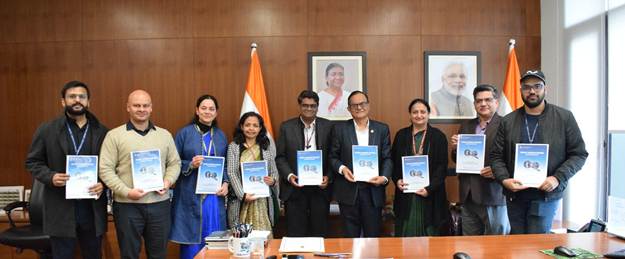

Addressing stakeholders from government, academia and industry, Prof. Sood highlighted the long-standing disconnect between researchers and investors over technology readiness. He noted that differing interpretations of maturity often create a funding bottleneck during critical development stages.
“The absence of a shared, evidence-based language has led to what is commonly described as the ‘Valley of Death’ between mid-stage development and deployment,” Prof. Sood said. “NTRAF shifts the focus from subjective claims to objective validation, ensuring that public funds and private investments support scalable and market-ready solutions.”
Structured Assessment Across TRL Levels
The framework aligns technology assessment with nine globally recognised Technology Readiness Levels (TRLs). These range from Proof of Concept stages (TRL 1–3), through Prototype Development (TRL 4–6), to Operational Deployment and commercial readiness (TRL 7–9).
By clearly defining evidence requirements at each stage, NTRAF is expected to help funding agencies make informed decisions while reducing uncertainty for private investors evaluating early-stage technologies.
Support for National Missions and R&D Funds
NTRAF is designed to act as the operational backbone for several R&D funding mechanisms launched under India’s National Missions. Officials from the Department of Science and Technology (DST) described the framework as a timely intervention for evaluating high-risk, high-reward research proposals.
Shri Praveen Roy and Dr. Jyoti Sharma of DST said the framework’s structured approach would strengthen the implementation of the Research, Development and Innovation (RDI) Fund by ensuring consistency, transparency and accountability in project evaluation.
Industry and Market Validation
Dr. Shivkumar Kalyanaraman, CEO of the Anusandhan National Research Foundation (ANRF), emphasised that technology readiness must advance alongside market validation, particularly beyond TRL 4. He proposed a pilot phase in which selected technologies could be independently cross-validated by the National Research Development Corporation (NRDC).
Industry representatives echoed this view. Dr. Rahul Katna of CII noted that stringent readiness benchmarks would ensure that startups claiming deployment readiness meet genuine industrial standards, reducing downstream risks for manufacturers and adopters.
Key Features of the NTRAF
The framework draws on global best practices, including models pioneered by agencies such as NASA, while adapting them to India’s unique research and industrial landscape. It replaces qualitative assessments with evidence-based checklists tailored to each development stage.
Specialised annexures address sector-specific nuances, particularly in healthcare, pharmaceuticals and software, where development pathways differ significantly from traditional engineering disciplines. A built-in self-assessment tool allows researchers to identify technical gaps before approaching funding agencies.
Open for Public Consultation
The National Technology Readiness Assessment Framework has been placed in the public domain for consultation until January 31, 2026. Feedback from researchers, startups, investors and policymakers will be used to refine the framework before nationwide adoption.
According to OPSA officials, the initiative marks a decisive step toward aligning India’s scientific ambition with industrial execution, helping convert cutting-edge research into globally competitive products.