

The partnership focuses on CSR-funded interventions to upgrade digital learning infrastructure, provide power resilience and improve basic school amenities at selected EMRS campuses. NCL has sanctioned ₹5 crore for strengthening digital education infrastructure across 45 EMRS located in Madhya Pradesh and Uttar Pradesh. The investment will benefit an estimated 10,000 tribal students by improving access to digital content, smart classrooms and connectivity-enabled learning.
Oil India Limited has sanctioned approximately ₹73 lakh to support five EMRS in Arunachal Pradesh. Given the remote locations of many hill schools, the OIL grant will provide diesel generators and solar street lighting to reduce power-related disruptions and improve campus safety and study conditions after dusk.
Voices at the Launch
At the event, Smt. Ranjana Chopra, Secretary of Tribal Affairs, underlined the strategic importance of public–private collaboration for tribal education. “Education is our most powerful tool against generational poverty,” she said. “When combined with skills and strong institutional partnerships, it ensures that every tribal child receives not just learning, but a real livelihood.”
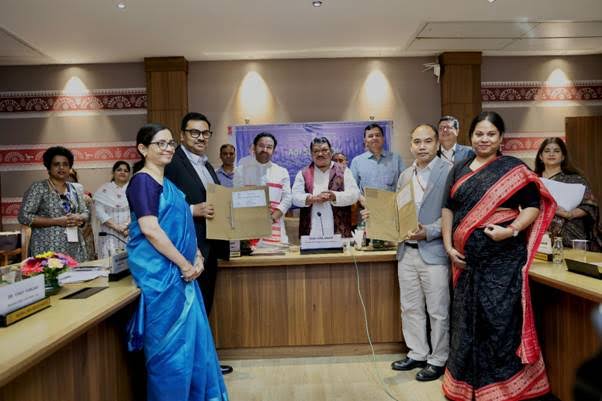
The MoU was exchanged by Smt. Bismita Das, Deputy General Manager, NSTFDC; Smt. Krishna Hazarika Rao, DGM, OIL; and Shri Abhinav Dixit, GM (CSR), NCL, in the presence of senior officials from the Ministries of Tribal Affairs and Coal.
Why This Matters
The EMRS network is a central government initiative steered by the Ministry of Tribal Affairs to provide residential schooling tailored to tribal children’s socio-cultural context. As of the release, 479 EMRS are functional nationwide. Yet many campuses, especially those in remote or hilly regions, face infrastructure gaps unstable power, limited digital access and difficulty in sustaining after-dark activities.
By directing CSR funds into digital classrooms, generators and solar lighting, the collaboration addresses immediate operational bottlenecks and creates a scalable model for corporate involvement in tribal education. NCL’s focus on digital learning aligns with national priorities to bridge the digital divide, while OIL’s interventions tackle energy resilience in difficult terrains.
Implementation and Impact
NSTFDC will oversee implementation with technical inputs from the respective PSUs and the Ministry of Tribal Affairs. NCL’s ₹5 crore programme will prioritise equipping laboratories, smart boards, learning devices and network upgrades in the targeted EMRS. OIL’s grant will supply reliable backup power and solar street lighting to improve student safety and enable evening study sessions.
Officials estimate that immediate interventions can reduce classroom downtime, enhance digital pedagogy adoption and improve student outcomes over the medium term. The model also offers a template for other corporates to direct CSR towards school-level transformation in tribal areas.
Next Steps and Broader Collaboration
The MoU signals growing synergy between the Ministry of Tribal Affairs, NSTFDC and the corporate sector to support the Prime Minister’s agenda of inclusive development. Implementation timelines remain subject to site surveys, procurement and coordination with state education authorities. If successful, the partnership could be expanded to additional EMRS through similar CSR investments.
For more information on EMRS and NSTFDC initiatives, readers can refer to the Ministry of Tribal Affairs and NSTFDC portals.