
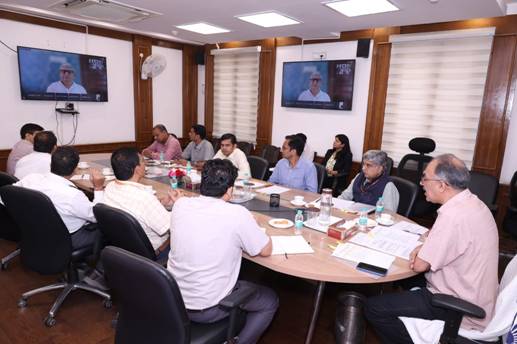
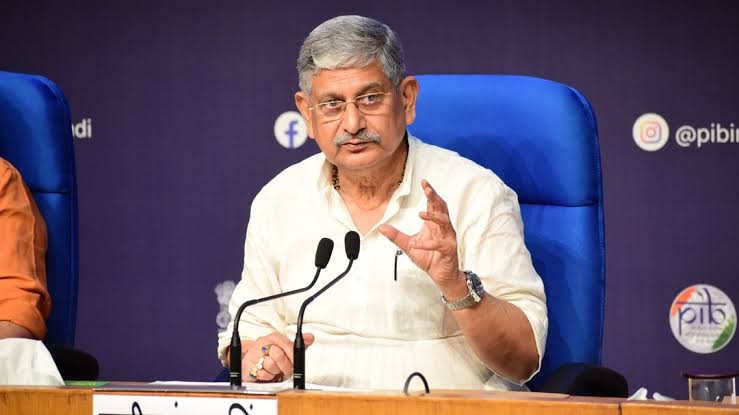

The Minister highlighted critical areas for sectoral reforms, including export market diversification, certification of produce, adoption of technology in fish processing, cold chain development, and robust traceability systems. He stressed that fisheries directly and indirectly support over 8 crore livelihoods and called for collective efforts from stakeholders to drive structural transformation.
Dr. Abhilaksh Likhi, Secretary, Department of Fisheries (DoF), underscored the importance of collaboration between States/UTs, fishermen associations, exporters, and industry bodies. He urged participants to provide actionable suggestions to boost production and exports, aligning with India’s vision of a Viksit Bharat by 2047.
Private Investment and Capacity Building
Joint Secretary Shri Sagar Mehra outlined the IGoM’s strategy to conduct sectoral assessments, identify pain points, and implement reforms. Key proposals included expanding marine and inland aquaculture, promoting high-value species with GI tagging, strengthening infrastructure, and attracting private investment through PPP models.
The consultation emphasized integrating state-level strategies with schemes such as PMMSY and PM-MKSSY, as well as the Blue Economy initiative. Stakeholders highlighted needs such as developing quarantine centers, improving value addition technologies, enhancing processing capabilities, creating single-window clearance systems, standardizing land leasing policies, and establishing cold storage and modern transportation facilities.
Brand India and Export Promotion
Participants also discussed the creation of regional centers of excellence, capacity-building for emerging jobs, saline aquaculture expansion, eco-labeling, and strengthening Brand India by diversifying high-value seafood exports. The consultation aimed to ensure that India’s fisheries sector meets global benchmarks, increases productivity, and secures a resilient export-oriented ecosystem.
The meeting saw participation from a broad spectrum of stakeholders, including senior officials from the Department of Fisheries, MoFAHD, States/UTs, NFDB, MPEDA, ICAR institutes, Coastal Aquaculture Authority, Fishery Survey of India, DoF field institutes, fishermen associations, industry bodies like FICCI, CII, ASSOCHAM, PHD Chamber, and representatives from central ministries under IGoM.