
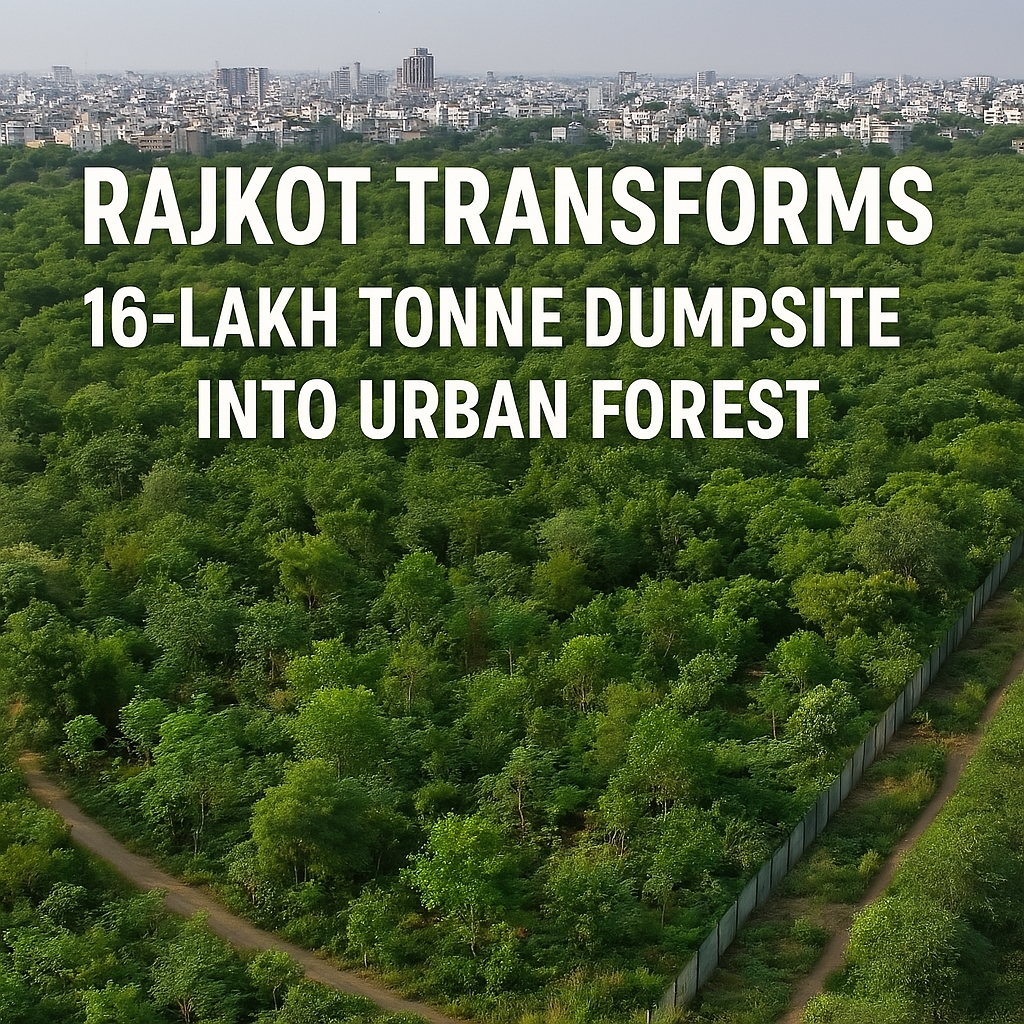
Rajkot’s Dumpsite Becomes Green Urban Forest
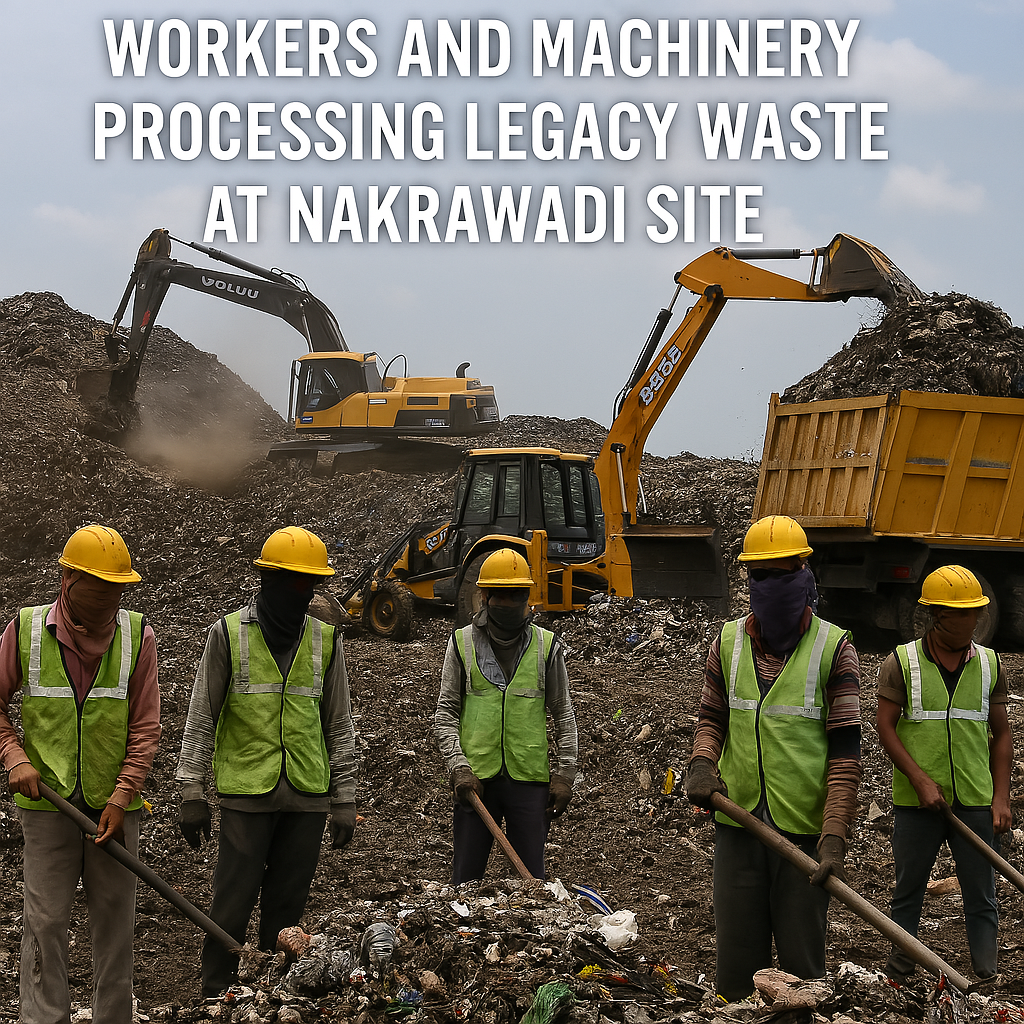

Rajkot creates 700 tonnes of waste every day. For years, all of this went to the Nakrawadi site. Over time, the site collected 16 lakh tonnes of old waste. RMC decided to clean the area and use the land in a better way.
Steps Taken to Transform the Land
- Experts studied the waste and made a full report.
- Machines separated the waste into three parts—Refuse-Derived Fuel (RDF), semi-compost, and inert material.
- They sent RDF to a waste-to-energy plant in Jamnagar.
- They moved inert waste to a secure landfill.
- They used over 50,000 tonnes of semi-compost to level the land and improve the soil.
Creating a Lush Green Forest
- RMC planted 2.35 lakh native trees using the Miyawaki method.
- They built a 12 km pipeline to bring treated water from Gauridad Sewage Plant.
- The team used drip and sprinkler irrigation to save water.
- They also built ponds to store rainwater and recharge the ground.
Overcoming Challenges
- Old and compressed waste was hard to separate.
- Bad smell and pollution caused health issues.
- Rain made the work slow and difficult.
- Laying the long water pipeline took extra effort and time.
Positive Results for Environment and People
- More trees mean cleaner air and better carbon capture.
- Using treated water saves fresh water.
- The green space improves the health of nearby people.
- Self-help groups got jobs during the project.
- Local people joined the efforts and learned about green living.
Economic Benefits
- RMC reduced waste management costs.
- The compost and RDF helped generate money.
- The area can attract eco-tourists.
Inspiration for Other Cities
This project shows that cities can fix old waste problems. Rajkot’s model offers ideas for many other places. With smart planning, cities can turn trash into green treasure.