
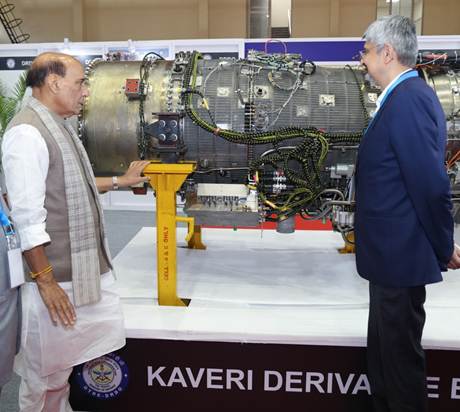
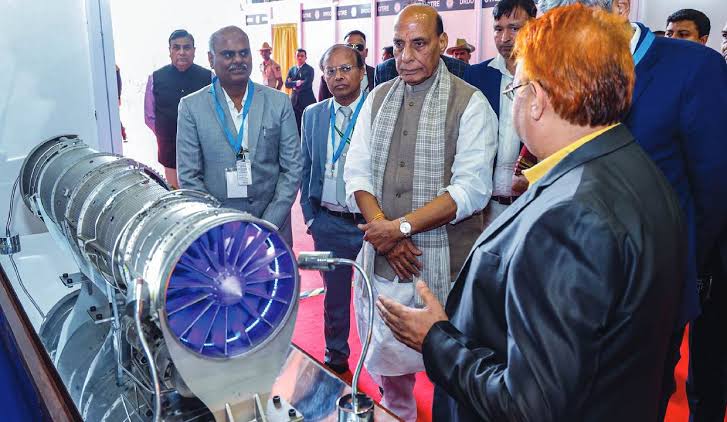

Addressing scientists and officials, Singh described DRDO as the backbone of India’s strategic strength and lauded GTRE for contributing to national security through technological self-reliance. He underlined that in the present geopolitical climate, nations possessing critical indigenous technologies would remain secure and resilient.
“Supply chains are breaking and new ecosystems are emerging. Countries that depend on others for key technologies may face vulnerabilities,” he said, reiterating the government’s commitment to Aatmanirbharta in defence manufacturing.
Push for Next-Generation Engines
Rajnath Singh urged scientists to focus not only on fifth-generation engine capabilities but also to initiate research into sixth-generation and advanced propulsion technologies. He highlighted the increasing role of Artificial Intelligence, Machine Learning and advanced materials in modern engine design.
India is progressing towards the design and development of the Advanced Medium Combat Aircraft (AMCA), making indigenous aero engine capability a strategic necessity. Singh stressed that past efforts must now culminate in tangible results, and timelines must be compressed in view of national security needs.
Calling aero engine development one of the most complex technological endeavours, he noted that even developed nations often take 25–30 years to build next-generation engines. “We must assume that 20 years have already passed and work with a sense of urgency,” he said.
Operation Sindoor and Indigenous Capability
Referring to Operation Sindoor, the Defence Minister said the armed forces demonstrated India’s growing self-reliance during the mission. He pointed out that communication systems, surveillance equipment and attack platforms used were indigenous, boosting both troop morale and public confidence.
Given evolving security challenges, Singh stressed the need to equip India’s forces with world-class indigenous systems. He urged researchers and industry partners to work cohesively to create a robust national ecosystem for advanced propulsion systems.
International Collaboration and Dual-Use Potential
The Raksha Mantri also acknowledged ongoing and proposed collaborations with the United Kingdom and France under the National Aero Engine Mission. He noted that partnerships with technologically advanced nations would help India understand global best practices and long-term challenges in aero engine development.
At the same time, he emphasised that such collaborations should strengthen India’s independent design and manufacturing capabilities. According to the Ministry of Defence (mod.gov.in), indigenous R&D remains central to India’s long-term defence roadmap.
Singh highlighted the dual-use applications of advanced propulsion technologies. High-temperature composites and material innovations developed for defence engines could benefit civil aviation, power generation and even space exploration in the future.
With India emerging as one of the fastest-growing civil aviation markets globally, he said breakthroughs in defence aero engines could transform the broader aerospace ecosystem and contribute significantly to economic growth.
National Aspiration and Strategic Vision
Calling for capitalising on India’s economic momentum, Singh referred to recent trade developments with the European Union and growing global recognition of India’s strategic stature. He emphasised that technological excellence in critical domains like aero engines would define India’s position in the coming decades.
Secretary, Department of Defence R&D and DRDO Chairman Dr Samir V Kamat, along with senior GTRE scientists, were present during the visit. The review marks a renewed push towards achieving full-spectrum indigenous capability in military aero engines.
As India accelerates its defence modernisation, the success of indigenous aero engine programmes will remain pivotal to achieving true strategic autonomy under the Aatmanirbhar Bharat vision.