Preserving India’s Finest Wool Heritage
Pashmina is not just a fabric — it’s a legacy. Woven from the softest wool of mountain goats in Ladakh, it holds centuries of artisanal pride. Today, the Indian government is working hard to protect this precious craft and empower the nomadic communities behind it.
Under the Integrated Wool Development Programme (IWDP), major steps are being taken to support the Pashmina sector in Ladakh. This initiative, which spans from 2021–22 to 2025–26, is run by the Central Wool Development Board under the Ministry of Textiles.
₹18.56 Crore Allocated for Pashmina Growth
As of now, the government has released a total of ₹18.56 crore for Pashmina development in Ladakh. Out of this, ₹14.46 crore has already been utilized by implementing agencies to improve living conditions and business prospects for Pashmina nomads.
This is not just about wool — it’s about dignity, livelihoods, and cultural pride.
 Empowering Nomadic Communities in Ladakh
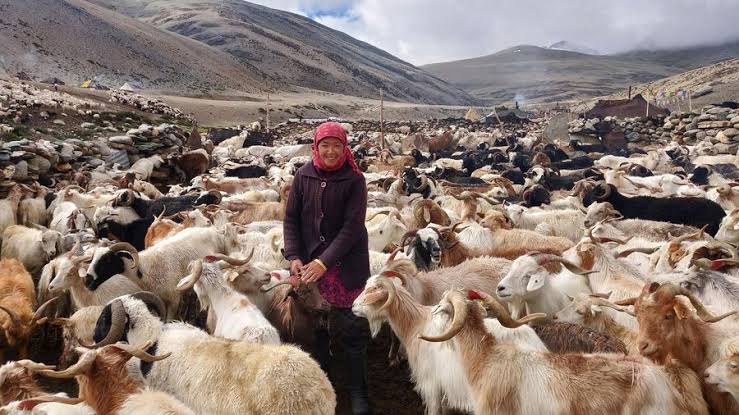
Pashmina production begins with the hard work of Changpa nomads, who brave the harsh Himalayan climate to raise Pashmina goats. Their contribution is vital. That’s why several projects under IWDP focus directly on their welfare:
- 150 predator-proof corrals equipped with LED lights were constructed or distributed to protect livestock.
- 200 portable tents with accessories were given to nomads for safer, more mobile living.
- 103 nomads received a revolving fund to support the marketing and sale of raw Pashmina wool.
These initiatives are helping preserve nomadic lifestyles while also improving their quality of life and income stability.
Strengthening the Pashmina Value Chain
Beyond herding, weaving Pashmina requires delicate craftsmanship and equipment. To modernize this ecosystem, the IWDP sanctioned:
- Procurement of Micro Plate PCR-DNA Analyzer equipment to maintain breed quality.
- Distribution of handlooms, charkhas, and small tools to bolster rural handloom infrastructure.
- Installation of one de-hairing plant with ancillary machinery for wool processing.
All of these components build a more efficient and sustainable Pashmina wool industry in Ladakh.
Government’s Vision for Pashmina’s Future
Union Minister for Textiles Shri Giriraj Singh highlighted these efforts in a written reply to the Lok Sabha. He emphasized the importance of Pashmina not just as a luxury item but as a livelihood source and cultural icon for India.
This multi-pronged support ensures that India retains its global leadership in Pashmina quality, while promoting rural development and preserving traditional skills.
Why This Matters
India is one of the few countries producing authentic Pashmina wool. However, it faces competition from machine-made imitations and environmental challenges.
By funding infrastructure, marketing, and nomadic welfare, the IWDP protects India’s Pashmina ecosystem from collapse — and helps it thrive.
Call for Global Recognition
As demand for ethical, handcrafted goods grows worldwide, Ladakhi Pashmina stands out for its authenticity. With continued government support and international promotion, this wool can become a symbol of India’s sustainable fashion revolution.
Conclusion: A Soft Thread of Hope
The IWDP is more than a development plan. It’s a lifeline to Ladakh’s nomads, artisans, and future generations. Through smart funding, better infrastructure, and compassionate policy, India is weaving a stronger future — one thread of Pashmina at a time.