
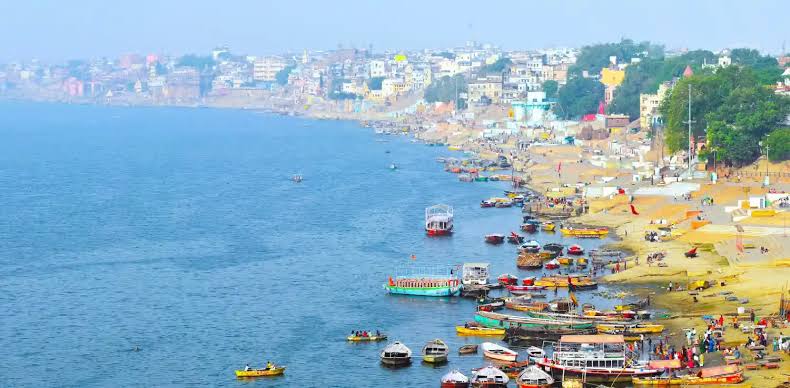
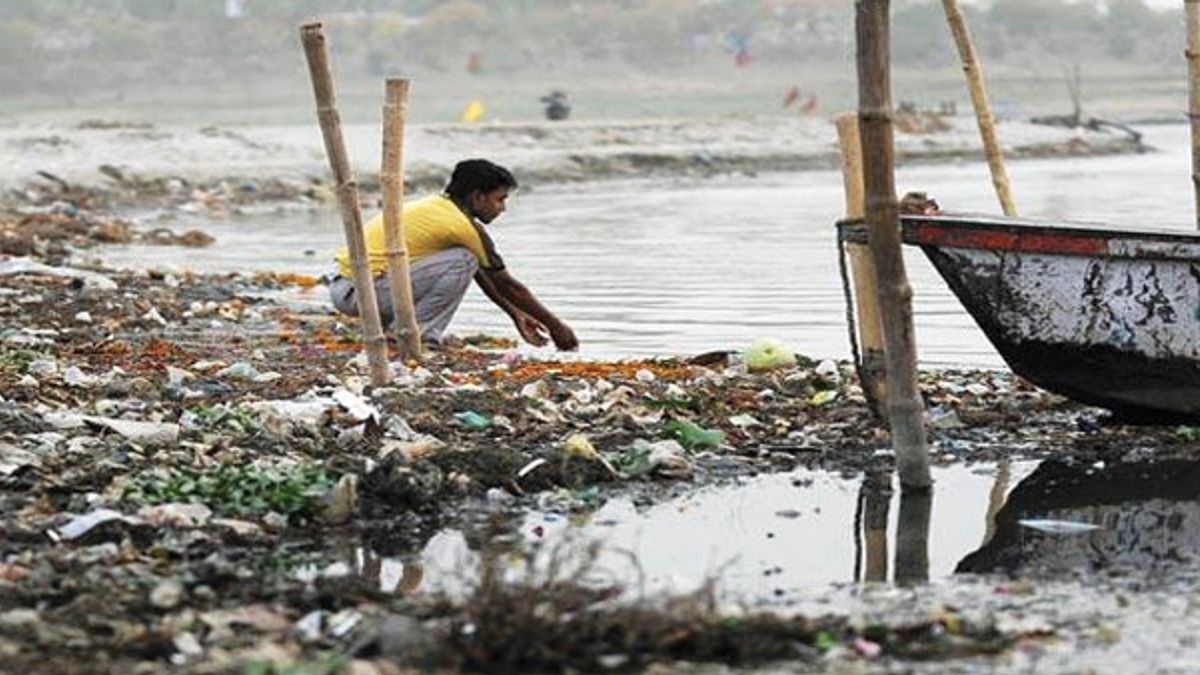

Under the flagship Namami Gange Programme, 218 sewerage infrastructure projects worth ₹35,698 crore have been sanctioned to tackle pollution in the Ganga basin. These projects collectively aim to create a sewage treatment capacity of 6,610 million litres per day (MLD).
So far, 138 projects with a combined capacity of 3,977 MLD have been completed and are operational. These facilities play a critical role in intercepting untreated sewage before it enters river systems, directly addressing one of the largest sources of river pollution.
Ganga Water Quality Shows Measurable Improvement
Data from the Central Pollution Control Board (CPCB) comparing polluted river stretches between 2018 and 2025 indicates clear improvement in the main stem of the Ganga. Uttarakhand, which earlier reported polluted stretches from Haridwar to Sultanpur, has seen complete removal of such stretches by 2025.
In Uttar Pradesh, Bihar and West Bengal, pollution levels have either reduced or remained marginal in select stretches, reflecting gradual but consistent progress. According to median water quality data for 2025, parameters such as pH and Dissolved Oxygen now meet bathing standards at all monitoring locations along the Ganga.
Biological Indicators Signal Ecological Recovery
Biomonitoring conducted during 2024–25 at 50 locations along the Ganga and its tributaries, and 26 locations along the Yamuna system, revealed that Biological Water Quality ranged largely from ‘Good’ to ‘Moderate’.
The presence of diverse benthic macro-invertebrates suggests improving ecological conditions and the river’s capacity to sustain aquatic life, reinforcing the positive impact of pollution control measures.
NRCP Boosts Pollution Control in Other River Basins
Beyond the Ganga basin, the NRCP continues to support pollution abatement across India. In Telangana, four sewage treatment plants with a total capacity of 593 MLD have been set up in Hyderabad to address pollution in the Musi River.
Additionally, five STPs with a combined capacity of 28.46 MLD have been established in Bhadrachalam, Mancherial and Ramagundam to curb pollution in the Godavari River.
Scientific Planning and Water Reuse Framework
Twelve leading institutions have been engaged under the Condition Assessment and Management Plan (CAMP) to develop scientific strategies for six major river basins, including the Godavari, Krishna, Narmada, Cauvery, Mahanadi and Periyar.
Recognising the importance of treated wastewater reuse, the government has introduced a National Framework for Safe Reuse of Treated Water. States have been directed to align their policies with this framework, while city-level action plans are being rolled out to ensure on-ground implementation.
Public Participation Central to River Cleaning Efforts
River rejuvenation is being reinforced through large-scale public awareness campaigns under both Namami Gange and NRCP. Initiatives such as Swachhta Pakhwada, Ganga Utsav, Ganga Run and community-led cleanliness drives aim to instil environmental responsibility among citizens.
Educational institutions, volunteer groups and District Ganga Committees play a crucial role in sensitising riverbank communities, particularly the youth, about sustainable practices and pollution prevention.
Shared Responsibility for Sustainable Outcomes
The government reiterated that river cleaning is a continuous process and the primary responsibility of States, Union Territories, urban local bodies and industries. The Centre supports these efforts through financial and technical assistance while ensuring compliance with pollution control norms.
Collectively, these measures underline India’s commitment to restoring river health, safeguarding ecosystems and ensuring clean water for future generations.