

India’s currency slid to record lows in late November 2025, with market reports putting the close at roughly ₹89.46 to the US dollar. Unlike episodic drops driven solely by dollar strength, this episode saw simultaneous depreciation against the euro, pound and yen a pattern economists say shows up in the NEER and REER indices.
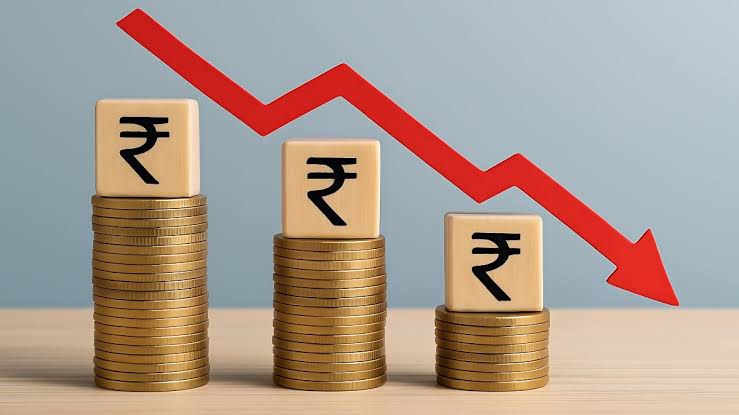

The Nominal Effective Exchange Rate (NEER) is a trade-weighted average of the rupee against a basket of currencies. The Real Effective Exchange Rate (REER) adjusts NEER for relative price changes (inflation), and so captures competitiveness. A falling NEER means the rupee is weaker against the basket; a falling REER means the rupee’s loss is not only nominal but also real when inflation differences are considered.
In recent months, data and commentary point to declines in both indices for India, underlining that the rupee’s loss is broad-based and has a real component that can affect trade competitiveness and import bills.
Why this matters trade, inflation and growth
A real depreciation (falling REER) raises the local-currency cost of imports, especially oil, fertilizers and capital goods. That pushes up input costs for industry and can feed into consumer inflation unless offset by other factors. For exporters, a weaker REER can be helpful for competitiveness but only if inflation does not erode the price advantage.
India’s current account position, foreign portfolio flows and global risk sentiment will influence whether the rupee stabilises or continues to weaken. Policy actions by the Reserve Bank of India including forex intervention and liquidity operations remain key to smoothing volatility. The RBI publishes reference rates and effective exchange rate data that the market watches closely.
Drivers behind the recent move
Several forces have combined: a stronger dollar on global safe-haven demand, shifts in major currencies, sticky domestic inflation differentials and portfolio outflows at times. Crucially, when other major currencies also move against the rupee, simple bilateral rates understate the breadth of the slide which is why NEER/REER matter. Market commentary after the late-November moves emphasised that this episode is not just about the dollar.
Policy implications and outlook
For policymakers, a sustained real depreciation raises the trade-off between supporting exporters and containing imported inflation. The RBI can use FX reserves to smooth excessive volatility while relying on monetary policy and macroprudential tools to anchor inflation expectations. Analysts also look to global cues US rate moves, commodity shocks and geopolitical risk to assess near-term direction.
What consumers and businesses should watch
Households should monitor fuel and cooking-gas prices, while firms importing raw materials should revisit hedging strategies. Exporters may find short-term relief from price competitiveness but should watch inflation and input-cost pass-through. Travelers should budget for a weaker rupee while exporters and importers should engage treasury advisers on forward covers.