
Part 1: The Origins, Findings, and Unfolding of a Controversial Report
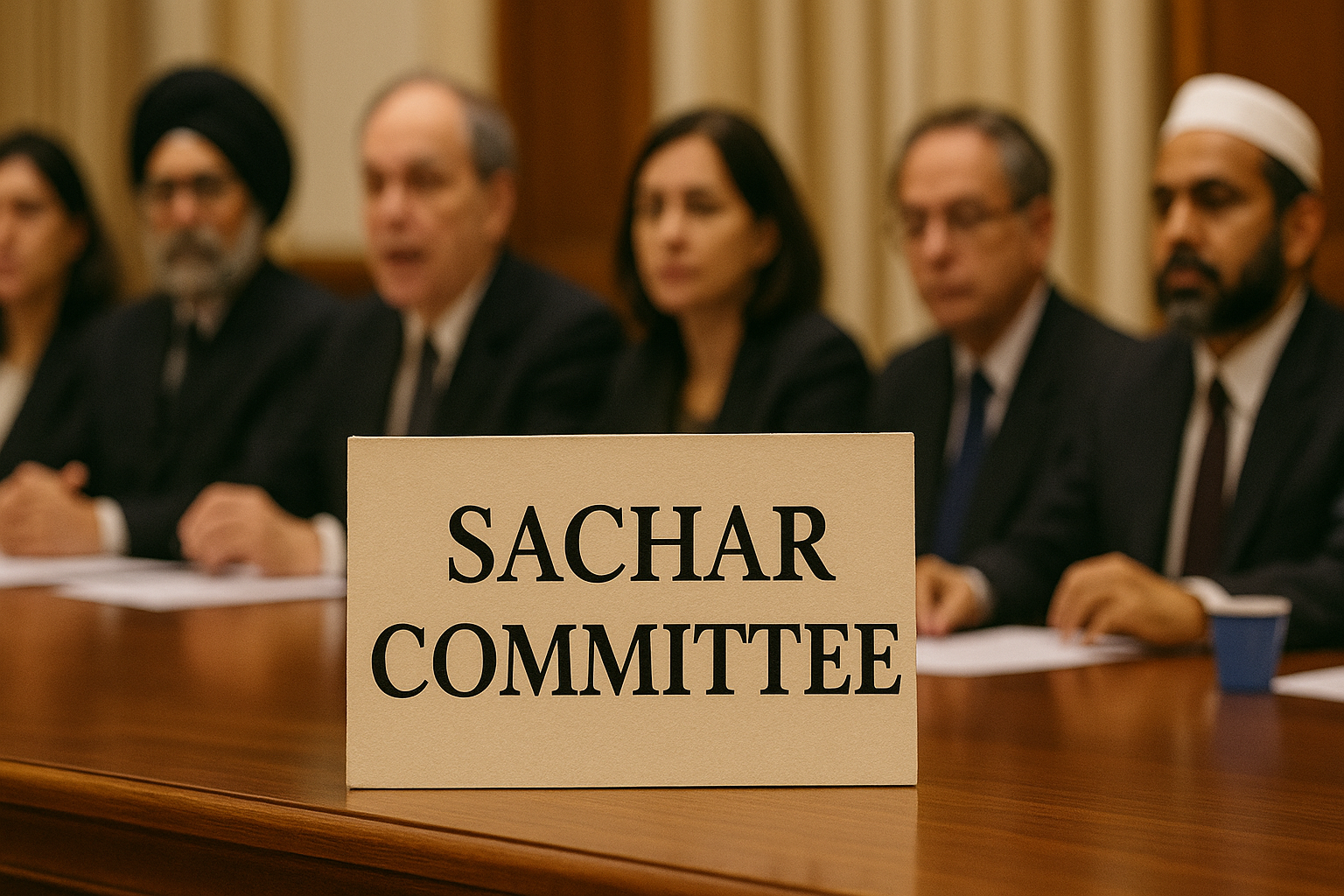
When the UPA Government constituted the Sachar Committee in 2005 under the leadership of Justice Rajinder Sachar, it was framed as an effort to bring socio-economic justice to India’s largest minority—Muslims. The committee’s mandate was to conduct a fact-based assessment of the condition of Muslims across sectors like education, employment, health, and access to infrastructure. The result was a 403-page document tabled in Parliament in November 2006, which has since been cited across academia, politics, and judiciary.
But beyond the numbers and policy prescriptions, the Sachar Report sparked one of the most intense debates around secularism, minority rights, and what critics called ‘appeasement politics’. Some believed it aimed to correct decades of neglect; others felt it laid the groundwork for minority-centric policies that fundamentally altered India’s secular framework. Here, we unpack the report in full depth—its contents, controversies, and the larger narrative that emerged from it.
—
1. Background and Intent of the Sachar Committee
The committee was appointed by Prime Minister Manmohan Singh and was officially called the “Prime Minister’s High Level Committee on the Social, Economic and Educational Status of the Muslim Community of India.” Its stated aim: to provide a data-based understanding of the Muslim community’s condition, without overlapping with existing census or National Sample Survey (NSSO) data.
At its face, the task appeared neutral and administrative. Yet, critics flagged a potential conflict with the constitutional principle of equality: Should public policy be guided by religious identity?
—
2. Key Findings of the Report
The report laid out a grim picture of the Muslim community:
Education: Muslims were behind both Hindus and even Scheduled Castes and Scheduled Tribes (SCs/STs) in literacy rates. Enrollment in higher education was disproportionately low.
Employment: Muslims were under-represented in government jobs, including IAS, IPS, IFS, and public sector undertakings.
Banking and Credit: Access to institutional finance was extremely limited; Muslim-majority areas saw fewer bank branches.
Urban Poverty: Urban Muslims had high poverty levels, sometimes even exceeding that of SC/ST communities.
Security Perception: There were mentions of Muslim youth being unfairly targeted or harassed under anti-terror laws.
While the data was revealing, its presentation raised concerns. Many critics argued that the report treated Muslims as a monolithic block, ignoring regional, economic, and ideological diversity.
—
3. Controversies and Criticisms
While the intent to uplift a backward community was applauded by many, a significant body of political analysts, constitutional experts, and Nationalist socio-cultural organizations raised three broad objections:
a) Religious Data Collection for Policy-making
This was arguably the first time post-independence that the *State initiated data-driven policy based solely on religious identity.* Critics argued that the report contradicted Article 15 of the Indian Constitution, which prohibits discrimination based on religion.
b) Appeasement Politics’ Label
The Sachar Report became a symbol of the Congress party’s ‘muslim-first’ governance model, as alleged by its political opponents. The Nationalist BJP, among others, accused the UPA of trying to cultivate a permanent muslim vote bank through state-sponsored benefits.
c) Neglect of Hindu Backward Classes
Many questioned why similar focused committees weren’t formed for economically weaker sections among Hindus, especially in states like Bihar and Uttar Pradesh where extreme poverty transcends religious lines.
—
4. The Institutional Fallout: Creation of the Ministry of Minority Affairs
Soon after the report, the Ministry of Minority Affairs (MoMA) was made a full-fledged ministry. Based on Sachar’s data, multiple schemes were introduced:
Multi-Sectoral Development Programme (MSDP)
Nai Roshni: Leadership training for minority women
Nai Manzil: Skill development for Madrasa graduates
Pre-Matric and Post-Matric Scholarships* for minority students
While these were lauded as affirmative action by congress allies, these were also as religiously exclusive to empower only one religious minority – muslims, fostering resentment among equally impoverished communities from other faiths.
—
5. The Bigger Debate: Social Justice or Soft Islamism?
A section of nationalists and conservative thinkers argued that the Sachar Committee unintentionally (or deliberately?) set in motion a redefinition of India’s secularism. By creating religiously-tailored policy pipelines, it raised fears of parallel systems, especially with Islamic education through Madrasas being legitimized as part of the mainstream.
Critics also highlighted the contradictions in the report’s recommendations:
* While demanding mainstream inclusion, it also sought special provisions for Madrasas.
* It pushed for increased representation in police and judiciary without proposing a *merit-based roadmap*, raising concerns over communal quotas.
—
6. The Sharia Law Allegation: Fact or Fiction?
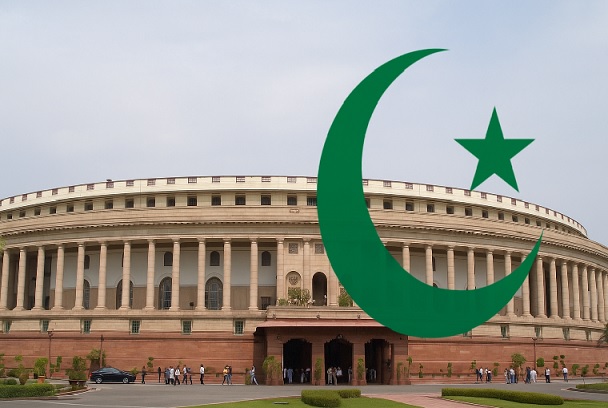

Some critics went so far as to link the report to a larger agenda of Islamic assertion, including fears of Sharia law influence in the long term. While the report cunningly made no explicit mention of Sharia,
Its indirect (or rather direct?) validation of madrasas,
Push for exclusive financial institutions for muslims
Call for sensitivity training of police when dealing with muslims
… were seen by the Nationalists as a slippery slope leading to legal pluralism.
Whether this concern is justified or alarmist depends on one’s ideological lens (although this has been happening in other democracies of the world specifically UK/ Europe are good examples of the aftermaths of muslims appeasements), but it’s undeniable that the post-Sachar political discourse heavily polarized India.
—
7. Judiciary and Public Response
There were multiple Public Interest Litigations (PILs) filed challenging schemes arising from the Sachar recommendations. Some were struck down; others, like scholarships for minorities, were upheld.
Public opinion was equally divided:
Urban liberals and left-leaning intellectuals endorsed the report as essential corrective action.
Nationalist commentators framed it as an institutional legitimization of religious divide, which the Constitution intended to avoid.
—
In the second part of this editorial, we will explore:
The political and electoral impact of the Sachar Report
How it reshaped Muslim identity politics
What happened to its implementation
Post-Sachar Muslim politics: Owaisi, Pasmanda vs Ashrafi debates
Critical lessons for India’s democracy
You can check the Sachar Committee report on the Govt website here