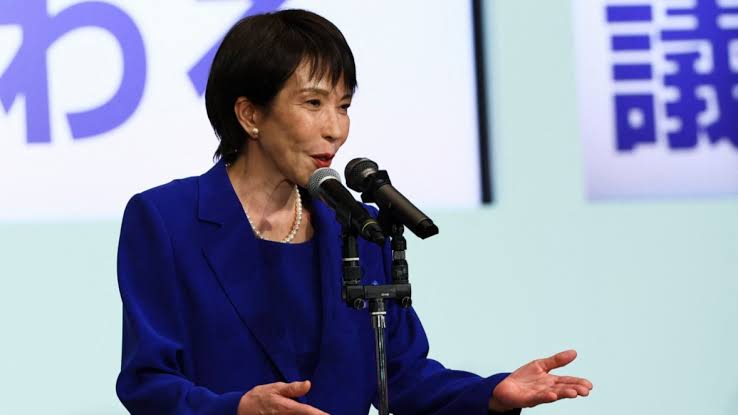
Takaichi, known for her conservative views and strong nationalist stance, replaces outgoing Prime Minister Shigeru Ishiba. With the LDP holding a dominant majority in the lower house of parliament, her election virtually guarantees her appointment as Japan’s next Prime Minister.
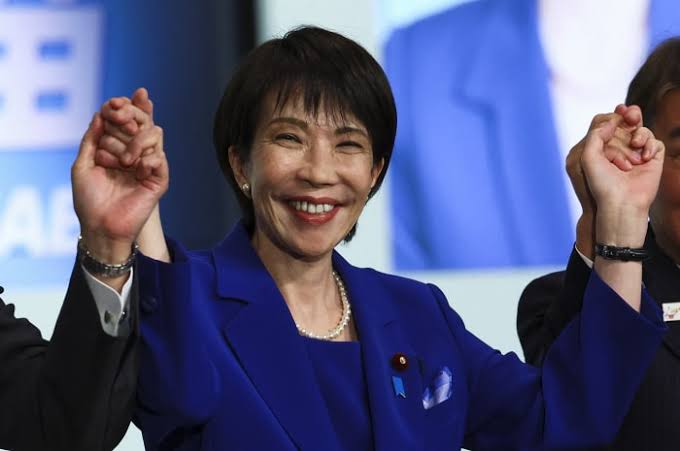 ‘A New Era for Japan’
Addressing party members after her victory, Takaichi said, “Together with so many of you, we have carved a new era for the LDP.” Her remarks were met with applause from supporters at the LDP headquarters, reflecting both excitement and relief within the party after months of declining public approval and electoral setbacks.
She vowed to restore public trust and focus on economic revival, national security, and social reforms. “I will lead with responsibility and courage to ensure stability and progress for Japan,” she added.
Takaichi’s win marks a significant moment for Japan, a country that has long struggled with gender inequality in political representation. Her leadership could redefine women’s role in national politics and inspire future generations of female leaders.
Conservative Roots and Political Vision
A seasoned politician with decades of experience, Takaichi has served in several ministerial roles, including internal affairs and economic security. She is regarded as one of the most conservative members of the LDP, frequently emphasizing national defense, economic resilience, and traditional Japanese values.
Observers note that her “Japan First” policy mirrors the populist tone of former U.S. President Donald Trump’s “America First” approach, underlining her preference for domestic priorities and a strong national identity. However, her conservative stance on historical issues—such as visits to the controversial Yasukuni Shrine—has sparked concerns among Japan’s regional neighbors, particularly South Korea and China.
“Takaichi is experienced and confident in international diplomacy, but her hawkish views could complicate regional ties if not balanced carefully,” said Yuka Hayashi, Vice President of The Asia Group in Washington, D.C.
Economic Reactions and Market Impact
Following the announcement of Takaichi’s victory, Japan’s financial markets reacted cautiously. Bond strategist Naoya Hasegawa of Okasan Securities noted that the likelihood of a Bank of Japan (BOJ) interest rate hike this month had decreased. “The market will initially react by buying mid-term bonds and selling long-dated ones, which will steepen the yield curve,” he explained.
Hasegawa added that the probability of a rate hike to 0.75% has now fallen below 50%, compared to over 60% before the LDP vote. Similarly, fund manager Toshinobu Chiba from Simplex Asset Management said the yen may weaken in the short term. “This result was unexpected. We might see the yen depreciate slightly as investors await her economic policy roadmap,” he said.
Analysts agree that while Takaichi’s election introduces short-term uncertainty, her pro-growth stance and emphasis on national security spending could support Japan’s long-term fiscal stability.
Challenges Ahead for Takaichi’s Leadership
Takaichi inherits a party struggling with low public approval and the task of rebuilding unity within the LDP. The party has faced consecutive election losses and internal divisions over fiscal and defense policies. Political analysts say her immediate priority will be consolidating party support and preparing for upcoming general elections.
Her leadership also comes at a time of growing global uncertainty, with economic slowdowns, regional security threats, and shifting alliances in the Indo-Pacific. Balancing Japan’s relations with the United States, China, and South Korea will be among her toughest diplomatic challenges.
“This is a very challenging time for the LDP,” Hayashi added. “Takaichi will likely prioritize unity and moderation to stabilize her government and strengthen Japan’s international position.”
Global and Domestic Significance
Takaichi’s historic ascent has drawn international attention. If confirmed by Parliament, she will become Japan’s first female Prime Minister—an achievement widely hailed as a breakthrough for gender equality in a nation ranked low on global gender parity indices. Her leadership could mark a turning point for women in Japanese politics, where representation has traditionally been limited.
For India and other key partners, her leadership promises continuity in Japan’s foreign policy and its role in regional initiatives such as the Quad alliance. As a strong advocate of economic security, she is expected to deepen cooperation in technology, defense, and trade with allied nations.
“Sanae Takaichi’s rise symbolizes a generational shift in Japanese politics,” said a Tokyo-based analyst quoted. “Her success reflects both Japan’s changing political dynamics and the global demand for strong, reform-oriented leadership.”