 From household kitchens to national platforms
Vandana Bharadwaj from Mohali, Punjab, stood at her Phulkari stall not just as an artisan but as the leader of a movement. Starting in 2018 with ten women, Vandana now anchors over 500 SHGs across 25 villages. “The government supported us at every step,” she told visitors, recalling sewing machines and a Rs. 30,000 working capital grant that helped convert household stitching into a viable enterprise. Today her groups supply phulkari items to government departments and export markets.
Markets, digital tools and measurable gains
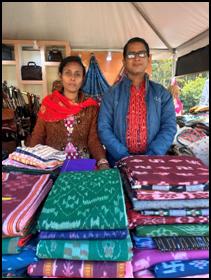
The festival highlighted how market exposure and digital tools have amplified earnings. SHG sellers used QR payments and UPI for instant transactions; several reported festival sales in lakhs. A handloom group from Odisha said a single Saras mela sale reached Rs. 5 lakh for Ikkat fabrics, while many food stalls reported daily takings of Rs. 2–2.5 lakh during the event. E-commerce linkages including Amazon storefronts are helping groups reach customers nationwide.
Lakhpati Didis: scale of impact
DAY-NRLM’s mission to mobilise rural households into Self-Help Groups has produced measurable results. As of 5 December 2025, the programme had mobilised some 10.20 crore households into SHGs. The initiative has helped create over 2 crore Lakhpati Didis — women whose household income exceeds ₹1 lakh annually — with continued targets to expand livelihoods and incomes across rural India.
Food, craft and personal transformation
Stories at the festival ranged from Mrs. Maya Devi of Saharsa, who scaled a makhana business after joining Jeevika SHG, to Mrs. Preeti Sahu, who runs a canteen and now earns over Rs. 50,000 a month. Women described greater confidence in negotiating prices, managing digital wallets, and communicating with buyers using tools like the BHASHINI app for live translation. For many, the mela is not only a sales venue but a classroom for packaging, marketing and enterprise skills provided through NRLM workshops.
Women’s entrepreneurship as an engine for inclusion
Saras Aajeevika Melas aim to eliminate middlemen, allow direct producer-buyer linkages and expand market access for marginalised communities. Beyond immediate sales, government-run capacity building on design, packaging and market engagement helps SHG members upgrade product quality and command better margins. For artisans and food entrepreneurs, such exposure connects craft traditions to viable livelihoods.
Digital inclusion and language support
Festival scenes underscored India’s digital transition in rural enterprise. QR codes and UPI reduced cash handling; BHASHINI’s voice-based translations helped bridge language gaps between sellers and urban buyers. These technologies, combined with easy credit and training, are expanding the market readiness of small producers.
What the fairs deliver: income, identity and dignity
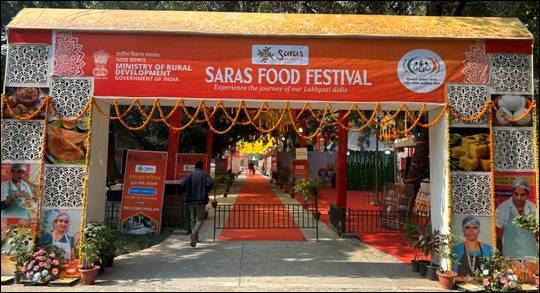
For visitors, Saras Food Festival is a celebration of taste. For participants, it is a celebration of autonomy. From higher land values recorded near project areas to SHG members running profitable stalls, the mela’s outcomes include increased incomes, strengthened social networks and enhanced skills. Programmes under DAY-NRLM are helping convert traditional skills into sustainable micro-enterprises that support families and communities.