
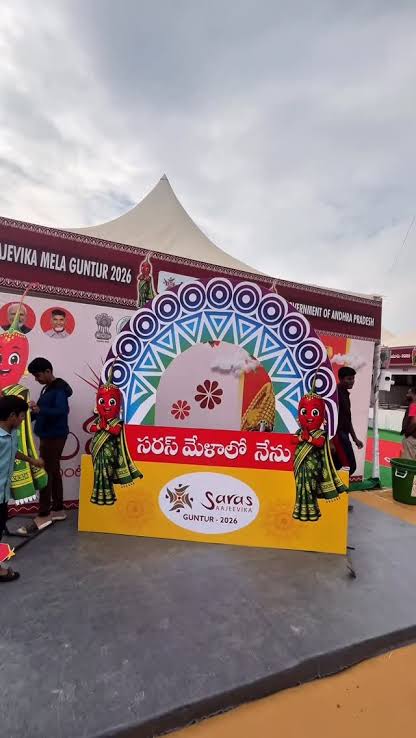
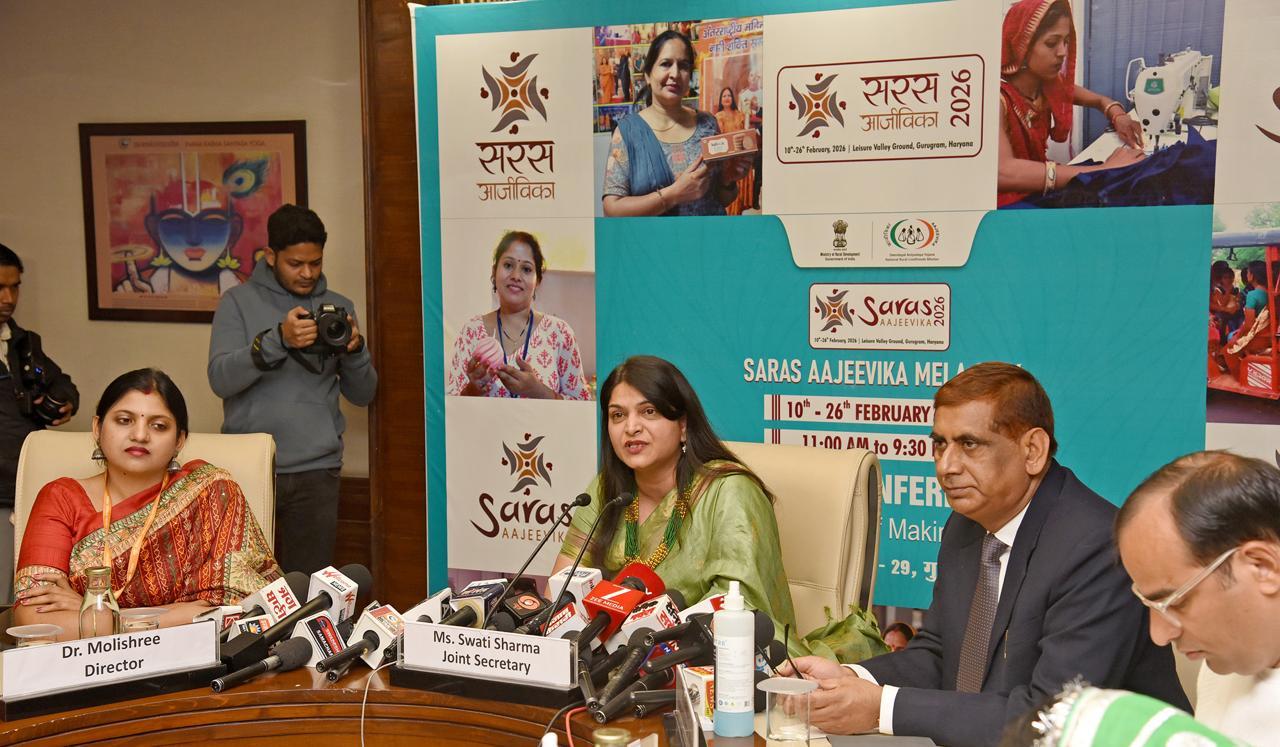
The SARAS Aajeevika Mela 2026 has transformed Gurugram’s Leisure Valley Park into a vibrant showcase of rural enterprise, bringing together more than 900 women entrepreneurs from 28 states under one roof. Organised as a national-level fair from February 10 to 26, the event highlights the growing strength of Self-Help Groups (SHGs) supported under the Deendayal Antyodaya Yojana–National Rural Livelihoods Mission (DAY-NRLM).
Beyond its festive atmosphere, the mela functions as a structured market linkage platform. It enables direct sales, strengthens brand recognition for SHG products and connects rural producers with urban consumers in a formal marketplace setting.

Among the standout exhibits is Assam’s GI-recognised Muga silk. Representing the Hariyani Mising Gaon Mohila SHG from Lakhimpur district, Najitra Didi has dedicated decades to training women in weaving and entrepreneurship. She has helped thousands obtain artisan cards and access formal markets.
At the mela, her stall features handwoven Muga sarees priced between ₹30,000 and ₹70,000. Within days of the event’s opening, sales reportedly crossed ₹3 lakh, underscoring growing consumer preference for authentic handloom products over machine-made alternatives.
Food Enterprises from West Bengal
A steady crowd gathers at a food stall managed by Suparna Didi from West Bengal. After forming an SHG in 2011, she expanded from home-based papad production to coordinating multiple SHGs in her gram panchayat.
At SARAS Aajeevika Mela 2026, her stall has achieved sales exceeding ₹50,000 within a week, with profit margins of 60–70 percent. Supported by district-level rural development initiatives, her enterprise demonstrates how decentralised production models can generate stable income for women.
Jute, Wood and Local Value Chains
Another inspiring example comes from Shobhita Didi, who began her SHG journey in 2006. After receiving training under DAY-NRLM, she built a jute-based enterprise that now sources raw materials from local farmers and employs rural women artisans.
Her venture later diversified into wooden household items, leveraging institutional credit and digital payment systems such as UPI. The integrated value chain from farm to finished product illustrates how skill training can evolve into a sustainable rural enterprise ecosystem.
Innovation from Agricultural Residue
Jyotsna Didi from Hooghly, West Bengal, has pioneered natural paddy straw painting. After joining an SHG and undergoing handicraft training, she transformed rice straw into intricate artworks. She now trains 15–16 women who produce designs from their homes.
The mela’s live demonstration zone allows visitors to observe such craftsmanship firsthand, reinforcing appreciation for the labour and creativity embedded in each product.
Textiles and Bamboo Enterprises Expand
From Maharashtra, the Sanjeevani Mahila SHG of Nagpur showcases cotton shirts and sarees produced in a rural unit employing over 30 women. Supported by the Maharashtra State Rural Livelihood Mission, the enterprise integrates local cotton farming with value-added garment production.
Similarly, an Assam pavilion displays innovative bamboo bags crafted by Vishakha Didi, who revitalised her family’s traditional craft with modern designs and expanded market access through exhibitions such as the India International Trade Fair.
Capacity Building and Digital Push
The Knowledge and Learning Pavilion at SARAS Aajeevika Mela 2026 hosts workshops on packaging, branding, logistics and digital marketing. Awareness about the E-SARAS portal aims to extend market access beyond the physical fair.
As evening lights illuminate the park, the fair stands as a testament to women-led entrepreneurship and collective resilience. SARAS Aajeevika Mela 2026 not only markets products but also amplifies stories of transformation, skill and shared prosperity.