
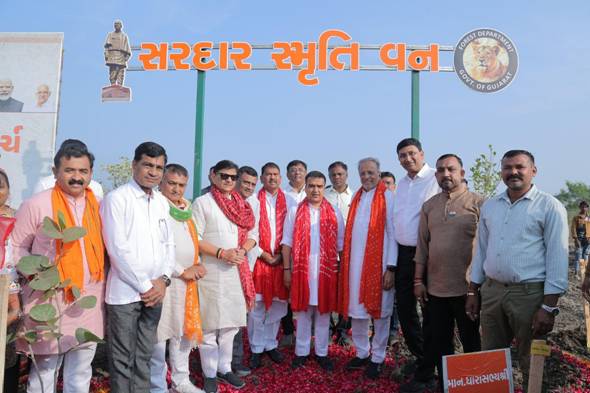
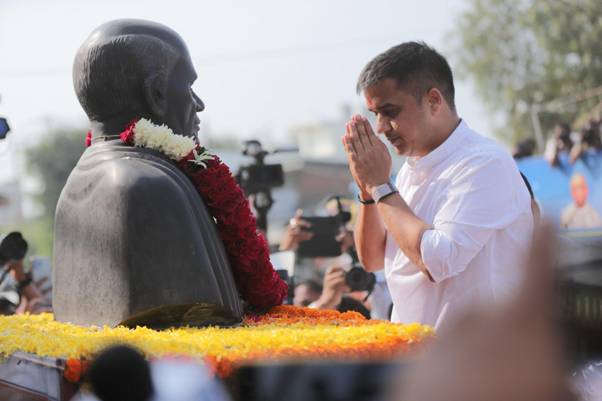

Senior leaders including Gujarat Deputy Chief Minister Shri Harshbhai Sanghavi, Cabinet Minister Shri Arjun Modhvadia, and other prominent representatives walked alongside participants. Their presence reinforced community mobilisation and encouraged public participation in the ongoing march.
Shri Sanghavi, addressing the gathering, emphasised the continued relevance of Sardar Patel’s vision, stating that without his leadership, “we might have needed a passport to enter Gujarat.” He urged youth to carry forward Patel’s sankalp with unity and service to the nation. Shri Modhvadia highlighted Patel’s role in shaping India’s administrative framework through services like the IAS and IPS, while also promoting a healthy, addiction-free lifestyle aligned with the Nirogi Bharat initiative.
Menpura Sardar Sabha: Tribute to National Integration
In Menpura, the padyatra featured a special Sardar Sabha titled “Kashmir, Hyderabad and Sardar”, honouring Patel’s decisive role in unifying India’s princely states. Distinguished leaders including Shri Manoj Sinha, Lieutenant Governor of Jammu & Kashmir, joined the event, linking Patel’s historic efforts to modern governance initiatives like One Nation One Tax, One Nation One Health Card, and Meri Maati Mera Desh, reinforcing Ek Bharat, Shreshtha Bharat and Viksit Bharat.
Shri Sinha praised the padyatra as a living representation of national integration and unity, reflecting Patel’s enduring influence on India’s governance and development trajectory.
Cultural Engagement and Community Participation
Day 6 advanced through key locations such as Trimandir (Varnama), Por – Varahi Temple, Ankhi, Fajalpur, Amber Spinex, Menpura, Polyplast Company, Gayatri Temple (Kayavarohan), and concluded at Lingasthali. At each point, local residents, cultural groups, and community organisations contributed actively to the march.
A Gram Sabha at Lingasthali will feature traditional Nritya Natika and Dayro performances, enhancing community involvement. The Godavari Pravaah, which commenced from Mumbai, is scheduled to join the padyatra later in the evening, strengthening the collaborative spirit of the march.
Legacy of Sardar Patel in Contemporary India
The Sardar@150 Padyatra, a 150-km march from Karamsad to Kevadiya, continues to draw widespread public participation, symbolising Sardar Patel’s enduring legacy. It inspires citizens to deepen Jan Bhagidari and contribute meaningfully to a Viksit Bharat. The integration of cultural, environmental, and nationalistic elements throughout the march underscores the relevance of Patel’s ideals in present-day India.