

Collective Achievements and Future Priorities
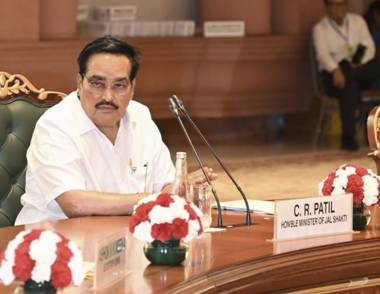
In his keynote address, Union Minister of Jal Shakti Shri C.R. Patil praised the collective achievements of SBM-G and underlined the mission’s role in transforming rural sanitation. He emphasized that SBM-G and the Jal Jeevan Mission (JJM) are together advancing India towards sustainable sanitation and water security. With rural households now receiving tap water under JJM, he highlighted the added responsibility of greywater management under SBM-G.
“The ODF Plus Model is not just about numbers, it is about health, dignity, and quality of life for rural families,” Shri Patil said, urging states to integrate climate resilience, waste-to-energy projects, and water harvesting into local development.

Minister of State Shri V. Somanna credited the mission’s success to the combined efforts of states, Panchayats, and communities. He urged a stronger push for behavior change, youth and women leadership, and better operation and maintenance of sanitation systems. “Persistence and innovation, supported by Sabka Saath, Sabka Vikas, Sabka Vishwas, must remain central to this mission,” he noted.
Secretary DDWS, Shri Ashok K.K. Meena, stressed that the next phase of SBM-G must be built on data-driven and citizen-centric approaches. He said community ownership—from Panchayats to Village Water and Sanitation Committees (VWSCs)—is crucial for achieving lasting impact.
Key Achievements of SBM-G
- 81% of villages have achieved ODF Plus Model Village status.
- 91% of villages have functioning greywater management systems.
- 84% of villages have solid waste management systems.
- 67% of blocks have achieved plastic waste management coverage.
- 11 States/UTs report GOBARdhan biogas plants operating at 80–100% of their designed capacity.
- Expansion of the Swachh Sujal Gaon campaign and integration of WASH curriculum in schools.
Showcasing Best Practices
The roundtable featured best practices from several states:
- Himachal Pradesh: Cluster-based solid waste management in Dharamshala.
- Odisha: Women-led waste management using Su-Nano e-vehicles in Sundargarh.
- Bihar: “Kabadmandi” digital platform and communication monitoring system.
- Karnataka: Greywater and faecal sludge management through GOBARdhan models.
- Gujarat: Women-led ODF+ models and large-scale biogas projects.
- Mizoram: Children’s sanitation clubs and CSC shop model.
- Maharashtra: Tiger Biofilter greywater treatment in Satara.
- Assam: Floating toilets and climate-resilient sanitation initiatives.
- West Bengal: Plastic waste utilization for road construction.
The Way Forward
Discussions concluded with a clear roadmap for sustaining the mission’s gains and moving toward Sampoorna Swachhata. Priorities include sustaining ODF gains, improving visual cleanliness, scaling up waste management solutions, and leveraging digital tools for reliable data.
Union Minister Patil, in his closing remarks, emphasized that SBM-G, JJM, and Jal Shakti Abhiyaan are together shaping a water-secure, healthy, and sustainable Bharat—central to the vision of Viksit Bharat.