
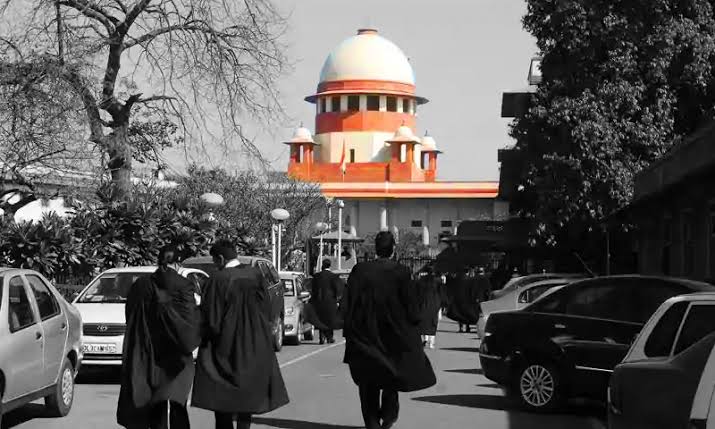
New Delhi, July 14, 2025 — In a significant decision reinforcing judicial discretion, the Supreme Court of India has upheld the suo motu powers of High Courts to designate lawyers as Senior Advocates. The apex court reversed the Orissa High Court’s 2021 ruling that had invalidated such designations made without formal applications.
This decision has reaffirmed the authority of High Courts to independently recognize merit and expertise, provided the process remains fair, transparent, and constitutionally sound.


The controversy began with the Orissa High Court’s 2019 notification under Rule 6(9) of its Senior Advocate Designation Rules. This rule permitted the court’s full bench to designate advocates suo motu, without any application or judge recommendation. Five advocates were conferred senior status under this rule.
However, four lawyers challenged the move, arguing it violated the Supreme Court’s earlier ruling in Indira Jaising v. Supreme Court of India (2017). They contended that only two sources of designation existed — applications by advocates and written recommendations from judges.
Supreme Court’s Verdict: Judicial Discretion Upheld
Pronouncing the verdict, a bench comprising Justice JB Pardiwala and Justice R. Mahadevan held that High Courts possess constitutional autonomy to make such designations. They referred to a recent three-judge bench decision in Jitendra @ Kalla v. State (Govt. of NCT of Delhi & Anr, 2025), which recognized that “the Full Court may consider and confer designation dehors an application in a deserving case.”
The Supreme Court clarified that the Advocates Act, 1960 — as amended in 1973 — places emphasis not just on experience but also on special ability, standing at the Bar, or expert knowledge. This allows the judiciary greater scope in identifying individuals of exceptional legal calibre.
High Standards for Senior Advocate Tag
While supporting suo motu powers, the court stressed the importance of maintaining high standards. Senior designation must go beyond routine experience. It should reflect demonstrated excellence and exceptional contribution to law and justice.
The court stated: “The standards for designating senior advocates must be significantly higher than those applicable to other advocates.” This statement signals the importance of setting a meritocratic benchmark within the profession.
Judicial Discipline and Constitutional Fairness
The ruling emphasized judicial discipline and the need for consistency with established precedent. The apex court found no reason to reconsider the High Court’s administrative actions, stating that the 2019 designations were valid and constitutionally sound.
“We respectfully follow and concur with the judgment in Jitendra… Accordingly, no reconsideration of the issue is warranted,” the bench observed.
Implications for Legal Community
This judgment has deep implications. It reaffirms that High Courts are not limited to procedural formality. They can act proactively to recognize exemplary legal professionals even without formal requests.
However, this discretionary power must be exercised with transparency, objectivity, and fairness — the core values embedded in the Indira Jaising judgment.
What Happens to Rule 6(9)?
The Supreme Court held that Rule 6(9) remains valid until the Orissa High Court chooses to amend or replace it. This gives the High Court full authority to revise its internal framework while respecting constitutional guidelines.
Case Details
- Case Title: Orissa High Court and Ors. v Banshidhar Baug and Ors
- SLP (C) Nos: 11605-11606/2021
- For Petitioners: Mr. Atmaram N.S. Nadkarni (Sr. Adv), Mr. Shovan Mishra, Ms. Bipasa Tripathy
- For Respondents: Ms. Uttara Babbar (Sr. Adv), Mr. Anirudh Sanganeria, Ms. Rayana Mukherjee, Mr. Kedar Nath Tripathy, among others
Conclusion: Empowering Courts, Honouring Merit
The ruling empowers High Courts to elevate the legal profession by independently identifying excellence. It affirms the court’s ability to uphold fairness while rewarding legal brilliance, not just seniority or popularity.
For young advocates and seasoned lawyers alike, this judgment offers hope. It reaffirms that the Indian judiciary values talent, dedication, and service to justice — with or without a formal request.