

Senior Advocate Jaideep Gupta, appearing for the West Bengal government, and Attorney General R Venkataramani, representing the Governor, jointly informed the court that agreement had been reached on six additional names, taking the total to eight universities where appointments now stand cleared.
The universities covered under the consensus include Sanskrit College and University, Cooch Behar Panchanan Barma University, Harichand Guruchand University, Raiganj University, Diamond Harbour Women’s University, Baba Saheb Ambedkar Education University, Uttar Banga Krishi Vishwavidyalaya, and West Bengal State University.
Direction to Chief Minister and Governor
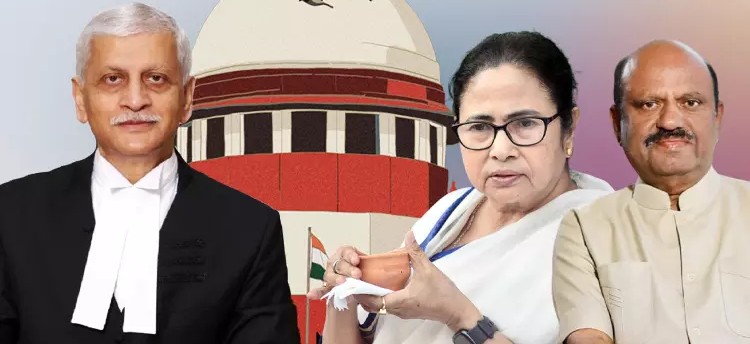
Recording the agreement, the Supreme Court directed West Bengal Chief Minister Mamata Banerjee to formally forward the names of the selected candidates to the Governor, who serves as the Chancellor of state universities. The Governor has been asked to issue the official notifications to complete the appointment process.
The court emphasised that the appointments should be processed expeditiously to ensure that academic and administrative work in the universities does not suffer further disruption.
Three Universities Sent Back to Lalit Committee
However, consensus could not be achieved for three universities North Bengal University, Maulana Abul Kalam Azad University of Technology, and Netaji Subhash Open University. Given the divergent views of the State government and the Governor on the proposed names, the court decided to refer these cases back to the Search-cum-Selection Committee.
The committee, headed by former CJI Justice UU Lalit, has been granted discretion to either recommend a fresh panel from the existing candidates or initiate an entirely new selection process.
Four-Week Timeline for Resolution
The Supreme Court requested the Justice Lalit-led committee to examine all material and representations submitted by the parties and endeavour to arrive at a decision within four weeks. The court noted that this flexibility was necessary to ensure fairness and transparency in the selection process.
“We leave it to the discretion of the committee to recommend a fresh panel or initiate a new selection,” the Bench observed, underlining the committee’s independence.
Background of the VC Appointment Dispute
The case arises from a prolonged standoff between the West Bengal government and the Governor over vice-chancellor appointments across 36 state-run universities. The disagreement had led to multiple institutions functioning without regular heads, impacting academic planning and governance.
Following Supreme Court intervention and the constitution of the Justice UU Lalit committee, appointments for 25 universities were finalised in phases. With the latest order, the number of unresolved cases has now been reduced to three.
Significance for Higher Education Governance
Legal experts say the court’s approach balances constitutional roles by encouraging consensus while preserving institutional autonomy through an independent selection mechanism. The decision is expected to stabilise university administration in West Bengal ahead of the next academic cycle.