

Background of the Reference
The reference stems from the Court’s April 8 ruling in a case filed by the Tamil Nadu government, which held that while Article 200 of the Constitution does not specify a time limit for Governors to act on bills, indefinite delays were unconstitutional. The Court had directed that Governors must act within a “reasonable time,” and further ruled that the President must decide on bills within three months under Article 201, recording reasons for any delay.
This judgment introduced the concept of “deemed assent” if no action was taken within the prescribed period, a principle that the Presidential reference has now questioned as contrary to the constitutional scheme.
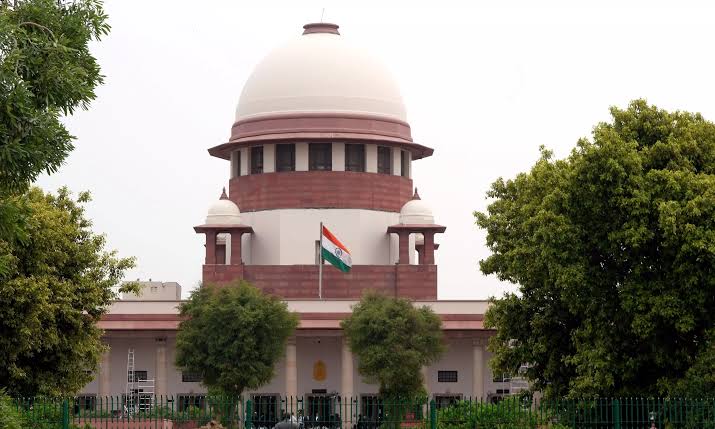

During arguments, Solicitor General Tushar Mehta defended the autonomy of constitutional authorities, asserting that Article 200 provides wide discretionary powers to Governors that are “essentially non-justiciable.” He warned against judicially imposed deadlines, stressing that “political maturity and statesmanship” were intended solutions when Governors delay action.
The Central government has backed the reference, arguing that Governors represent the will of the Union and cannot be treated as mere ceremonial figures bound by strict timelines. However, States like Tamil Nadu and Kerala have opposed the reference, calling it a disguised appeal against the Court’s earlier judgment and urging the Bench to return it unanswered.
Judicial Concerns Over Indefinite Delay
The Bench raised sharp questions over the possibility of Governors indefinitely withholding bills, pointing out that such inaction would undermine elected State governments. Justice Narasimha asked whether a process could be devised to ensure bills are not stalled indefinitely, while Justice Kant observed that the Court does retain interpretative powers to prevent constitutional deadlocks.
CJI Gavai noted, “If a constitutional functionary does not discharge functions without valid reasons, should the court say we are powerless?” He stressed that the Court, as a constitutional organ, could not ignore wrongs that disrupt the democratic process.
Key Constitutional Arguments
Mehta cited precedents, including the Shamsher Singh and Nabam Rebia rulings, to argue that Governors enjoy limited discretionary powers in specific contexts, such as reporting breakdown of constitutional machinery under Article 356 or refusing assent in rare situations. However, he insisted that courts cannot prescribe procedural timelines where the Constitution is silent.
The Bench, however, pressed whether silence in the Constitution can be read to permit “dead ends,” emphasizing that democracy requires functional clarity between institutions.
What Lies Ahead
The Court’s opinion, though advisory under Article 143, is expected to have a significant impact on Centre-State relations and the role of Governors. At stake is the balance between judicial oversight, constitutional discretion, and political accountability.
The matter will continue in subsequent hearings. Observers say the outcome could reshape the interpretation of Articles 200 and 201, especially regarding whether courts can fill gaps where the Constitution does not lay down specific timelines.