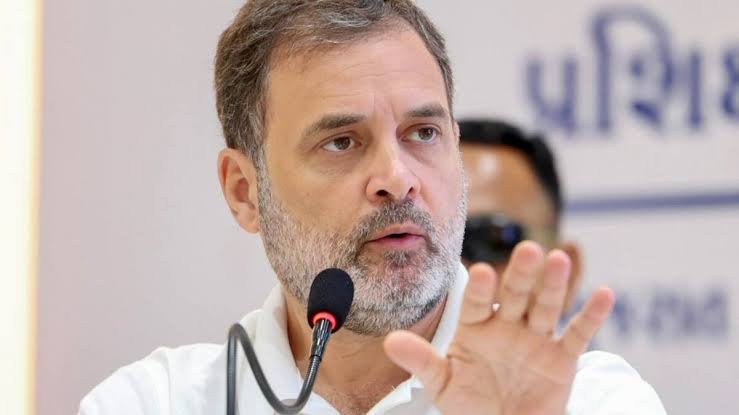
The Supreme Court of India has issued a sharp rebuke to Leader of Opposition Rahul Gandhi over his controversial statement alleging Chinese occupation of Indian territory. The Court granted him an interim stay in a criminal defamation case but not without raising serious concerns about the credibility and implications of his remarks.
What Triggered the Controversy?
Rahul Gandhi had, during a public address in his Bharat Jodo Yatra on December 16, 2022, alleged that China had occupied 2,000 square kilometres of Indian land. He criticized both the Indian government and media for staying silent, calling the incident a threat to national sovereignty.
This sparked outrage. A defamation complaint was soon filed by former BRO Director Uday Shankar Srivastava in Lucknow. He accused Gandhi of defaming the Indian Army and spreading false information that could damage national morale.
 What the Supreme Court Said
On August 4, 2025, the Supreme Court bench of Justice Dipankar Datta and Justice AG Masih heard the case. Although they agreed to stay the proceedings for three weeks, the judges did not hold back their disapproval of Gandhi’s statements.
Justice Datta asked pointedly, “How do you know 2,000 square kilometres were occupied? Were you there?”
He further remarked, “If you’re a true Indian, you wouldn’t say all this.”
Gandhi’s Defence and Singhvi’s Arguments
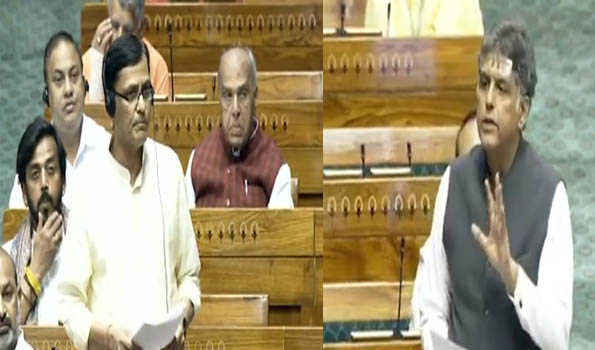
Senior Advocate Dr Abhishek Manu Singhvi, appearing for Gandhi, argued that as an opposition leader, Gandhi had the right to raise issues. He stressed that Gandhi was quoting publicly available reports and raising national concerns.
“If opposition leaders can’t question the government, democracy fails,” Singhvi said. He emphasized that Gandhi’s statements were political in nature and not aimed at maligning the Indian Army.
Judicial Pushback
The bench wasn’t fully convinced. Justice Datta reiterated that Parliament was the proper forum to raise such concerns, not social media. He expressed concern over the lack of credible proof behind such claims, stating, “Why make statements without basis?”
Singhvi admitted the wording could have been better but called the complaint an attempt to harass his client.
What the Case Is About
The case stems from alleged remarks during Gandhi’s Bharat Jodo Yatra about a violent clash between Indian and Chinese forces in Arunachal Pradesh on December 9, 2022. Gandhi allegedly said, “The Chinese army is thrashing our soldiers, and the Indian press won’t even ask questions.”
These remarks were labeled defamatory and damaging to the Indian Army’s image. The complaint claims it hurt the morale of soldiers and their families.
Allahabad High Court’s Stand
Earlier in May 2025, the Allahabad High Court had refused to quash the defamation proceedings. Justice Subhash Vidyarthi stated that freedom of speech does not include the right to defame the Indian armed forces.
Gandhi then moved the Supreme Court challenging the High Court’s decision, arguing that the complainant wasn’t directly defamed and lacked locus standi.
Section 223 BNSS Argument
Singhvi invoked Section 223 of the Bharatiya Nagarik Suraksha Sanhita (BNSS), claiming that Gandhi should have been heard before cognizance was taken. However, the bench noted this argument was not raised in the High Court and questioned the timing.
Despite this lapse, the Court issued a notice on the Special Leave Petition and stayed the criminal proceedings for three weeks.
Key Takeaways from the Hearing
- SC questioned the factual basis of Gandhi’s remarks.
- Interim relief was granted, but criticism remained sharp.
- Singhvi emphasized political freedom and lack of intent to defame.
- SC stressed that such issues should be raised in Parliament, not public rallies or social media.
- Gandhi’s legal team failed to raise key procedural points earlier.
Wider Political Impact
This case adds another layer to the already tense relationship between the judiciary and political class. It also raises questions about how much freedom opposition leaders truly have in critiquing the government and military.
Gandhi’s supporters say he’s being targeted for holding the government accountable. Critics argue that irresponsible statements can hurt national security and public confidence in the armed forces.
Conclusion: A Line Between Dissent and Defamation
The Supreme Court’s rebuke highlights a key tension in Indian democracy — the fine line between dissent and defamation. While leaders have the right to criticize, they also bear a responsibility to verify and contextualize their claims.
As the matter unfolds in court, it will test not just Gandhi’s political standing, but also the boundaries of free speech in India’s ever-changing political climate.