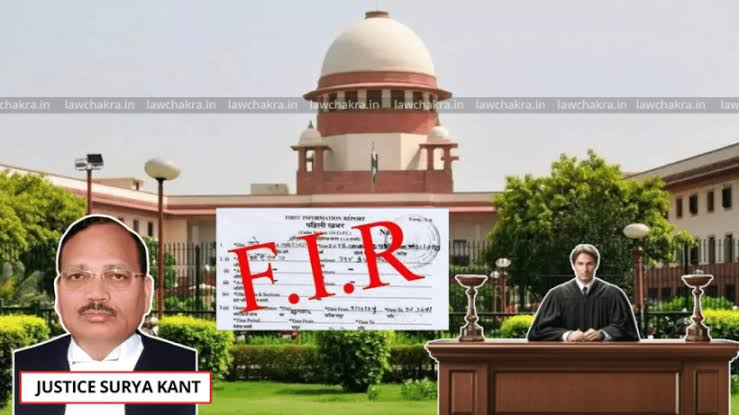
Supreme Court Questions Attempt to Prosecute Judges
The petitioner’s counsel had requested the apex court to order an FIR against judges who had allegedly ruled unfairly in a case where the petitioner claimed to be a topper in an exam. The Bench questioned the legal foundation of such a demand.
 “Under What Law Can Judges Be Prosecuted?”
The court was quick to point out the flawed logic behind the plea. Justice Surya Kant asked, “Tell me under which law judges are liable to be prosecuted for giving judgments against you?”
He further added that merely because a judgment does not go in someone’s favor, it cannot be termed illegal or perverse, let alone used to justify criminal prosecution. The Court stressed that judicial independence is a cornerstone of the Indian legal system.
Demand for FIR Raises Serious Concerns
The plea argued that sitting judges were allegedly complicit in unfair practices. The lawyer stated that since the petitioner was the highest scorer, any decision contrary to his merit must be reviewed. He also insisted that such sensitive matters should be handled by a Constitution Bench.
However, the Bench remained unconvinced. It emphasized that filing criminal cases against judges for their rulings sets a dangerous precedent and violates the basic principles of judicial immunity and separation of powers.
Amicus Curiae Appointed for Legal Clarity
Given the complexity of the issue and the petitioner’s strong claims, the Supreme Court decided to appoint a neutral legal expert. Senior Advocate Dr. S Muralidhar was named as amicus curiae—a friend of the court—to assist with the legal intricacies.
The Court directed that the complete paper book of the plea be handed over to Dr. Muralidhar for a comprehensive review. His inputs are expected to provide clarity on whether any elements of the petition merit legal consideration.

Judicial Independence Under Spotlight
The Supreme Court’s reaction underscores the importance of maintaining judicial dignity. Attempts to criminalize judgments not only undermine the authority of the judiciary but also threaten the delicate balance of power in a democracy.
Legal experts have pointed out that judges enjoy constitutional immunity for decisions made in their official capacity. Filing FIRs against them could have chilling effects, deterring honest judges from ruling fearlessly.
Case Highlights Need for Legal Awareness
This case has sparked debates among legal circles and the public. Many believe it showcases a growing misunderstanding about judicial processes among litigants. Others see it as an attempt to pressure the judiciary for favorable outcomes.
Constitutional scholar Professor G Mohan said, “Judges are accountable through legal appeals and review processes—not through police complaints.”
What’s Next?
The Court has not dismissed the plea outright but has taken a cautious path by involving a respected senior advocate. A hearing will be scheduled after Dr. Muralidhar submits his report. The outcome could set a precedent regarding the legal boundaries of judicial accountability.
Final Thoughts
In a democracy, institutions must protect their integrity. The Supreme Court’s stand sends a clear message: the independence of the judiciary is non-negotiable. While litigants have a right to appeal, weaponizing criminal law against judges endangers the foundation of justice.
As the case proceeds, all eyes will be on how the Court balances free expression, judicial review, and constitutional safeguards for its judges.