
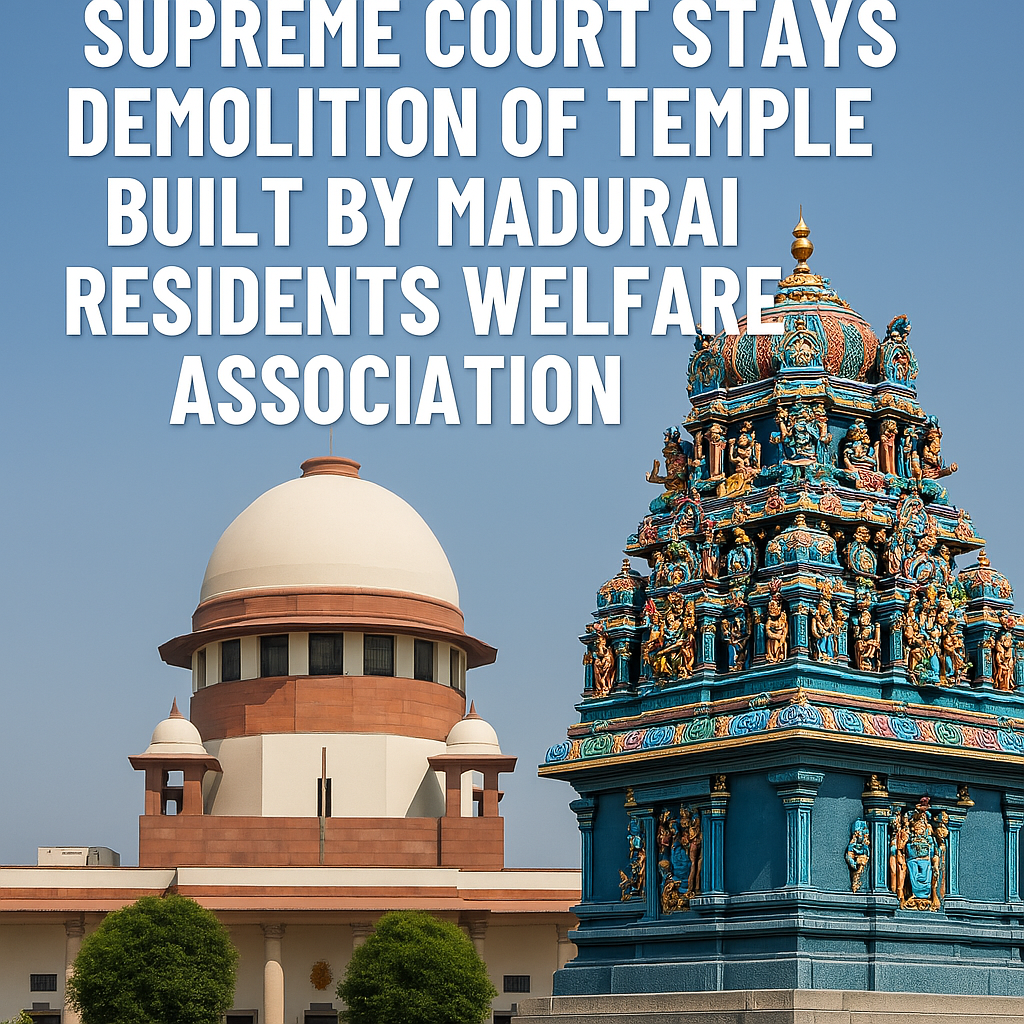
SC Halts Demolition Of Temple Built By Madurai Residents
Background of the Dispute
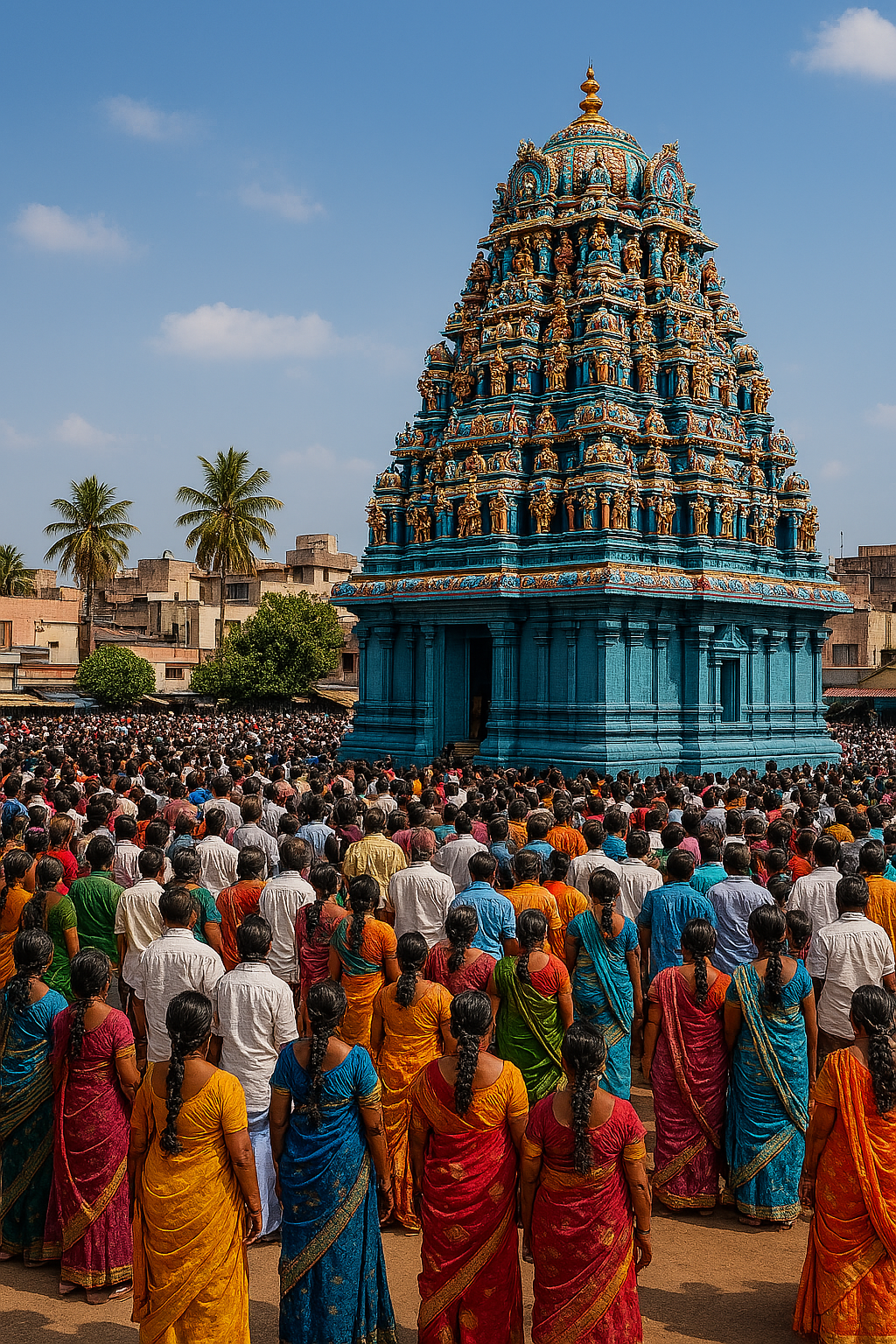
The dispute arose after the Madras High Court ordered the demolition of the temple, claiming it was illegally constructed on land reserved as Open Space Reservation (OSR). Justice S.M. Subramaniam ruled that the apartment owners had failed to provide any legal license or permission for constructing the temple under the Tamil Nadu Town and Country Planning Act, 1971.

Arguments in Supreme Court
Senior Advocate Dama Seshadri Naidu, appearing for the Welfare Association, argued that the High Court gave its verdict without hearing either the petitioners or the respondents. It was further submitted that no opportunity was granted to file pleadings before passing such a severe order.
“The High Court has directed the demolition of the temple without giving any party the chance to respond or provide documents,” said Advocate Naidu.
Supreme Court’s Interim Relief
The apex court acknowledged the merit in the petitioner’s concerns and issued notice to the respondents. The matter has been made returnable in eight weeks. Until then, demolition proceedings shall remain stayed.
Legal and
Community Implications
This case sheds light on the conflict between religious sentiments of communities and zoning laws designed for urban planning. While the OSR rule ensures essential open spaces in cities, community initiatives like temple building often spark disputes, especially when prior permissions are not obtained.
What Lies Ahead?
The matter will now be further examined by the Supreme Court in detail. A final ruling will determine whether the structure can remain or must be removed in compliance with the law.
Case Title: Visthara Welfare Association Viswa vs R. Mayilsamy
SLP(C) No.: 16898/2025