
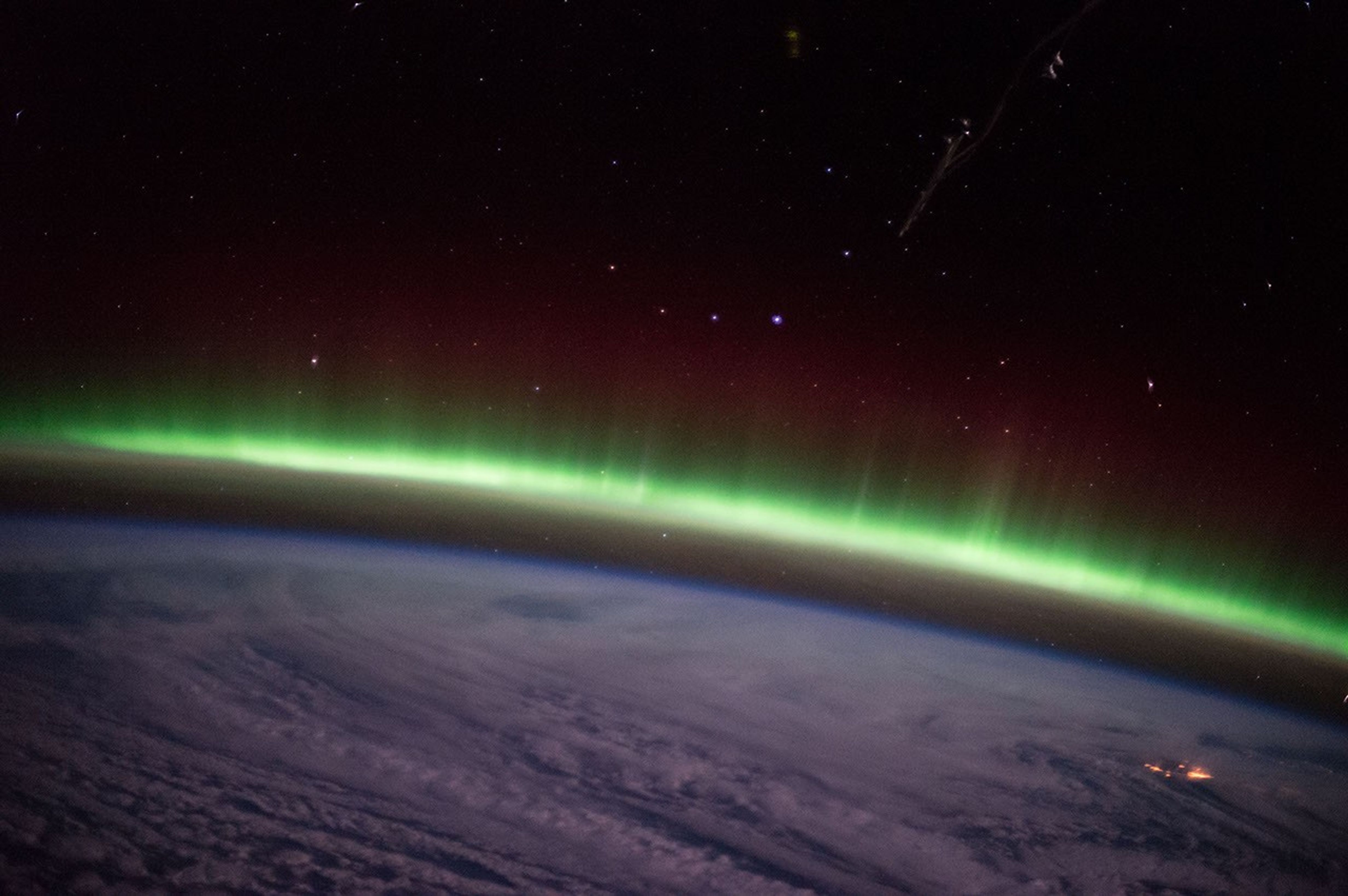
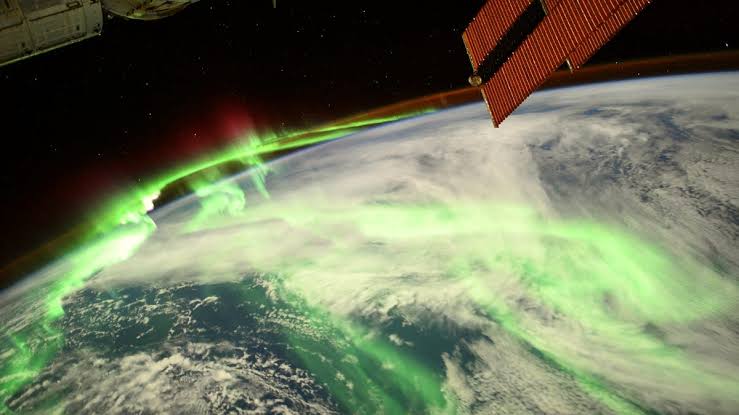

Scientists have long understood that auroras occur when energetic electrons plunge into Earth’s upper atmosphere. What remained unclear, however, was how the electric fields that accelerate these particles are continuously maintained in space, where energy would normally dissipate rapidly.
The new study demonstrates that Alfvén waves act as a constant energy supply. These waves propagate along magnetic field lines, transferring energy from distant regions of Earth’s magnetosphere into the auroral acceleration zone, effectively replenishing the electric fields required to sustain auroras.
Satellite Data Confirms the Discovery
To validate their findings, researchers analysed extensive satellite data from NASA missions, including the Van Allen Probes and the THEMIS spacecraft. These satellites provided high-resolution measurements of particle motion and electric fields in near-Earth space.
The data showed consistent energy transfer from Alfvén waves to charged particles in auroral regions. This confirmed that the waves are not a transient phenomenon but a continuous power source, operating like a space-based electrical generator above Earth.
Implications Beyond Earth
According to Professor Zhonghua Yao of HKU’s Department of Earth and Planetary Sciences, the findings go far beyond explaining Earth’s auroras. The same physical processes are likely at work around other magnetised planets, including Jupiter and Saturn, which display even more powerful auroral activity.
“This discovery offers a universal framework for understanding auroras across the solar system,” Professor Yao said. “It bridges Earth-based observations with planetary exploration and deepens our understanding of space plasma environments.”
Interdisciplinary Global Collaboration
The research highlights the importance of interdisciplinary and international collaboration. While the UCLA team, led by Dr Sheng Tian, contributed deep expertise in Earth’s auroral physics, the HKU team brought valuable insights from planetary magnetospheres.
This combined approach allowed scientists to apply lessons from distant planets to near-Earth space, creating a more complete picture of how magnetic fields and plasma interact throughout the universe.
Why This Matters
Understanding how energy flows through Earth’s magnetosphere is not only of academic interest. Space weather phenomena driven by similar processes can affect satellite operations, GPS systems, and power grids on Earth.
Improved models of auroral energy transfer may help scientists better predict space weather events, supporting efforts by agencies such as ISRO and NASA to protect critical space-based infrastructure.