 Launch and Capacity Building
The second round of pan-India dolphin population estimation and its updated protocol was formally launched earlier by Union Environment Minister Shri Bhupendra Yadav during Wildlife Week at Dehradun. As part of preparations, a regional training workshop for forest staff from 13 districts of Uttar Pradesh was held at Bijnor.
Officials said similar training sessions will be conducted at regular intervals for every 10 to 15 districts as the survey progresses, ensuring uniform methodology and capacity building of frontline staff across states.
Scientific Approach and Technology Use
The survey commenced with 26 trained researchers deployed across three boats, systematically recording ecological parameters and habitat conditions. Advanced tools such as hydrophones are being used for underwater acoustic monitoring to detect dolphin presence even in low-visibility conditions.
This scientific approach is expected to provide more accurate population estimates while also documenting threats, river health indicators and associated biodiversity.
Survey Coverage Across River Systems
In the first phase, the survey will cover the main stem of the Ganga from Bijnor to Ganga Sagar, along with stretches of the Indus River system. The second phase will expand to include the Brahmaputra, tributaries of the Ganga, the Sundarbans delta and select river systems in Odisha.
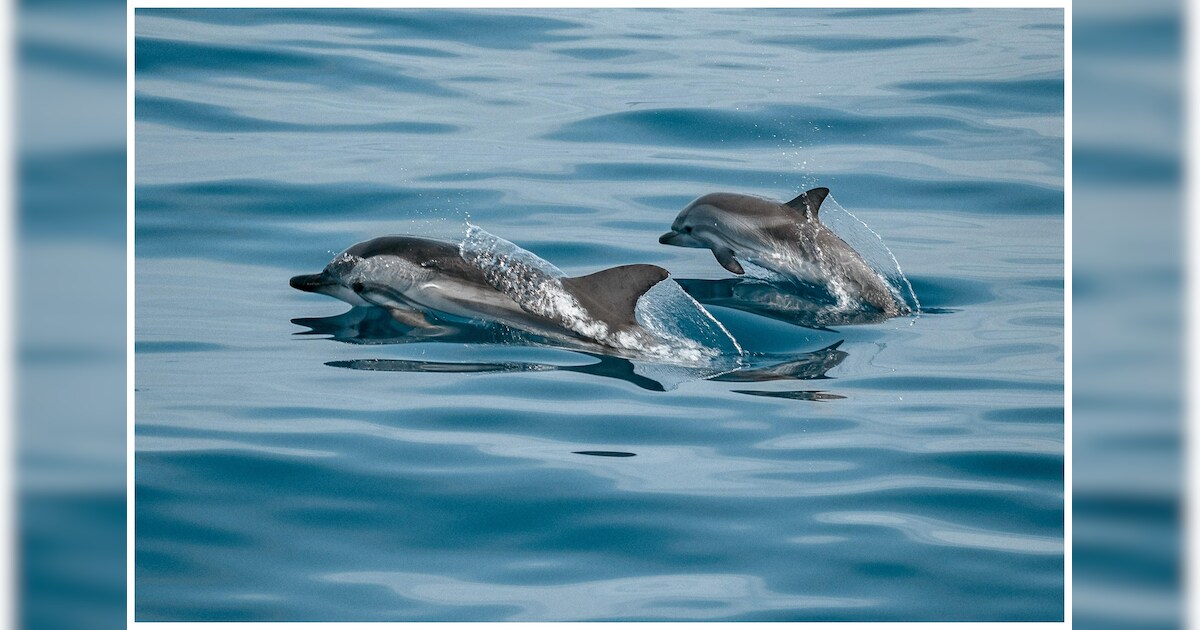
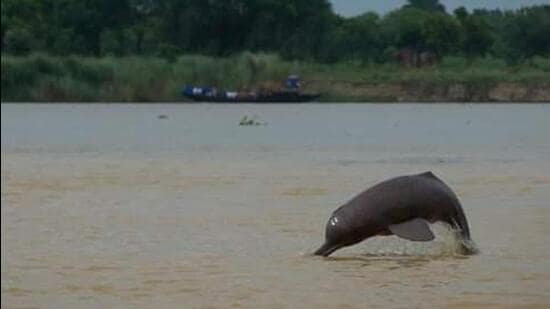
In addition to the Ganges River Dolphin, the survey will assess populations of the Indus River Dolphin and, for the first time on a national scale, the Irrawaddy Dolphin in the Sundarbans and coastal Odisha.
Learning from the First Nationwide Survey
The previous nationwide dolphin estimation exercise conducted between 2021 and 2023 recorded an estimated population of around 6,327 riverine dolphins across India. This included Ganges River Dolphins across the Ganga, Yamuna, Chambal, Gandak, Ghaghara, Kosi, Mahananda and Brahmaputra river systems.
A small but significant population of Indus River Dolphins was also recorded in the Beas River. Uttar Pradesh and Bihar accounted for the highest dolphin numbers, followed by West Bengal and Assam, highlighting the critical role of the Gangetic basin.
Expanded Scope Under Project Dolphin
Officials said the second survey follows the same standardized methodology as the earlier exercise but with expanded spatial coverage and additional operational areas. The inclusion of the Irrawaddy Dolphin is expected to provide crucial baseline data for conservation planning.
The survey will also assess habitat quality, human-induced threats and the status of other conservation-priority aquatic species, supporting evidence-based policy decisions for river and estuarine ecosystems.
Strengthening River Conservation
The findings from the survey are expected to play a key role in refining conservation strategies under Project Dolphin, India’s flagship initiative for protecting riverine dolphins and their habitats.
By generating robust scientific data, the programme aims to support long-term ecological sustainability, improve river management practices and strengthen coordination between conservation agencies and state governments.