 Regulatory Oversight Strengthened
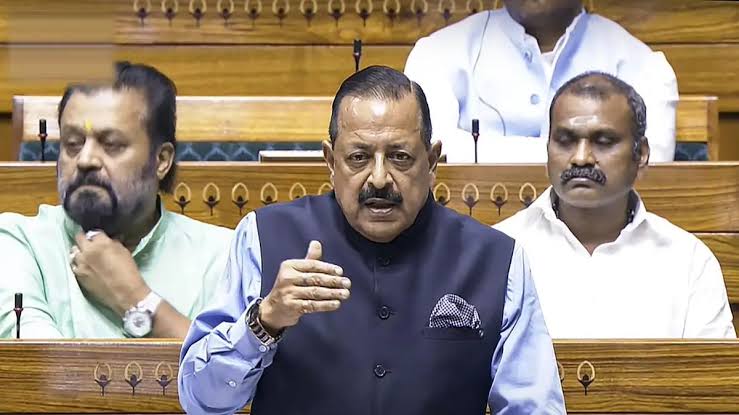
Dr Jitendra Singh explained that the SHANTI Bill consolidates provisions from the Atomic Energy Act, 1962 and the Civil Liability for Nuclear Damage (CLND) Act, while also granting statutory status to the Atomic Energy Regulatory Board (AERB). Bringing the AERB into the parent legislation, he said, strengthens regulatory oversight and aligns India’s nuclear governance with global best practices.
The Minister rejected claims that regulatory powers are being weakened, asserting that the Bill reinforces accountability and transparency across the nuclear sector.
Safety Standards Remain Non-Negotiable
Addressing safety-related apprehensions, Dr Singh stated that India’s nuclear safety framework continues to be governed by the long-standing principle of “safety first, production next.” He outlined a rigorous inspection regime that includes quarterly inspections during construction, biannual checks during operation, five-yearly licence renewals, and enhanced supervisory powers for the AERB.
He further informed the House that India’s nuclear facilities are located away from major seismic fault zones and operate under safety norms aligned with International Atomic Energy Agency parameters.
No Cancer Risk from Nuclear Plants
Responding to public health concerns, the Minister categorically stated that there is no scientific evidence linking Indian nuclear power plants to cancer risks. Citing radiation emission data measured in micro-sieverts, he said levels recorded at facilities such as Kudankulam, Kalpakkam, Rawatbhata and Tarapur are far below globally prescribed safety limits.
Dr Singh added that India has significantly upgraded cyber security in the nuclear sector through encryption, secure coding, regular audits, malware filtering and multi-layered digital protection.
Government Retains Control Over Strategic Assets
Clarifying fears of privatisation, Dr Jitendra Singh emphasised that while certain exploration activities may involve private participation under defined conditions, uranium mining beyond specified thresholds will remain exclusively under government control. Spent fuel management, he said, will also remain entirely with the government under clearly defined long-term storage and handling protocols.
Strategic materials including source material, fissile material and heavy water will continue to be tightly regulated by the state, ensuring that national security interests are fully protected.
Liability, Compensation and Citizen Redressal
On the issue of liability, the Minister explained that the Bill introduces graded liability caps to encourage participation by smaller investors without compromising victim compensation. In cases where damages exceed operator liability, full compensation mechanisms through government-backed funds and international conventions are предусмотрed.
The definition of nuclear damage has been expanded to explicitly include environmental harm. Additionally, the proposed Atomic Energy Redressal Commission will offer a faster dispute-resolution mechanism for citizens without restricting access to civil courts or higher judiciary.
Nuclear Science Beyond Power Generation
Dr Jitendra Singh highlighted that nuclear science today plays a critical role beyond electricity generation, contributing to healthcare, agriculture, food preservation and cancer treatment. He cited advances in nuclear medicine for conditions such as childhood leukaemia and prostate cancer, supported by institutions like the Tata Memorial Centre.
Liberalising research participation under the new framework, he said, would accelerate innovation across these sectors while retaining strict safety oversight.
India’s Long-Term Nuclear Energy Roadmap
Outlining India’s future plans, the Minister said the country has already achieved nearly 9 GW of nuclear power capacity. Targets have been set at 22 GW by 2032, 47 GW by 2037, 67 GW by 2042 and 100 GW by 2047, which would account for nearly 10 per cent of India’s total energy needs.
Nuclear energy, he noted, will be indispensable in meeting rising power demands driven by artificial intelligence and digital infrastructure, as it provides reliable, round-the-clock clean energy unlike intermittent sources.