
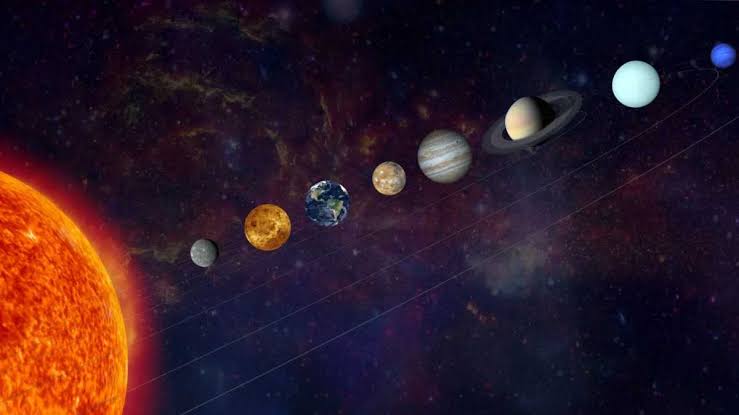
What Is a Six-Planet Alignment?
A planetary alignment occurs when several planets appear to line up from Earth’s perspective. While the planets are not physically arranged in a straight line in space, they orbit roughly along the same plane the ecliptic making such visual alignments possible.
This particular event features six of our solar system’s planets visible within the same general region of the sky. Four of them Mercury, Venus, Jupiter and Saturn can be seen with the naked eye under clear conditions. Uranus and Neptune may require binoculars or a small telescope for proper viewing.
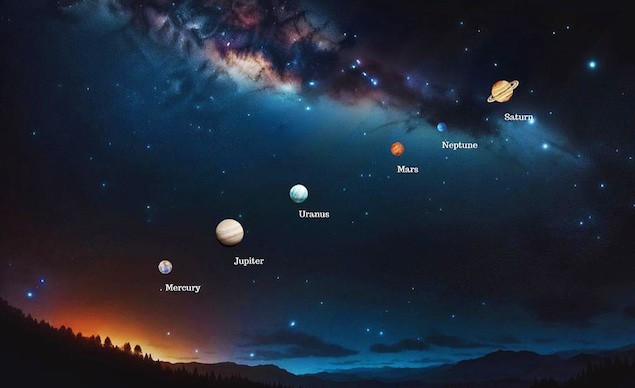

The planetary parade is best observed shortly after sunset. Experts advise looking toward the western horizon once the sky turns dark but before the planets set. The exact timing may vary slightly depending on your city and local weather conditions.
Urban observers should try to move away from bright city lights for clearer visibility. Rooftops, balconies with a clear western view, or open grounds can provide ideal vantage points.
Which Planets Will You See?
Venus and Jupiter are expected to shine the brightest, making them the easiest to spot. Saturn may appear slightly dimmer but still visible without optical aid. Mercury, being closer to the horizon, may require careful scanning.
Uranus and Neptune are fainter and generally invisible to the naked eye. Amateur astronomers with binoculars or telescopes can attempt to locate them with the help of sky-mapping apps.
Why This Event Is Special
Planetary alignments involving multiple bright planets are relatively uncommon. While smaller groupings happen more frequently, six-planet parades are rarer and generate global interest.
Such alignments not only excite hobbyists but also help create public awareness about astronomy. Institutions like the Indian Space Research Organisation (ISRO) regularly promote space education initiatives through their official portal at https://www.isro.gov.in.
No Special Equipment Needed Mostly
One of the most exciting aspects of this six-planet alignment is that most planets can be seen without advanced equipment. Clear skies and patience are often enough.
However, using a basic pair of binoculars can enhance the experience significantly. A small telescope can reveal additional details, such as Saturn’s rings or Jupiter’s moons.
Weather and Visibility Conditions
Clear skies are crucial for viewing. Regions experiencing haze, pollution or cloud cover may find visibility reduced. Checking local weather forecasts before heading out is advisable.
Air pollution levels in major cities can sometimes limit clarity near the horizon. Choosing a slightly elevated location can improve chances of spotting Mercury and Saturn.
A Moment to Look Up
In a fast-paced digital age, events like this six-planet alignment offer a rare pause to reconnect with the cosmos. The sight of multiple planets sharing the same stretch of sky serves as a reminder of Earth’s place within a vast solar system.
For students, families and amateur astronomers, tonight presents an accessible and memorable astronomical event. With the right timing and a clear sky, India’s night horizon promises a truly stunning planetary parade.