
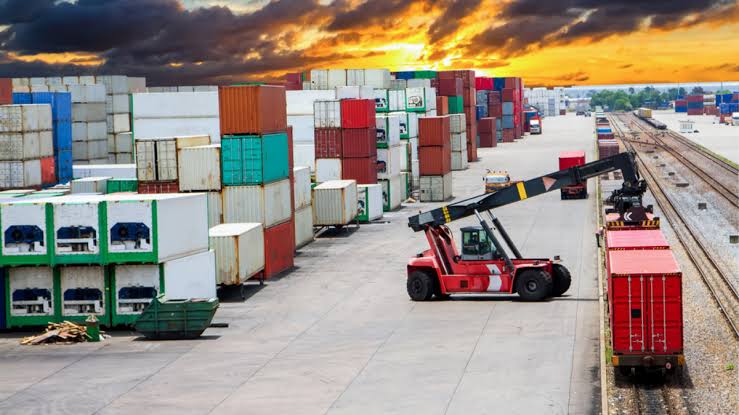
Operation Sindoor Showed the Power of Logistics
“Wars today are not just won with bullets, but with timely delivery,” said Defence Minister Rajnath Singh, addressing students at Gati Shakti Vishwavidyalaya’s (GSV) convocation. Speaking virtually, he credited seamless logistics management for the success of Operation Sindoor.
From troop mobilization to on-time equipment delivery, logistics made the difference. Singh called it the “deciding factor” in the operation’s success, proving logistics is not just support—it’s strategy.


“Logistics is the power that transforms chaos into control,” he declared. Whether during a war, disaster, or a pandemic, the nation that maintains a strong supply chain stands secure and capable.
He urged India to view logistics as a core component of national power—not merely a support system, but a strategic enabler.
PM GatiShakti: India’s Infrastructure Engine
The Defence Minister praised the PM GatiShakti National Master Plan for revolutionizing India’s infrastructure. Under this visionary initiative, seven critical pillars—Railways, Roads, Ports, Airports, Waterways, Mass Transport, and Logistics Infrastructure—are being integrated on a single digital platform.
This approach, combining policy reforms with data-driven planning, is cutting logistics costs, increasing efficiency, and making India globally competitive.
Smart Logistics, Smart Nation
India’s logistics sector contributes significantly to GDP. Singh cited examples from the COVID-19 pandemic, where fast, reliable logistics enabled the delivery of oxygen cylinders, vaccines, and medical teams across the country. Logistics saved lives—and stabilized the nation.
According to the National Logistics Policy, India aims to reduce logistics costs from 13–14% of GDP to levels seen in developed countries. This shift will make Indian products more competitive in global markets, fuel innovation, and create jobs.
Gati Shakti Vishwavidyalaya: Where Vision Meets Talent
Established in 2022 under the Ministry of Railways, GSV has become a hub for future-ready talent in transport and logistics. Its first Chancellor, Union Minister Shri Ashwini Vaishnaw, emphasized GSV’s role in producing problem-solvers, innovators, and leaders for India’s growth story.
“GSV is more than an institution—it’s a mission,” said Rajnath Singh. “The ‘gati’ (speed) with which youth are giving ‘shakti’ (power) to the nation is commendable.”
Logistics in the Era of Digitization
Singh stressed the need for modern tools—digitization, automation, real-time tracking, and AI-enabled forecasting. He called these technologies “national necessities.”
“No country can become developed until goods, services, and people move fast and easily,” he added, linking logistics speed to India’s 2047 Viksit Bharat vision.
Education for Economic Empowerment
At the event, 194 students received degrees in logistics and transport-related fields. Singh encouraged them to become creators of solutions, not just job seekers. Their role is to modernize India’s systems—building logistics that are faster, smarter, and greener.
With programs focused on AI, sustainability, and multimodal transport, GSV is preparing India for a new era of mobility.
Building a Resilient India
India’s logistics sector is undergoing a transformation. Policy, technology, and education are working in sync. The goal is clear—reduced costs, faster delivery, and global competitiveness.
As Rajnath Singh highlighted, power in the 21st century is measured not just by weapons, but by how fast you can move your resources. India’s future, its security, and its economic strength depend on how well we master smart logistics.