
Focus on Rescue and Rehabilitation
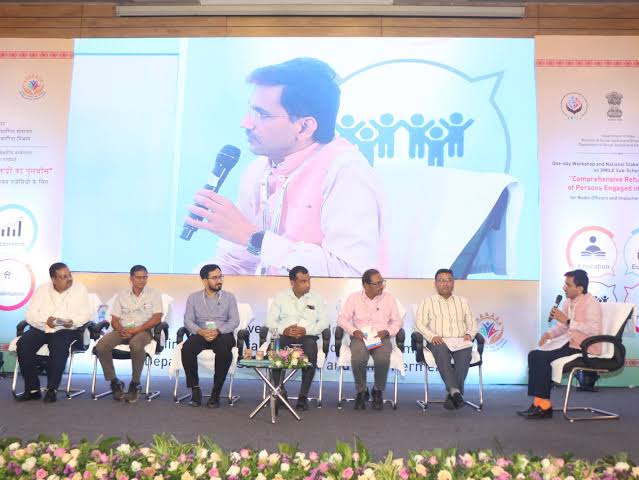
The SMILE Sub-Scheme for Comprehensive Rehabilitation of Persons Engaged in the Act of Begging (SMILE-B) was at the core of the discussion. During the day-long workshop, participants examined strategies and shared best practices to improve outreach, rehabilitation, and reintegration efforts. Technical sessions included real-life case studies and interactive panels covering:
- Rescue operations and outreach interventions
- Livelihood convergence through skill development (NSDC)
- Counselling approaches (led by NISD experts)
- Standard Operating Procedures (SOPs) and implementation models

Former beneficiaries who were rehabilitated under SMILE-B shared emotional accounts of their journeys from street begging to dignified livelihoods. These stories offered a moving glimpse into the programme’s life-changing potential.
Key Statements from Officials
Shri Amit Yadav, Secretary (DoSJE), delivered the keynote, stressing on data-driven implementation, inter-departmental convergence, and continuous training to ensure sustainable change. He reiterated the government’s aim to extend dignity and support to the most marginalized.
Ms. Sonali Ponkshe Vayangankar, Principal Secretary, Social Justice and Empowerment (MP), shared state-level efforts and emphasized the need for collaboration between departments for holistic rehabilitation. Ms. Caralyn K. Deshmukh, Additional Secretary (DoSJE), reaffirmed the Centre’s commitment to a just and inclusive future.
Progress So Far & Future Plans
Launched in October 2023, the SMILE Scheme aims to create sustainable livelihood options for those formerly engaged in begging. As of now, over 22,410 individuals have been identified and 3,400 rehabilitated under the initiative.
Phase 3 of the scheme will expand its reach to 100 cities across 34 States/UTs. The revised cost norms and extended coverage beyond FY 2025–26 were also discussed during the stakeholder consultation session.
Moving Towards a Begging-Free India
Bringing together participants from over 67 districts and 23 States/UTs, the workshop emphasized coordinated planning, skill building, and policy-level integration. The event concluded with a display of products created by rehabilitated individuals, reflecting their new-found independence and self-worth.