
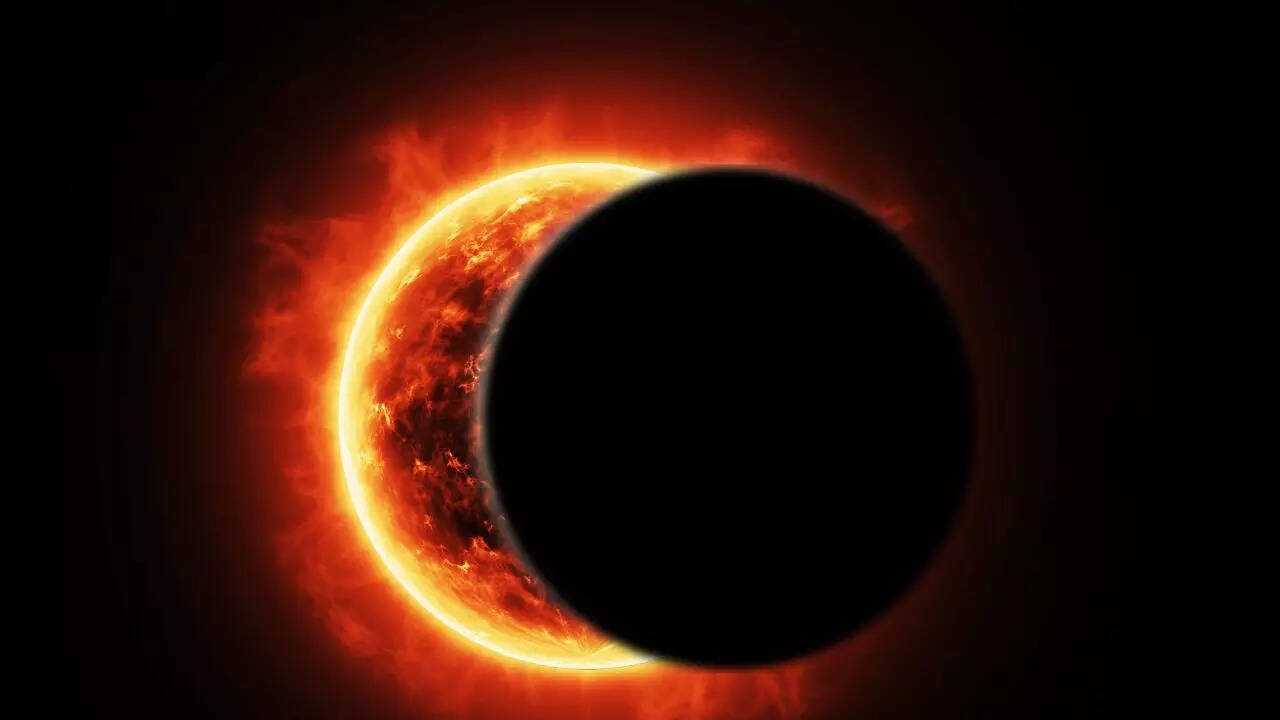
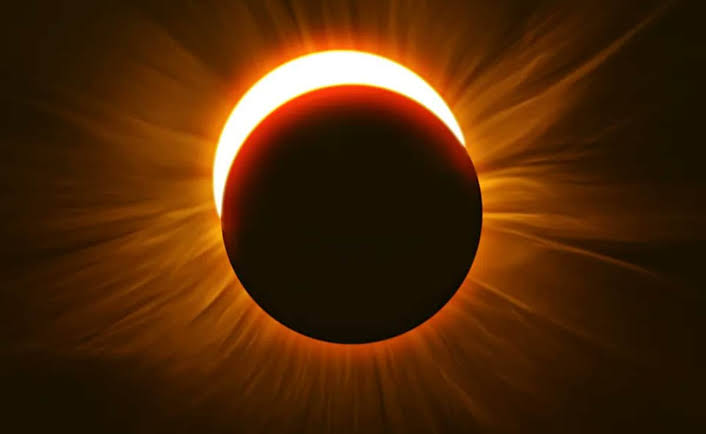

The eclipse will begin at 10:59 pm IST (1:29 pm EDT) and end at 3:23 am IST (5:53 pm EDT). The maximum eclipse phase, when the Moon covers most of the Sun, will occur at 1:11 am IST (3:41 pm EDT).
Where Will the Eclipse Be Visible?
This partial eclipse will be visible in parts of Australia, New Zealand, Antarctica, the Pacific Ocean, and the Atlantic Ocean. Unfortunately, due to timing, the phenomenon will not be visible in India, as it occurs after sunset.
Indian viewers, however, can watch the event via online live streams provided by international observatories and astronomy portals. For reference, ISRO and Space.com regularly share updates on celestial events.
Why Does a Solar Eclipse Happen?
A solar eclipse occurs when the Moon passes between the Earth and the Sun, blocking sunlight partially or completely. In today’s case, it is a partial eclipse, where only a portion of the Sun’s disc will be covered by the Moon.
Safety Guidelines for Watching the Eclipse
Experts strongly advise against looking at the Sun directly without proper protection. Specialized solar eclipse glasses or viewers must be used, as regular sunglasses are insufficient and can cause severe eye damage.
Another safe method is to use indirect viewing techniques, such as pinhole projectors or live online broadcasts.
Upcoming Solar Eclipses
After today’s event, the next solar eclipse will occur on February 17, 2026. It will be an annular eclipse visible in Antarctica, while parts of Africa, South America, and the Indian Ocean will experience a partial eclipse. Later in August 2026, a total solar eclipse will be visible in several regions.