

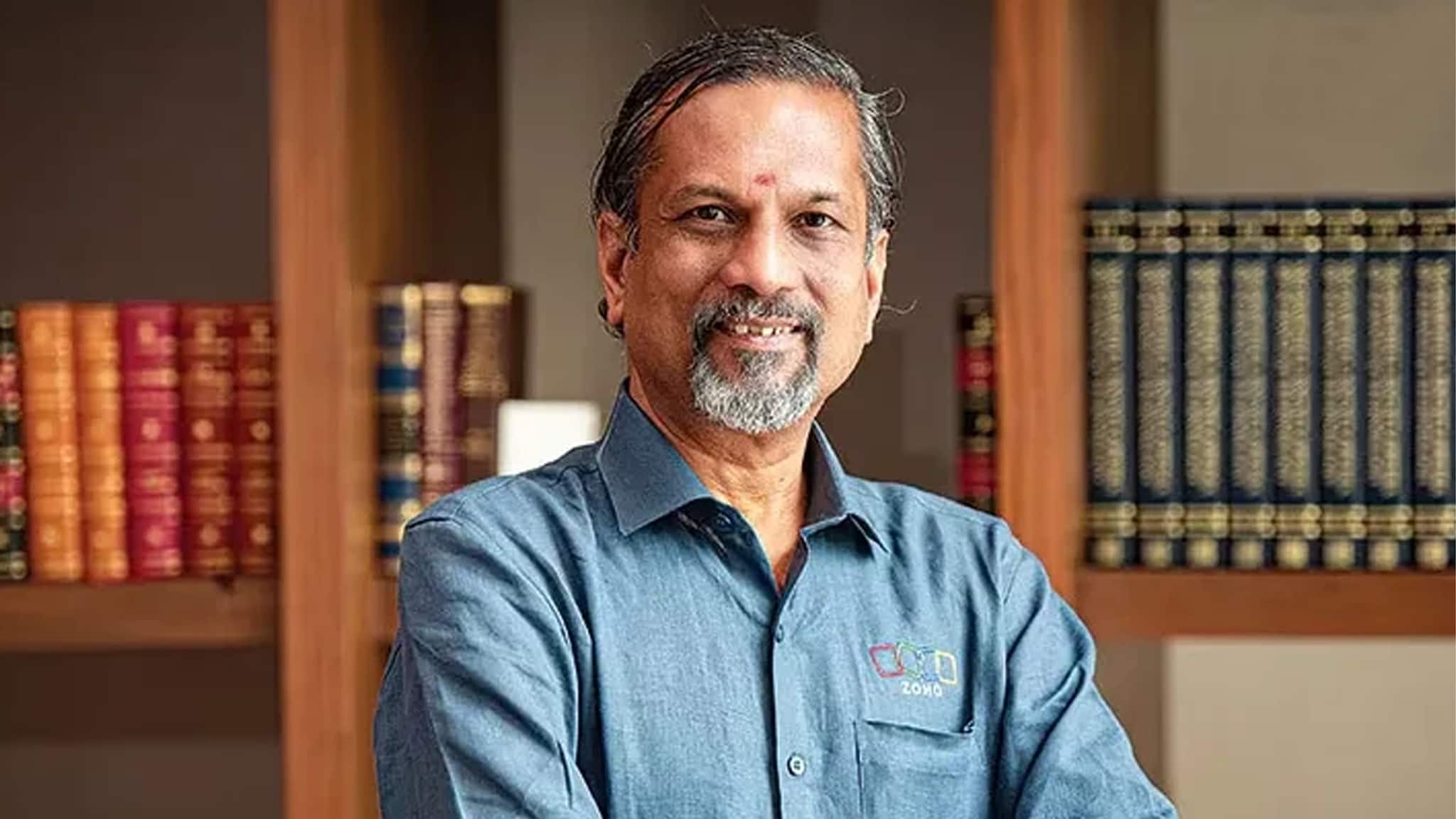

Vembu criticized the long-standing economic frameworks influenced by economists educated at elite Western universities like Columbia, Chicago, and Harvard. According to him, these policies encouraged India to over-rely on the service sector and import most of its technological needs.
“We got very poor economic advice from economists trained in the West. They told us to focus only on services and buy everything else for money. But what is money in a global system built on imbalance?” he remarked.
He stressed that India must balance its trade, ensuring that “when we buy something, we must also sell something equally valuable.”
Technology as a Strategic Imperative
Calling technology a key weapon in modern geopolitics, Vembu warned that foreign-controlled systems could be “weaponized” against nations that lack self-reliance. He urged India to build its own capabilities across critical domains—semiconductors, artificial intelligence, and communications technology.
“We have to invest in all critical technologies so that nothing can be used against us,” he said. “That’s the only way to trade on equal terms with global powers.”
Learning from Global Instability
Vembu argued that the global financial and trade systems are increasingly fragile, describing them as being built on a “monetary illusion.” He cited the 2008-09 financial crisis as a turning point when the illusion began to fracture but was never properly addressed.
“Even today, the world economy is unstable. The tensions between the US and China are inevitable—one is a massive exporter, the other a massive importer. You cannot sustain that forever,” he explained.
India’s Dual-Track AI Strategy
Vembu’s remarks come as the Indian government pursues a dual-track artificial intelligence (AI) strategy—welcoming foreign companies while nurturing local innovation. At the recent India Mobile Congress, MeitY Additional Secretary Abhishek Singh emphasized that India’s approach to AI is “open and inclusive.”
“We are among the few nations that allow Western companies to operate here while simultaneously building our own capabilities,” Singh noted. The statement aligns with Vembu’s belief in achieving equilibrium between cooperation and independence.
Building a Self-Reliant Future
Vembu acknowledged that India’s path to technological sovereignty will require patience, strategic vision, and national effort. He encouraged policymakers and entrepreneurs to focus on indigenous innovation and value creation rather than short-term economic gains.
“We are heading toward a world where equal trade and technological ownership will decide power. To get there, we must make sacrifices and work hard to build these technologies ourselves,” Vembu concluded.
His views resonate with India’s growing narrative of Atmanirbhar Bharat—a self-reliant nation capable of competing in a multipolar global economy driven by innovation and resilience.