 Why The Court Closed The Case
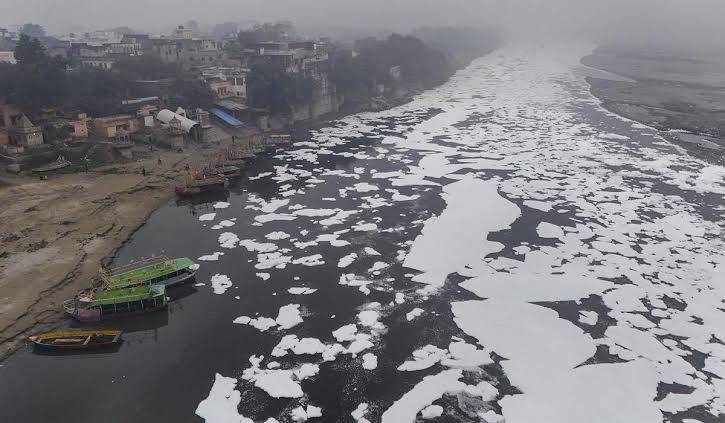
The suo motu proceedings began after concerns were raised over rising pollution levels in the Yamuna river. The Court later expanded the scope to examine untreated sewage discharge into rivers across several states.
However, during the latest hearing, the Chief Justice observed that the case had not seen significant advancement since it was taken up. He remarked that in the absence of updated status reports, it was difficult to assess improvements in river conditions.
The Bench also pointed out that multiplicity of proceedings could disrupt continuity and uniformity of directions. The Court emphasised that environmental governance requires consistent monitoring rather than fragmented litigation.
NGT To Resume Proceedings
In its order, the Court clarified that the National Green Tribunal remains empowered to exercise judicial and quasi-judicial authority in environmental matters. It stated that river pollution cases should be actively pursued before the NGT.
The tribunal is expected to ensure periodic compliance reports and sustained oversight of government agencies responsible for preventing sewage discharge into rivers.
Information about the tribunal’s mandate and environmental jurisdiction is available on the official website of the National Green Tribunal. Broader environmental regulatory frameworks can also be accessed through the Central Pollution Control Board.
Article 21 And Environmental Rights
The Supreme Court reiterated that the right to live in hygienic conditions and enjoy a clean environment is part of the right to life guaranteed under Article 21 of the Constitution of India.
It observed that statutory authorities, including the Central Pollution Control Board and State Pollution Control Boards, are legally obligated to prevent untreated sewage from entering rivers.
The Bench stressed that the NGT’s responsibility does not end with issuing directions. Instead, it must monitor implementation and demand periodic status updates from concerned stakeholders.
Observations From The Bench
During the hearing, the Chief Justice candidly remarked that “much water has flown” since the initiation of the proceedings in 2021. He questioned whether the Supreme Court could realistically monitor every polluted river in the country.
The Court indicated that instead of continuing parallel proceedings, it would have been more effective to direct the NGT at the outset to ensure compliance with environmental norms.
The Bench also noted that the tribunal had earlier closed its original proceedings in haste after the Supreme Court took cognisance of the matter. It suggested that environmental issues demand ongoing supervision rather than one-time adjudication.
Case Background
The case, titled “In Re: Remediation of Polluted Rivers” (SMW(C) No. 1/2021), was initiated by the Supreme Court on its own motion amid growing concerns about river pollution.
By closing the suo motu case and reviving proceedings before the NGT, the Court has effectively streamlined jurisdiction to avoid overlapping orders.
The development underscores the judiciary’s emphasis on institutional efficiency and sustained environmental governance, ensuring that specialised forums handle complex ecological challenges.