
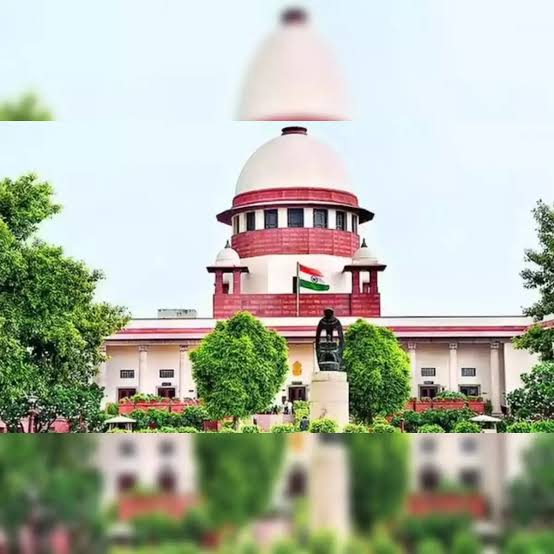
A Bench comprising Justice Prashant Kumar Mishra and Justice Vipul Pancholi observed that the matter involves larger issues relating to the rule of law, independence of investigating agencies, and the delicate balance between the Centre and states. The court issued notice to the respondents and stayed further proceedings, including FIRs registered by West Bengal Police against ED officers.
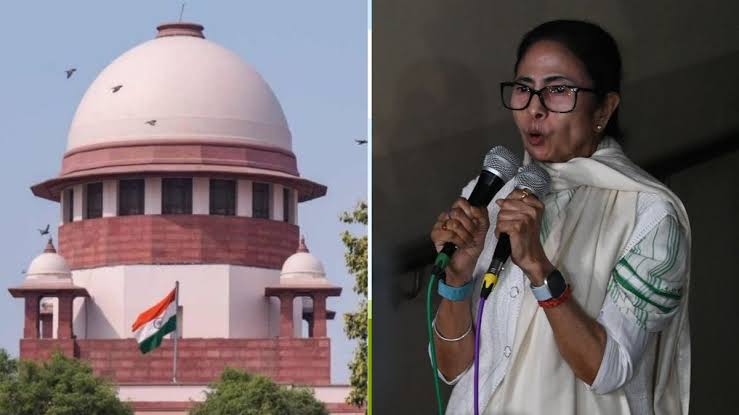

The controversy traces its origins to January 8, when ED officials conducted search and seizure
operations at multiple locations in Kolkata, including premises linked to I-PAC executive Prateek Jain. The searches were part of an ongoing probe into alleged laundering of proceeds of crime arising from the multi-crore coal scam being investigated since 2020.
According to the ED, while the search was underway, senior officers of the West Bengal Police,followed by Chief Minister Mamata Banerjee herself, entered the premises despite requests not to interfere with proceedings conducted under the Prevention of Money Laundering Act (PMLA). The agency alleged that certain documents were taken away from the site, an act it claims severely compromised the investigation.
ED Alleges Pattern of Interference
Representing the ED, the Solicitor General submitted before the court that this was not an isolated incident. He argued that central agencies have repeatedly faced obstruction in West Bengal when probing cases involving influential political figures. The ED further contended that FIRs filed by state police against its officers were intended to intimidate and paralyse lawful investigation.
Citing constitutional provisions and past judgments, the ED sought transfer of the probe to the Central Bureau of Investigation (CBI),
arguing that a fair investigation by state authorities was unlikely when senior police officials and the Chief Minister herself were involved.
State Government’s Defence
Senior advocates Kapil Sibal and Abhishek Manu Singhvi, appearing for Mamata Banerjee
and the West Bengal government, strongly opposed the ED’s plea. They argued that the petitions were not maintainable and accused central agencies of targeting opposition-ruled states, particularly during election periods.
The defence maintained that the Chief Minister had visited the premises not in her official capacity, but as the chairperson of the Trinamool Congress, after receiving information about unknown persons entering a location linked to election work. They claimed that the I-PAC office contained only political and election-related documents, which had no nexus with the ED’s investigation.
Supreme Court’s Interim Directions
After hearing extensive arguments, the Supreme Court issued interim directions
staying all proceedings and investigations against the ED officers involved in the raid.
The Bench also directed that CCTV footage and digital storage devices from the searched premises be preserved without any tampering.
Observing that “state agencies interfering with central probes is a serious issue,” the court noted that failure to examine such disputes could lead to a situation of lawlessness,
especially when different political parties govern the Centre and states. Counter-affidavits have been sought, and the matter will be heard next after two weeks.
Broader Implications
Legal experts say the case could have far-reaching implications for Centre-state relations and the operational independence of central investigating agencies. The court’s eventual ruling may clarify the extent to which state authorities can intervene during central investigations, particularly those involving political actors.
For now, the Supreme Court’s intervention has provided temporary relief to ED officers
while placing the spotlight firmly on the constitutional principles of federalism,
accountability, and the rule of law.