
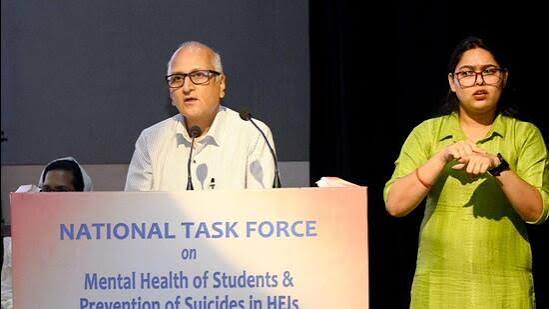


The NTF launched a centralised website on 8 August 2025 (ntf.education.gov.in) to collect perspectives from Higher Education Institutions (HEIs) and individual stakeholders. The portal hosts separate surveys for institutions and for students, faculty, parents and mental-health professionals, enabling the Task Force to build a robust evidentiary base for its recommendations.
Field visits to select HEIs, stakeholder meetings and analysis of existing national data and legal frameworks have complemented the online inputs. The Task Force’s working premise is that student wellbeing rests on multiple determinants academic pressure, discrimination based on caste, tribe, religion, gender or disability, financial hardship, and campus culture.
Mandatory Institute Survey and Confidentiality Assurances
To ensure comprehensive institutional data, the NTF has made it mandatory for HEIs to complete an institute-level survey. The questionnaire asks about faculty diversity, vacant posts, student composition, mental-health provisions, counselling services, and the presence of committees and cells pertinent to student welfare.
Respondents are assured confidentiality and anonymity. The NTF has emphasised that institutional participation is critical for producing evidence-backed, implementable recommendations that reflect ground realities across India’s diverse higher-education ecosystem.
Deadline Extended to Boost Participation
In order to widen participation, the NTF has extended the final deadline for all surveys to 15 December 2025. The extension covers both institutional surveys and individual stakeholder responses from students, faculty, parents and mental-health professionals.
The Task Force has appealed to State Nodal Officers, regulatory bodies and HEI leadership to actively promote the surveys. Officials noted that richer, diverse inputs will strengthen the quality of the NTF’s final recommendations and ensure they are responsive to local needs.
Focus Areas Under Review
Through its consultations, the NTF is examining prevention, early identification, intervention, referral mechanisms and postvention strategies for suicide prevention. It is also assessing capacity gaps in counselling services, faculty training needs, crisis response protocols and the availability of mental-health professionals on campuses.
Special attention is being paid to vulnerable groups and to the intersectional stressors that can compound mental-health risks including financial insecurity, marginalisation and harassment. These insights will feed into guidelines that HEIs can adopt to strengthen student support systems.
Participate and Access Resources
The NTF has encouraged all stakeholders to use the central portal for submissions and resources. Institutions and individuals seeking to contribute or access NTF materials can visit ntf.education.gov.in. The Task Force has reiterated that participation is voluntary but vital for representing the lived experiences of India’s student population.
Next Steps and Expected Outcomes
Following court cognisance, the NTF will continue analysis of collected data and may issue further interim guidance based on emerging patterns. The final recommendations are expected to propose a combination of policy changes, institutional reforms and capacity-building measures aimed at preventing student suicide and building resilient campus ecosystems.
Experts say that a participatory, context-sensitive set of recommendations backed by data from a wide cross-section of HEIs will be crucial for practical implementation across India’s higher-education sector.