
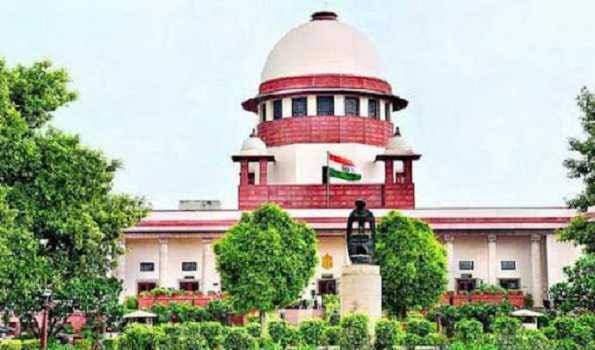
In a significant development, the Supreme Court of India has granted interim relief to a Srinagar-based family facing the threat of deportation to Pakistan. The family’s predicament arose following the Pahalgam terror attack on April 22, which heightened tensions between India and Pakistan. In the wake of the attack, the Indian government had suspended visa services to Pakistani nationals, ordering all such individuals to leave the country by April 27.
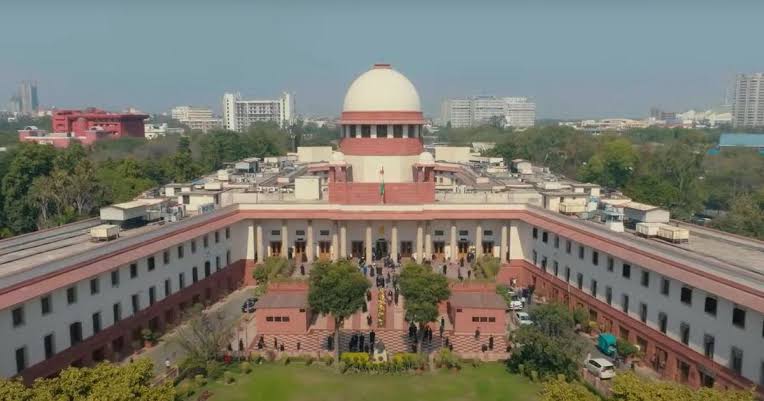

However, the family in question—a married couple and their four children—has strongly asserted that they are Indian nationals, supported by government-issued identification such as Aadhaar cards, PAN cards, and voter ID cards. Despite this, they were arrested and faced the risk of being deported to Pakistan.
In response to their plea, the Bench of Justice Surya Kant and Justice NK Singh issued a ruling that prevents the government from taking any coercive action, including deportation, until the family’s claims are fully verified. The Court emphasized that while the human element of the case is critical, there are factual aspects that require thorough examination. The government was directed to review the documents provided by the family and any other evidence brought forward, and to make a decision on the matter as soon as possible.
The Court also made it clear that if the Indian government decides to proceed with the deportation after verifying the family’s claims, they would be free to approach the Jammu and Kashmir High Court for further relief. However, the Supreme Court added that its decision should not be treated as a legal precedent due to the unique circumstances of the case.
During the proceedings, Advocate Nanda Kishore, representing the family, explained that while one of the family members worked in Bangalore, the rest resided in Srinagar. The family’s legal representative also pointed out that although one member had Pakistani origins, having been born there, they had long surrendered their Pakistani passport and held valid Indian documentation.
Solicitor General of India, Tushar Mehta, suggested that the family approach the relevant government authorities for a resolution, but the petitioner’s counsel reiterated their position that the family was indeed Indian and had been unjustly detained.
The Court ultimately closed the matter by instructing the Indian government to verify the family’s nationality claims and assured them that no deportation would take place in the interim.
This ruling highlights the complexities of identity verification and deportation issues, especially when they intersect with broader geopolitical tensions. The family now awaits the outcome of the verification process, while their future in India hangs in the balance.