 Bail Plea Under IPC Provisions
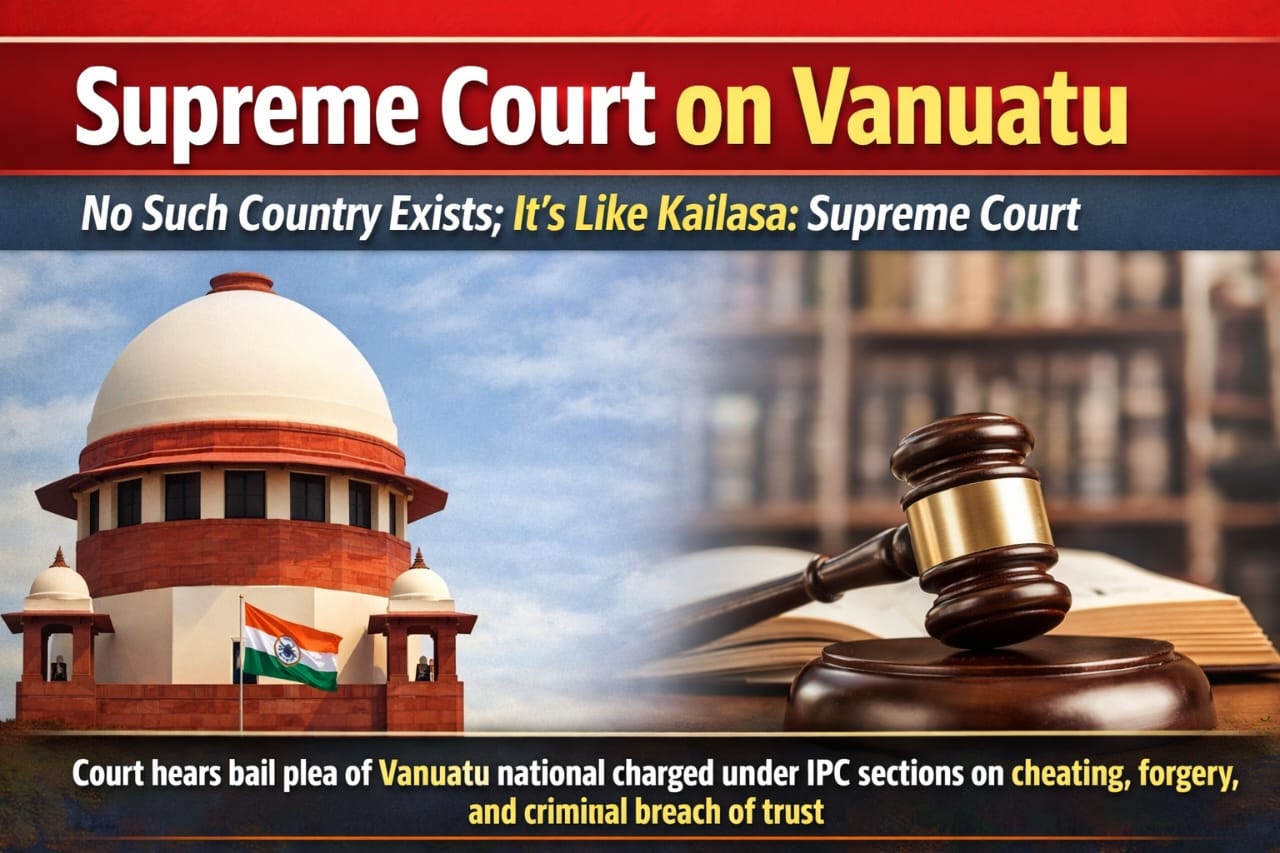
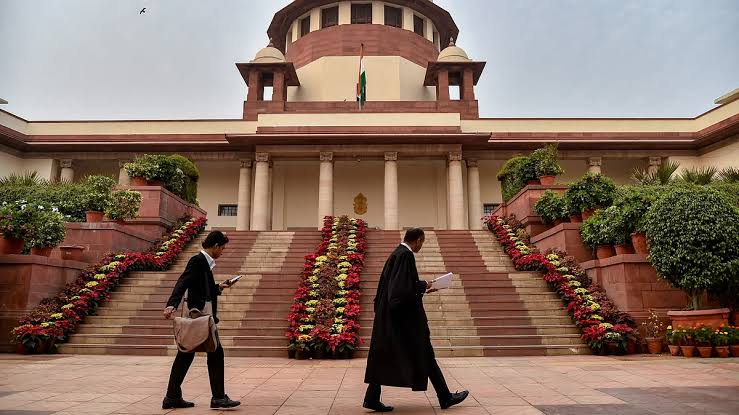
The case came up before a Bench of Justices Vikram Nath, Sandeep Mehta and NV Anjaria. The matter involved a bail application filed by a man described as a Vanuatu national, accused of offences under Sections 420 (cheating), 468 (forgery for the purpose of cheating), and 406 (criminal breach of trust) of the Indian Penal Code (IPC), among other provisions.
During the hearing, Justice Sandeep Mehta asked Senior Advocate Siddhartha Dave, appearing for the accused, about his client’s nationality. When informed that the individual was from Vanuatu, the judge reportedly responded in a lighter vein, questioning whether such a country existed and likening it to “Kailasa.”
Reference to ‘Kailasa’
Kailasa refers to a self-declared Hindu micronation announced in 2019 by fugitive Indian godman Nithyananda. The comparison was made in jest during the exchange in court.
Senior Advocate Dave reportedly clarified that Vanuatu is located in the South Pacific, though there was momentary confusion during the interaction about its geographical placement.
Multiple Identities Alleged
During the proceedings, the Bench was informed that the accused had allegedly used multiple identities. Reacting to this submission, Justice Mehta again made a light remark suggesting that the Court may need to “research” the individual.
The exchange, though brief, quickly gained attention due to the unusual reference to Vanuatu and the analogy drawn with Kailasa.
Bail Plea Withdrawn
After arguments, the bail plea was ultimately dismissed as withdrawn. The Court did not pass any detailed order on the merits of the allegations during this particular hearing.
The accused continues to face charges under the IPC. Details regarding the investigation or trial proceedings were not elaborated upon during the brief exchange.
Understanding the Legal Context
Section 420 of the IPC deals with cheating and dishonestly inducing delivery of property, while Section 468 pertains to forgery committed for the purpose of cheating. Section 406 addresses criminal breach of trust.
The Supreme Court, as the apex judicial authority in India, regularly hears bail pleas in serious criminal matters.
Judicial Wit and Courtroom Exchanges
Observers note that courtrooms occasionally witness lighter exchanges between judges and counsel, particularly when clarifications are sought about unusual facts or submissions. Such remarks are generally made in passing and do not reflect formal judicial findings.
In this instance, the Bench’s comments were made during a preliminary interaction and did not form part of any substantive ruling.
The episode highlights how courtroom proceedings can sometimes combine serious legal deliberations with moments of levity, even as significant criminal allegations remain under judicial scrutiny.