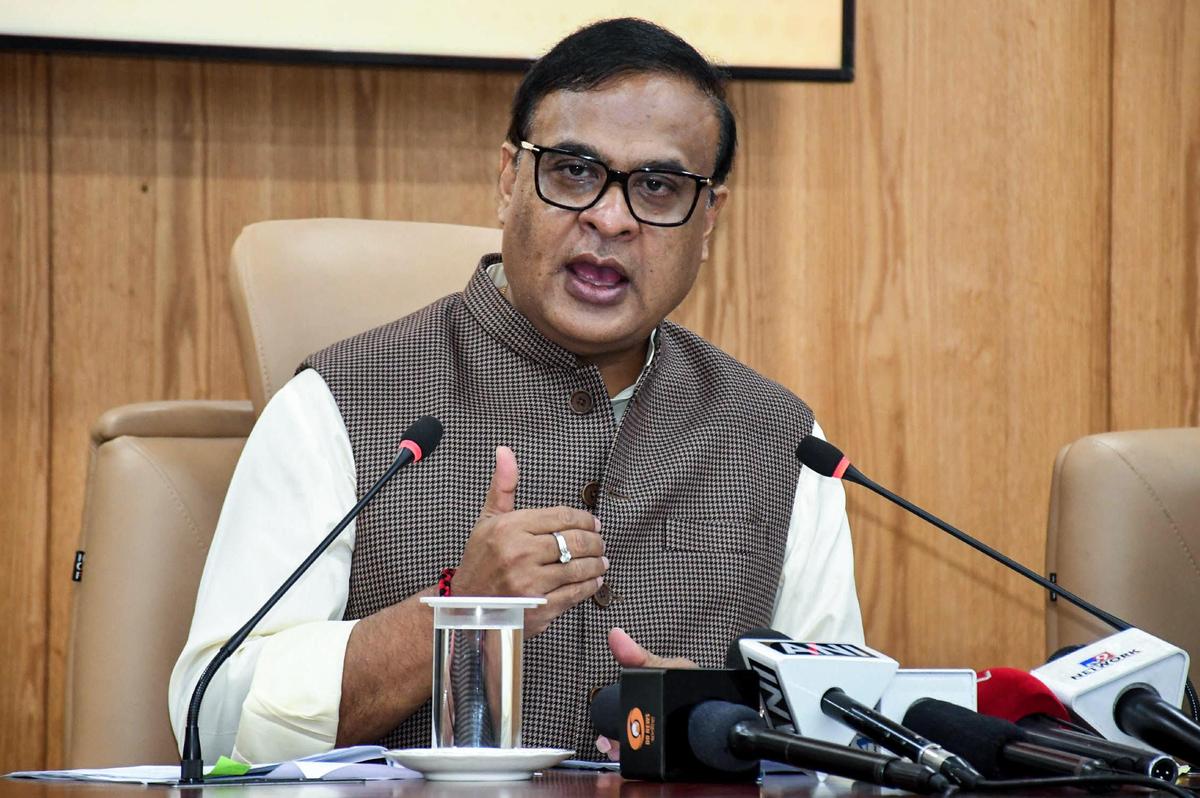
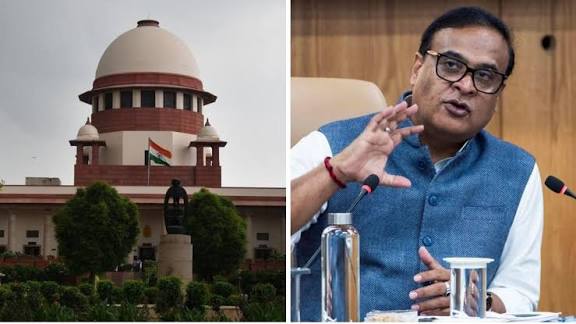
New Delhi, February 16, 2026: The Supreme Court on Monday refused to entertain petitions seeking a criminal investigation against Assam Chief Minister Himanta Biswa Sarma over alleged hate speech, directing the petitioners to approach the Gauhati High Court instead.
 Supreme Court Finds ‘No Good Reason’ to Intervene
A three-judge Bench headed by Chief Justice of India Surya Kant observed that there was “no good reason” for the apex court to directly entertain the pleas seeking registration of an FIR against the Assam Chief Minister.
The petitions had alleged that Sarma made communal speeches and shared a now-deleted social media post that purportedly depicted him firing a gun at an animated image of two Muslim men. The petitioners sought immediate criminal investigation into the matter.
However, the Bench maintained that the appropriate forum to examine such allegations at the first instance would be the Gauhati High Court.
Petitioners Raise Concerns Over State Authority
The petitions were filed by political parties including the Communist Party of India (Marxist) and the Communist Party of India, among others. During the hearing, the petitioners argued that approaching the State High Court might not yield impartial relief as the Chief Minister heads the State administration.
They contended that Sarma, being the “boss of Assam,” could influence the machinery of the State, making it difficult to ensure an independent investigation.
The Supreme Court, however, was not convinced by this argument and reiterated that constitutional courts at the State level are fully empowered to examine such grievances.
Direction to Expedite Hearing
While declining to entertain the petitions directly, the Supreme Court took note of the seriousness of the allegations. It requested the Chief Justice of the Gauhati High Court to ensure that any petitions filed before it on the matter are listed and heard expeditiously.
This direction is seen as an attempt to balance judicial propriety with the urgency expressed by the petitioners.
The apex court’s approach underscores the principle of judicial hierarchy, encouraging litigants to first seek remedies from the appropriate High Court unless exceptional circumstances exist.
Legal Context of Hate Speech Cases
Hate speech allegations involving political leaders often draw nationwide attention and raise complex legal questions. The Supreme Court has in previous rulings emphasised the need to curb inflammatory speech while protecting constitutional guarantees of free expression under Article 19.
Courts typically examine whether statements incite violence, promote enmity between communities, or disturb public order before directing criminal action.
Legal experts note that High Courts are empowered under Article 226 of the Constitution to issue directions for investigation or registration of FIRs where necessary.
Political and Public Reactions
The case has triggered debate in political circles, with opposition parties demanding accountability and supporters of the Chief Minister asserting that the allegations are politically motivated.
As of now, Sarma has not issued a fresh public statement specifically addressing the Supreme Court’s order. The social media post in question had reportedly been deleted earlier.
Further developments are expected once the matter is formally moved before the Gauhati High Court.
What Happens Next?
The petitioners are likely to file fresh pleas before the Gauhati High Court in the coming days. The High Court will then decide whether to order a preliminary inquiry, direct the registration of an FIR, or dismiss the plea.
The Supreme Court’s order does not express any opinion on the merits of the allegations, leaving the substantive issues open for judicial scrutiny at the State level.