
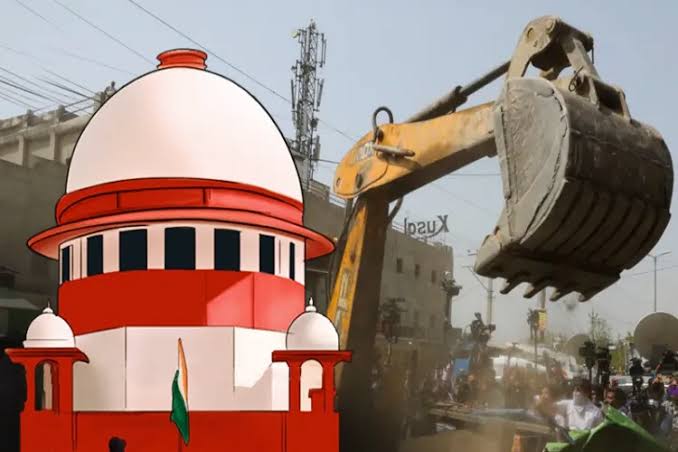
In a case that has sparked widespread debate on justice and civic rights, the Supreme Court is set to hear a petition challenging the demolition of a family’s home and shop in Maharashtra’s Sindhudurg district. The petitioner, Kitabullah Hamidulla Khan, a 40-year-old scrap dealer, claims the demolition was carried out as a punitive measure after his 15-year-old son allegedly shouted an “anti-India” slogan during an India-Pakistan Champions Trophy match on February 23.
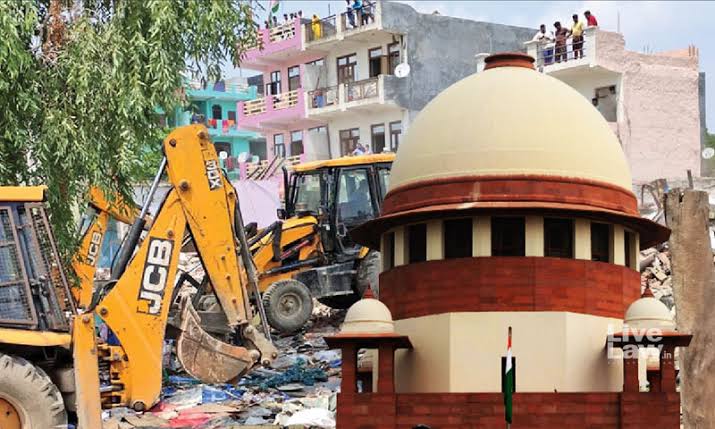

Khan’s plea before the Supreme Court argues that the demolition was carried out under political pressure, with local leaders reportedly mobilizing people to justify the action. His legal team contends that this act of “bulldozer justice” violates a Supreme Court ruling from November 2024, which explicitly prohibits demolitions as a form of punishment for alleged criminal acts. The ruling had also mandated a clear legal process, including prior notice, before any structure could be torn down.
The case has drawn significant attention due to its implications on fundamental rights and due process. Civic demolitions as punitive measures have been widely criticized for bypassing legal safeguards and disproportionately affecting marginalized communities. Human rights activists argue that irrespective of the alleged offense, citizens must be given a fair opportunity to present their case before being subjected to life-altering actions such as home demolitions.
As the Supreme Court prepares to hear Khan’s plea, the case serves as a crucial test for the rule of law and the balance between state power and individual rights. Legal experts and activists alike are watching closely, hoping for a decision that upholds constitutional principles and ensures that justice is not compromised by political or administrative overreach.