
Background of the Case
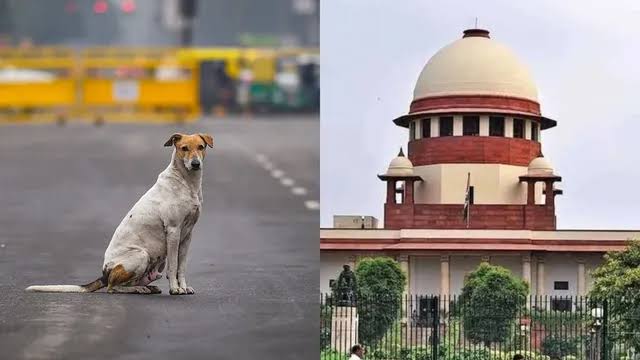
The controversy began when a two-judge bench of Justice JB Pardiwala and Justice R Mahadevan took suo motu cognisance of a news report published in The Times of India on July 28, highlighting increasing stray dog attacks in the national capital. The bench, on August 11, directed the Delhi government to establish dedicated shelters and move stray dogs into them within eight weeks.
However, the decision immediately sparked concerns as lawyers pointed out that it contradicted earlier rulings from other benches of the Supreme Court, which had emphasised a more balanced approach to stray dog management, including sterilisation and vaccination programs rather than wholesale relocation.

On August 12, the case was moved to a three-judge bench led by Justice Vikram Nath, along with Justices Sandeep Mehta and NV Anjaria, after the Chief Justice of India was approached regarding the conflicting orders. The bench heard arguments on August 14 and reserved its verdict.
The court will now clarify the legal position, which could have significant implications not only for Delhi but also for states across India facing rising concerns over stray dog attacks and animal welfare obligations.
Key Issues Before the Court
The Supreme Court is expected to balance two competing concerns: public safety and animal rights. On one hand, citizens have increasingly raised alarms over dog bites and attacks on children, citing the lack of effective municipal action. On the other, animal rights groups argue that mass relocation violates the Supreme Court’s own earlier guidelines that stressed humane sterilisation and vaccination under the Animal Birth Control (ABC) Rules.
Experts suggest today’s order could serve as a precedent in reconciling urban safety with ethical treatment of animals. The ruling may also determine whether local governments will be directed to strengthen existing sterilisation programs or create entirely new shelter infrastructure.
Public and Government Response
The Delhi government has so far maintained that it lacks adequate shelter facilities to house the city’s estimated stray dog population. Animal welfare organisations such as the People for Animals (PFA) and Federation of Indian Animal Protection Organisations (FIAPO) have filed interventions urging the Court not to allow indiscriminate relocation.
Meanwhile, residents’ groups from East and South Delhi have welcomed the possibility of stricter measures, citing rising health risks and instances of school children being attacked. Similar debates have been playing out in other Indian states, making today’s ruling closely watched nationwide.
What Lies Ahead
The Supreme Court’s verdict, expected at 10:30 AM, will either affirm or modify the August 11 directions. Legal experts say the decision may outline a comprehensive framework for managing stray dogs that municipal authorities across India will need to follow.
Regardless of the outcome, the ruling is likely to set a critical benchmark for the balance between safeguarding citizens and ensuring humane treatment of animals under constitutional and statutory mandates. For the latest official updates, readers may also visit the Supreme Court of India website.