
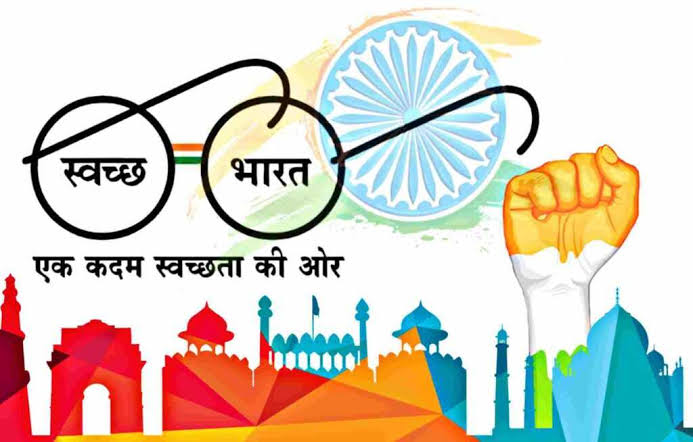
From Vision to Jan Andolan
Launched on October 2, 2014, the SBM became a people’s movement or Jan Andolan. It was split into two arms: SBM-Grameen for rural areas under the Ministry of Jal Shakti, and SBM-Urban for cities under the Ministry of Housing and Urban Affairs. The mission’s primary objective was to make India “Open Defecation Free” (ODF) by 2019, coinciding with Gandhi’s 150th birth anniversary.
The initiative mobilised crores of households, constructed toilets in schools, anganwadis, and public spaces, and promoted solid and liquid waste management systems. Swachh Bharat Kosh was also set up to channel philanthropic and CSR funds for sanitation efforts.


According to government data, millions of toilets were constructed nationwide, drastically reducing open defecation. Studies, including one published in Nature, suggest that SBM may have averted 60,000–70,000 infant deaths annually between 2014 and 2020 due to improved sanitation.
To sustain these gains, the government launched SBM-Urban 2.0 in 2021, focusing on garbage-free cities, plastic waste management, faecal sludge treatment, and greywater recycling. SBM-Grameen Phase II, running until 2026, continues efforts toward “Sampoorn Swachhata” (complete cleanliness) by managing both solid and liquid waste.
Impact Beyond Cleanliness
The mission has had profound social and economic impacts. A UNICEF study estimated that achieving ODF status saved each rural household about ₹50,000 annually in medical costs, time, and productivity. Toilet coverage, which was below 40% in 2003, rose to more than 60% by 2020, leading to significant reductions in infant and child mortality rates.
Gandhi’s Enduring Message
Mahatma Gandhi often said, “Sanitation is more important than independence.” For him, cleanliness was both a moral duty and a path to social reform. He urged Indians to take personal responsibility, declaring that “everyone is his own scavenger.”
His vision connected cleanliness with swaraj, believing that only a clean and healthy society could be truly free. The Swachh Bharat Mission has carried this message forward, embedding sanitation into the nation’s development agenda.
Global Lessons
The mission’s success, driven by political will, financing, partnerships, and citizen participation, is now studied globally. Countries like Nigeria, Indonesia, and Ethiopia have adapted similar models for their sanitation campaigns.
As SBM enters its next phase, the challenge lies in sustaining behavioural change, strengthening waste management, and achieving the goal of garbage-free cities and villages by 2026. The mission’s legacy, however, is clear: it has turned cleanliness into a collective responsibility and national pride.