
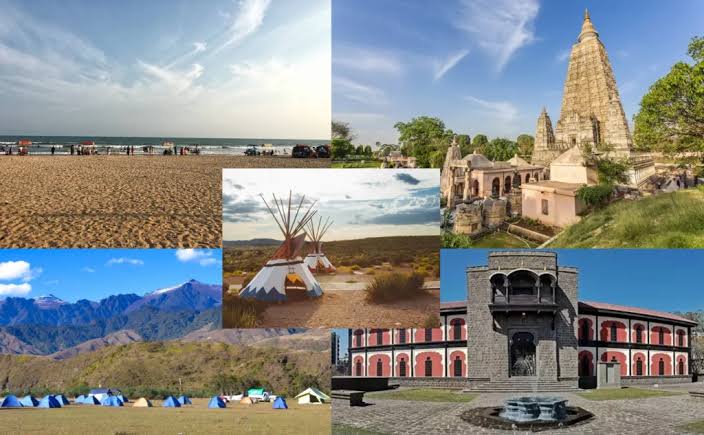

Swadesh Darshan 2.0 has been designed to minimise the negative environmental and social impacts of tourism while maximising benefits for host communities. The scheme emphasises environmental sustainability, socio-cultural preservation and economic viability as core pillars of tourism growth.
Projects sanctioned under the scheme integrate eco-friendly construction practices, renewable energy use, improved sanitation, waste management systems and accessible infrastructure. Community participation and stakeholder consultations are mandated at the planning stage to ensure that tourism development aligns with local needs and cultural sensitivities.
Role of States and Centre in Tourism Development
While tourism development remains primarily under the jurisdiction of State Governments and Union Territory Administrations, the Ministry of Tourism supports states through financial assistance and policy guidance. Project approvals under Swadesh Darshan 2.0 are based on adherence to scheme guidelines, availability of funds, sustainability benchmarks and inter-se priorities.
The Centre regularly reviews the progress of sanctioned projects and encourages states to ensure effective operation and maintenance so that long-term benefits accrue to local residents, artisans, guides, homestay owners and small tourism entrepreneurs.
Challenge Based Destination Development Initiative
As part of Swadesh Darshan 2.0, the Ministry has launched the “Challenge Based Destination Development” initiative aimed at transforming selected destinations through end-to-end experience enhancement. The approach focuses on strengthening the entire tourism value chain, from access and amenities to interpretation, safety and visitor engagement.
Under this initiative, 38 projects worth approximately ₹698 crore have been sanctioned across the country. These projects are designed to position destinations as models of sustainable and responsible tourism, ensuring high-quality visitor experiences while safeguarding local ecology and heritage.
National Strategy for Sustainable Tourism
To further institutionalise sustainability in the tourism sector, the Ministry of Tourism has released the National Strategy for Sustainable Tourism. The strategy aims to build a resilient, inclusive and resource-efficient tourism ecosystem that contributes to India’s climate goals while protecting natural and cultural assets.
The strategy promotes collaboration among government bodies, private sector players, non-governmental organisations and local communities. It emphasises capacity building, green investments, responsible travel behaviour and community ownership of tourism assets.
Travel for LiFE Programme under Mission LiFE
In alignment with Mission LiFE (Lifestyle for Environment), the Ministry has also launched the ‘Travel for LiFE’ programme for the tourism sector. The initiative seeks to nudge tourists and tourism businesses towards environmentally responsible practices such as reducing plastic use, conserving water and energy, respecting biodiversity and supporting local livelihoods.
The programme aims to create awareness among travellers while encouraging tourism service providers to adopt sustainable operational standards, making India’s tourism sector more climate-resilient and future-ready.
Strengthening Local Economies and Cultural Heritage
Officials noted that Swadesh Darshan 2.0 places strong emphasis on local economic participation. The scheme supports skill development, employment generation and entrepreneurship opportunities for local youth, women and traditional artisans.
By integrating tourism with local crafts, cuisine, festivals and heritage assets, the initiative seeks to ensure that tourism growth translates into inclusive development rather than isolated infrastructure expansion.
Way Forward
With over ₹2,200 crore already sanctioned and multiple projects at different stages of implementation, Swadesh Darshan 2.0 is emerging as a key instrument in reshaping India’s tourism landscape. The Ministry of Tourism has reiterated its commitment to monitoring outcomes, improving destination management and scaling best practices across states.
The initiative is expected to significantly enhance India’s global tourism appeal while ensuring that growth remains environmentally sustainable, socially responsible and economically beneficial for communities on the ground.