
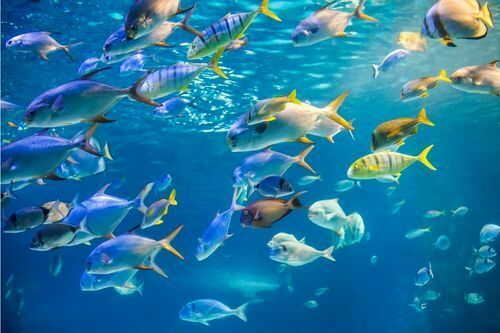

Indigenous fish, adapted to local ecosystems, form the backbone of India’s aquatic biodiversity. With over 2,800 native species identified including 917 freshwater, 394 brackishwater, and 1,548 marine species these fishes play critical ecological, economic, and cultural roles. By promoting native species, India aims to reduce dependence on exotic varieties, diversify production, and safeguard aquatic heritage.
Current Aquaculture Landscape
Indian aquaculture production is heavily concentrated on a few species. Indian major carps Rohu, Catla, and Mrigal alongside the giant freshwater prawn, dominate freshwater aquaculture, contributing over three-fourths of production. In brackishwater systems, production relies largely on the exotic shrimp Penaeus vannamei, with the indigenous black tiger shrimp contributing minimally. Mariculture remains at an early stage.
Prioritized Indigenous Species for Promotion
To diversify aquaculture, the DoF has prioritized species such as Fringed-lipped Carp, Olive Barb, Pengba, Striped Murrel, Pabda, Singhi, Asian Seabass, Pearlspot, Pompano, Mud Crab, and Penaeus indicus. Breeding, seed production, and grow-out practices are already established for these species, allowing immediate integration into farming systems and strengthening community livelihoods.
Government Schemes Supporting Indigenous Fisheries
Major initiatives like the Pradhan Mantri Matsya Sampada Yojana (PMMSY), Pradhan Mantri Matsya Kisan Samridhi Sah-Yojana (PMMKSSY), and Fisheries and Aquaculture Infrastructure Development Fund (FIDF) are being leveraged to support seed production, technical training, and infrastructure development. These schemes facilitate sustainable aquaculture, strengthen supply chains, and improve the income of rural communities.
Genetic Improvement and Cluster Development
In partnership with ICAR, the DoF has identified key species for genetic improvement including Scampi, Rohu, Catla, Murrel, P. indicus, P. monodon, and Indian Pompano. The Department has also approved Nucleus Breeding Centres for freshwater and marine species at ICAR-CIFA Bhubaneswar and ICAR-CMFRI Mandapam. Additionally, 34 production and processing clusters have been established across India, including Scampi in Odisha, Murrel in Telangana, Pabda in Tripura, Pengba in Manipur, Trout in Jammu & Kashmir and Ladakh, Pearlspot in Kerala, and cage culture of marine species in Karnataka.
Impact on Sustainability and Livelihoods
By promoting indigenous species, the Blue Revolution integrates ecological balance, cultural heritage, and economic growth. These efforts ensure food security, reduce overexploitation of exotic species, and generate employment for rural youth and women. Awareness campaigns, training programs, and technical interventions are crucial in encouraging adoption among stakeholders.
Looking Ahead
The Swadeshi Blue Revolution represents a strategic approach to fisheries management in India, linking conservation with economic benefits. By leveraging the unique ecological and cultural value of indigenous species, India aims to establish a sustainable aquaculture sector, enhance rural livelihoods, and strengthen its position as a global leader in fisheries and aquatic biodiversity.