
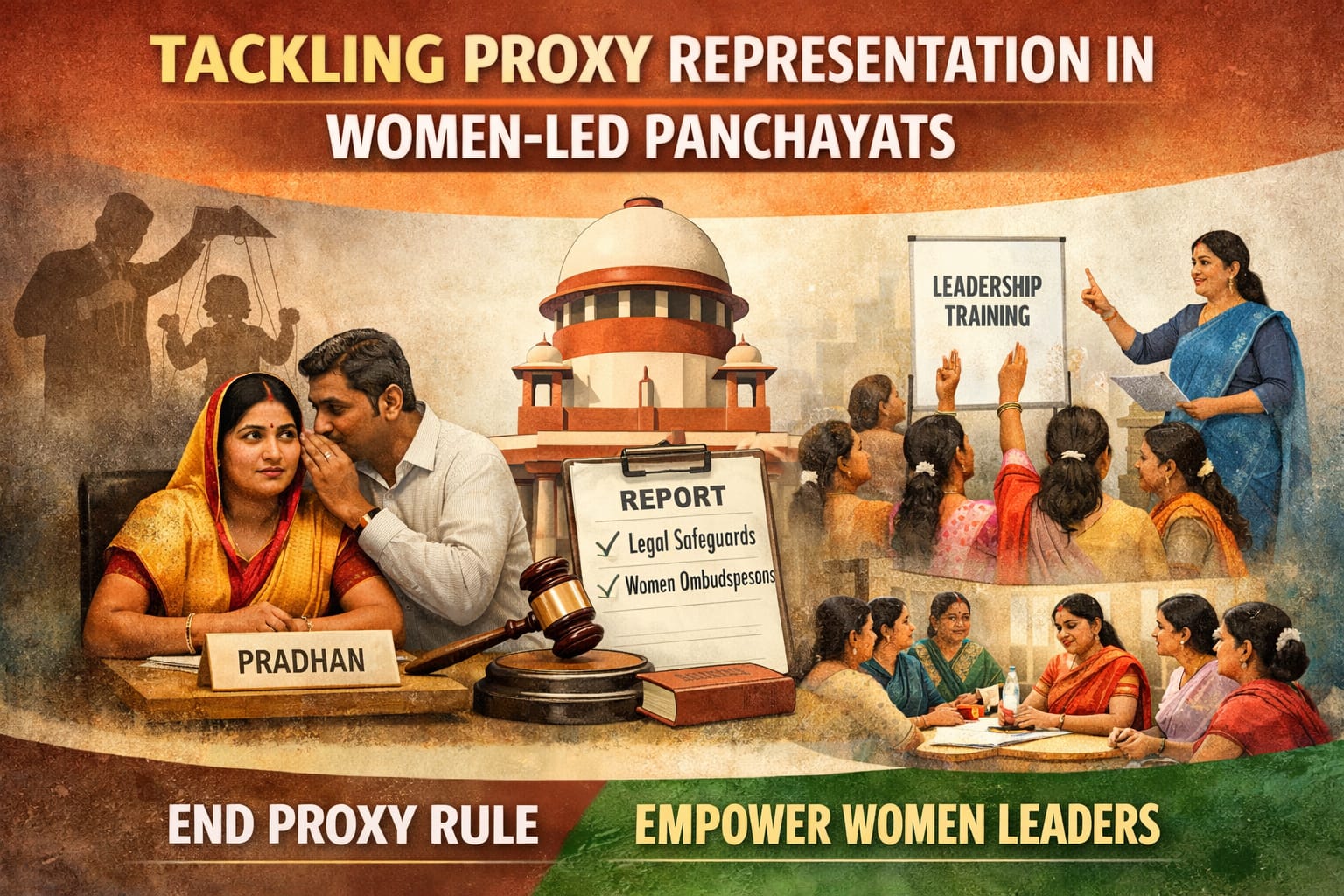
New Delhi: The Centre has reiterated that eliminating proxy representation of elected women representatives in Panchayati Raj Institutions (PRIs) remains a priority, even as it underlined that “Panchayat” is a State subject under the Constitution.
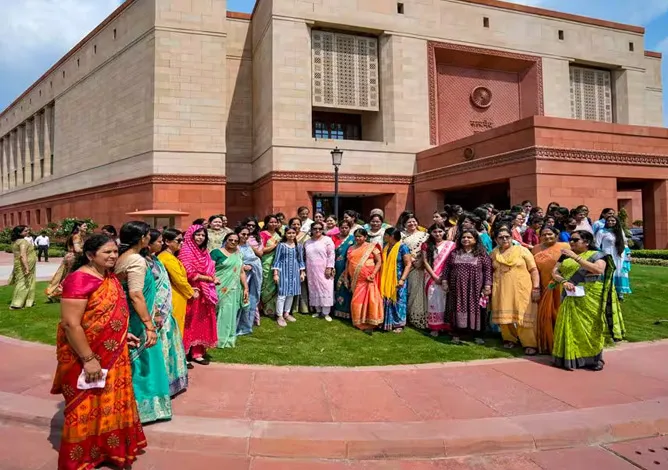

Responding to a question in the Rajya Sabha on February 11, 2026, Union Minister for Panchayati Raj Shri Rajiv Ranjan Singh, also known as Lalan Singh, clarified that Panchayats fall under the State List of the Seventh Schedule of the Constitution. Therefore, issues related to independent decision-making powers of women representatives lie within the domain of State Governments.
However, the Ministry of Panchayati Raj has stepped in with policy guidance and capacity-building initiatives aimed at strengthening women’s leadership at the grassroots level.
RGSA: Large-Scale Capacity Building
The Centre is implementing the Revamped Rashtriya Gram Swaraj Abhiyan (RGSA) since the financial year 2022-23. The scheme focuses on Capacity Building and Training (CB&T) of elected representatives, Panchayat functionaries and other stakeholders across States and Union Territories.
Between FY 2022-23 and FY 2025-26 (up to December 31, 2025), as many as 28,60,585 Women Elected Representatives (WERs) have been trained under various modules of the scheme.
The training categories include basic orientation, refresher courses, thematic sessions, specialised modules and Panchayat Development Plan training. The aim is to enhance governance standards and ensure women representatives can independently discharge their constitutional responsibilities.
Shashkta Panchayat Netri Abhiyan
To directly address the challenge of proxy representation, the Ministry launched a specialised training module under the “Shashkta Panchayat Netri Abhiyan.” This initiative is tailored specifically for Women Elected Representatives.
The module focuses on strengthening leadership qualities, communication skills, managerial capacity and decision-making abilities. It also equips women with practical knowledge of rural governance and service delivery mechanisms.
As of December 31, 2025, a total of 64,863 WERs have undergone this specialised training.
Supreme Court-Directed Advisory Committee
In September 2023, following directions from the Hon’ble Supreme Court, the Ministry constituted an Advisory Committee to examine the issue of male family members informally exercising authority on behalf of elected women, often referred to as proxy leadership.
The Committee submitted its report in February 2025, and the Ministry has accepted its recommendations. According to the Minister, the report suggested multiple measures for States to eliminate proxy representation and ensure genuine empowerment.
The recommendations include legal safeguards, penal provisions, appointment of women ombudspersons, public oath-taking ceremonies, mentorship programmes led by experienced women leaders and strengthened social audit mechanisms.
The original parliamentary reply is accessible via the Press Information Bureau at pib.gov.in.
Task Force to Drive Implementation
Recognising the seriousness of the issue and its broader impact on women’s political empowerment, the Ministry constituted a dedicated Task Force on April 17, 2025. The body is expected to coordinate with States and recommend actionable strategies for effective implementation of reforms.
The Centre has emphasised that real empowerment goes beyond reservation of seats. It requires autonomy, accountability and institutional support so that women leaders can function independently without external interference.
Strengthening Grassroots Democracy
India’s Panchayati Raj system reserves a significant proportion of seats for women, making it one of the largest experiments in grassroots gender empowerment globally. However, the practice of proxy representation has often undermined this constitutional vision.
By combining legal safeguards with structured training and institutional monitoring, the Centre aims to ensure that elected women representatives exercise full authority and participate meaningfully in governance.
The success of these efforts will ultimately depend on coordinated action by State Governments, civil society and local communities to uphold the spirit of decentralised democracy.