
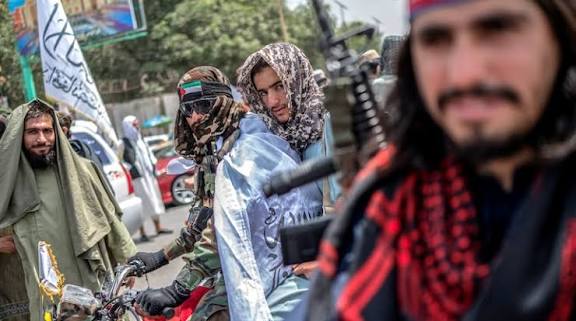


In a high-level meeting in Kandahar, Taliban chief Hibatullah Akhundzada, along with senior cabinet ministers, intelligence officials, and military commanders, unanimously rejected the idea of surrendering Bagram Air Base. Leaders declared they would “fully prepare for war” if the US attempted to re-establish a presence on Afghan soil.
Trump had earlier warned that “bad things” could happen if the Taliban did not comply with Washington’s demands, sparking strong reactions from the group. The Taliban’s response signals a clear refusal to revisit arrangements similar to those in the Doha Agreement.
Pakistan Draws Taliban’s Warning
The Taliban’s statement also placed Pakistan directly in the spotlight. Sources within the group said the leadership made it clear that any logistical, diplomatic, or military support provided by Islamabad to the US would mark Pakistan as an “enemy state.” This escalation comes just as Pakistan is preparing for high-level talks with the Trump administration.
The warning underscores the complex geopolitical position Islamabad faces, balancing its ties with Washington while maintaining fragile relations with the Taliban government in Kabul.
Global Outreach Strategy
In anticipation of possible US actions, Taliban leaders tasked Prime Minister Mullah Mohammad Hassan Akhund and Foreign Minister Amir Khan Muttaqi with urgent diplomatic outreach. The group intends to contact Russia, China, Iran, Qatar, the UAE, Saudi Arabia, and India to rally support and prevent American intervention.
The Taliban’s diplomatic push suggests that the group aims to frame any US move on Bagram as a violation of Afghan sovereignty and the commitments made in the Doha Agreement, signed in 2020.
ISIS and Internal Security Signals
Interestingly, Taliban officials noted that the Islamic State (ISIS) faction in Afghanistan was “following the spirit of the Doha Agreement,” a rare acknowledgement suggesting that ISIS may not currently be viewed as a major destabilising factor. This appears to be an attempt to reassure regional stakeholders of relative stability under Taliban rule.
Afghanistan Government Statement
Days earlier, the Taliban government issued an official statement reiterating its foreign policy stance: to maintain constructive relations with all nations based on mutual interest. It further reminded the US of its Doha Agreement commitments, which included pledges not to interfere in Afghanistan’s sovereignty or internal affairs.
Muttaqi reinforced this in remarks to state media, declaring: “Not even a metre of Afghanistan’s land will be given to the Americans.”
Rising Regional Tensions
The standoff raises the risk of renewed conflict in Afghanistan, a region already fragile after decades of war. If the US follows through on reclaiming Bagram and Pakistan is perceived as supportive, the fallout could destabilize South Asia further. The Taliban’s position reflects not only its resistance to US pressure but also its determination to assert independence in shaping Afghanistan’s geopolitical trajectory.