


The government listed multiple reforms that eased industry operation and investment: rationalisation of Adjusted Gross Revenue and Bank Guarantees; lower interest rates and removal of penalties; waiver of Spectrum Usage Charge (SUC) for spectrum bought after 15 Sept 2021; permission for 100% FDI under automatic route (with safeguards); replacement of paper customer forms with digital storage; relaxed SACFA clearances for towers; and extending spectrum tenure from 20 to 30 years. Collectively, these measures reduced compliance friction and improved capital flows into network buildout.
Infrastructure gains fibre, towers and village coverage
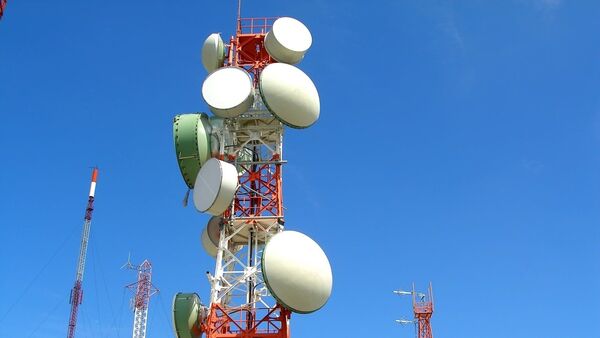
Concrete outcomes of these policies are striking. The optical fibre cable network has grown from 17.5 lakh km in March 2018 to 42.36 lakh km as of September 2025. Base Transceiver Stations (BTS) have risen from 17.3 lakh in March 2018 to 31.4 lakh in October 2025. According to the ministry, out of 6,44,131 villages, 6,34,019 now have mobile connectivity and 6,30,676 villages are served by 4G.
Digital Bharat Nidhi: 4G saturation and Amended BharatNet
To close last-mile gaps the Government is implementing schemes under Digital Bharat Nidhi, including targeted 4G saturation projects and an amended BharatNet programme. These initiatives prioritise rural and remote areas for fibre backhaul, public Wi-Fi and community access points. As of 31 October 2025, the PM-WANI ecosystem hosts about 3.80 lakh public Wi-Fi hotspots, widening affordable access where mobile data alone may be insufficient.
Usage trends: more data at lower cost
Expanded capacity and competition have translated into heavier and cheaper usage. Broadband subscriptions climbed from roughly 48 crore in September 2018 to 98 crore by June 2025. Average wireless data consumption rose from 8.32 GB per subscriber per month in September 2018 to 25.24 GB in September 2025. At the same time, the average wireless data tariff fell from ₹10.91 per GB to ₹8.27, indicating more value for users.
Social and economic impact
Officials framed these advances as enablers of inclusion and growth. Greater fibre and tower density supports tele-education, telemedicine, digital payments and local entrepreneurship. The ministry said infrastructure investments also drive jobs in tower maintenance, fibre laying and logistics while improving quality-of-life indicators in previously underserved districts.
What comes next: consolidation and quality focus
While coverage figures are encouraging, the reply to Parliament notes priorities ahead: deepening backhaul in remaining black-spots, ensuring last-mile reliability, and maintaining quality-of-service standards as traffic rises. The amended BharatNet rollout and 4G saturation projects are expected to focus resources where village-level coverage is incomplete or sub-optimal.