

₹6.11 Lakh Crore Invested Since 2014
Between 2014–15 and 2024–25, a total of ₹6.11 lakh crore has been spent in the North East under the 10% GBS mechanism. Expenditure in 2014–15 stood at ₹24,819 crore, rising to ₹1,02,749 crore by 2023–24, reflecting the central government’s sustained focus on the region.
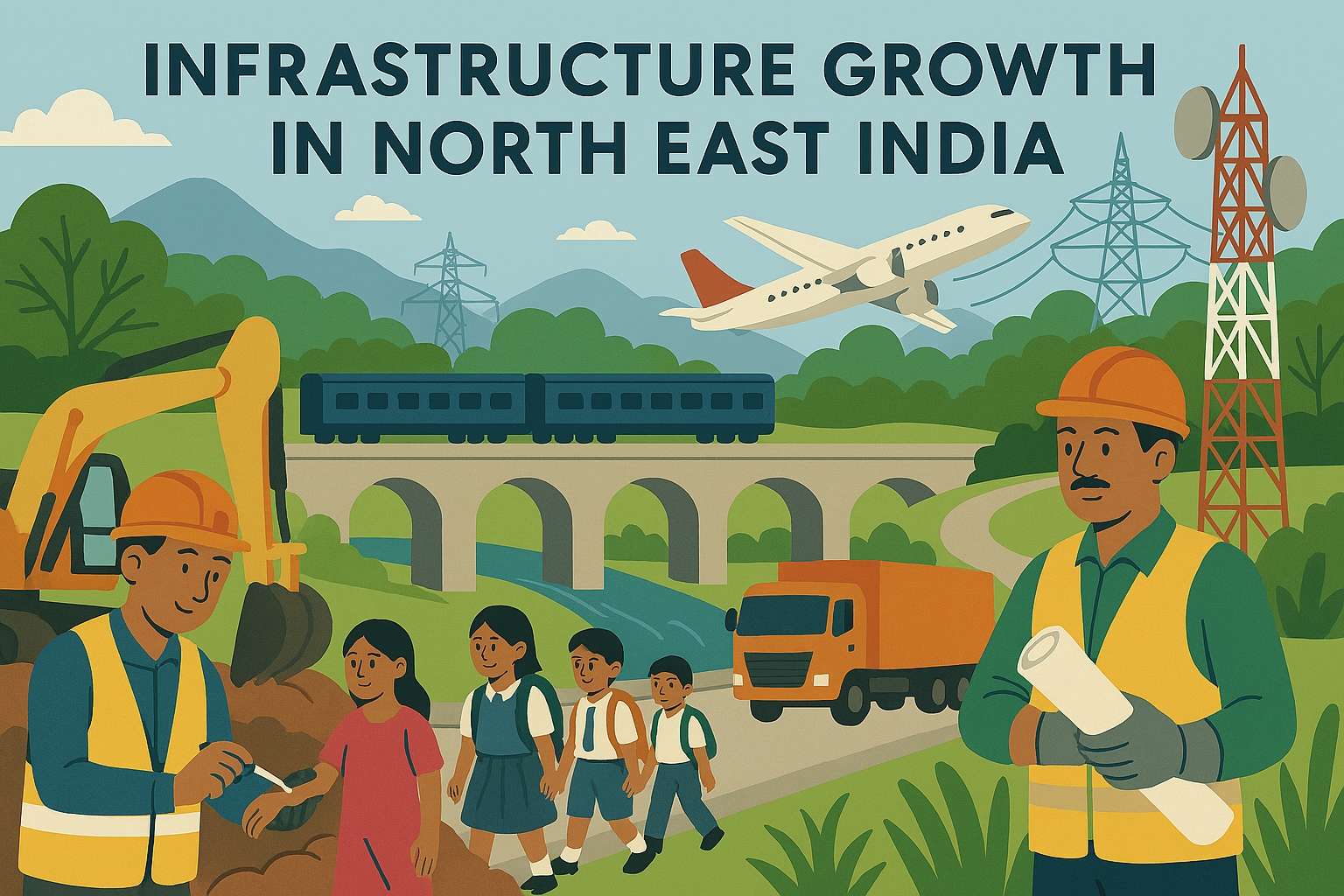
This funding has supported the creation of durable assets, leading to enhanced road, rail, and air connectivity while also strengthening facilities in health, education, water supply, and power distribution.

As per the Department of Expenditure’s Office Memorandum dated May 5, 2017, DoNER conducts quarterly review meetings with all non-exempted Ministries, Departments, and Organizations (MDOs) to track progress. A dedicated monitoring portal captures real-time expenditure data, enabling timely interventions and efficient fund utilization.
The transparent monitoring mechanism has ensured that central schemes are effectively aligned with regional needs, minimizing delays in fund allocation and project execution.
Strengthening Connectivity and Infrastructure
The 10% GBS policy has significantly boosted infrastructure projects in the North East. Investments have been directed towards railway expansion, national highway upgrades, and new airport facilities. Improved connectivity has reduced travel time, expanded trade opportunities, and fostered tourism across the region.
Simultaneously, the policy has supported projects in healthcare and education, helping bridge long-standing gaps in public service delivery.
A Model for Regional Growth
Experts view the ten percent GBS mechanism as a cornerstone of India’s strategy to integrate the North East with the national growth agenda. By mandating dedicated funding, the initiative ensures that developmental gaps are systematically addressed.
According to Dr. Sukanta Majumdar, the expenditure has created visible improvements in both physical and social infrastructure, contributing to long-term economic resilience in the region. The policy is also seen as vital for enhancing connectivity to Southeast Asia under the government’s Act East Policy.