
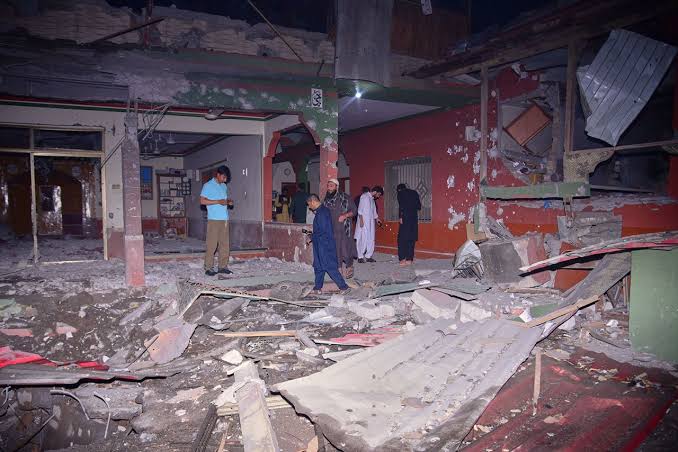
In a dramatic escalation of hostilities between two nuclear-armed neighbors, India launched missile strikes early Wednesday into Pakistani-controlled territory, killing at least eight people and injuring dozens more, according to Pakistani officials. India has stated that the operation targeted terrorist infrastructure following a brutal attack last month in Kashmir that claimed the lives of 26 Indian tourists.
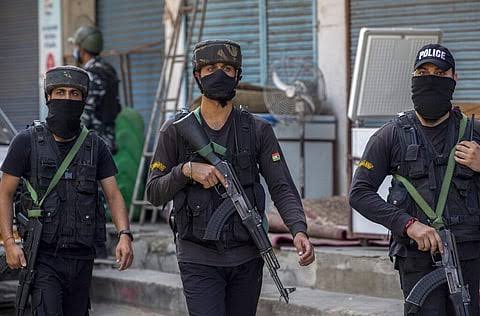

The cross-border strikes mark one of the most serious escalations in recent years. Indian authorities said the strikes were precise and focused solely on militant camps believed to be responsible for planning attacks against India. In response, Pakistan condemned the move as an act of war and vowed retaliation. Prime Minister Shehbaz Sharif asserted that Pakistan has every right to defend itself and assured the nation that a strong response is underway.
Among the most heartbreaking reports from the region was the death of a child and injuries to two others in Bahawalpur, where one of the Indian missiles allegedly struck a mosque. Rescue efforts were seen in full force as emergency was declared in hospitals across Pakistan-administered Kashmir. In Muzaffarabad, residents spoke of panic, loud explosions, and blackouts as sirens blared through the night.
Tragically, the violence has not spared Indian civilians either. Shelling from the Pakistani side reportedly killed three people and injured others in Indian-controlled Kashmir. A woman and a young girl were among the casualties in the Poonch district, as mortar fire and gunshots echoed across the Line of Control.
The Indian military confirmed it had initiated the operation, codenamed Sindoor, named after the traditional red mark worn by married Hindu women—a symbolic tribute to the women widowed in the recent Kashmir massacre. According to Indian officials, nine strategic locations were targeted using precision-guided weapons, including drone-assisted strikes, with a focus on terrorist headquarters in Muridke and Bahawalpur.
Adding to the chaos, an unidentified aircraft crashed into a school building near Srinagar, causing fires and panic among local residents. All flights to and from the region have been suspended, and Srinagar airport is currently closed under military directives.
Both countries have taken their grievances to international platforms. Pakistan has formally informed the United Nations Security Council, warning that India’s strikes pose a grave threat to regional and global peace. The U.N. Secretary-General Antonio Guterres urged both sides to exercise restraint, reminding the world that a military confrontation between India and Pakistan would have devastating consequences.
Meanwhile, U.S. officials, including Secretary of State Marco Rubio, expressed deep concern and encouraged both nations to seek a peaceful resolution. Former President Donald Trump called the conflict “a shame” and hoped it would “end very quickly,” while acknowledging the long and troubled history between the two countries.
Indian Prime Minister Narendra Modi was reportedly monitoring the operation throughout the night, emphasizing a careful and measured approach. However, Pakistani officials have dismissed India’s claims of restraint, accusing it of deliberately targeting civilian areas.
This latest conflict arises in the wake of deep-rooted tensions that stretch back decades. Since the partition of British India in 1947, India and Pakistan have fought multiple wars and skirmishes over the disputed region of Kashmir. Each new incident risks reigniting long-standing animosities and bringing unimaginable suffering to countless innocent civilians on both sides of the border.
As the world watches with bated breath, the human cost continues to mount. Families grieve, cities brace for more violence, and hopes for peace dim yet again in this historically volatile region.