

Former US President Donald Trump had earlier asserted that a ceasefire agreement had been reached following telephone conversations with Thai Prime Minister Anutin Charnvirakul and Cambodian Prime Minister Hun Manet. Writing on his Truth Social platform, Trump claimed both sides had agreed to “cease all shooting” and return to a July peace accord.
However, Prime Minister Anutin categorically denied this version of events. Speaking to reporters in Bangkok, he said no ceasefire proposal was discussed during his call with Trump. “There was no mention of stopping military action,” Anutin stated, adding that discussions were limited and did not include any truce arrangement.
The public contradiction has highlighted the fragile diplomatic environment surrounding the conflict, even as fighting continues on the ground.
Mutual Accusations and Expanding Military Action
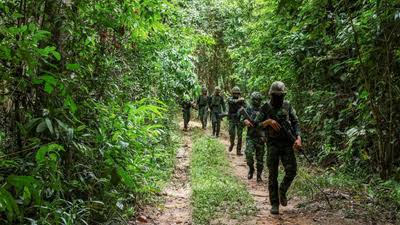
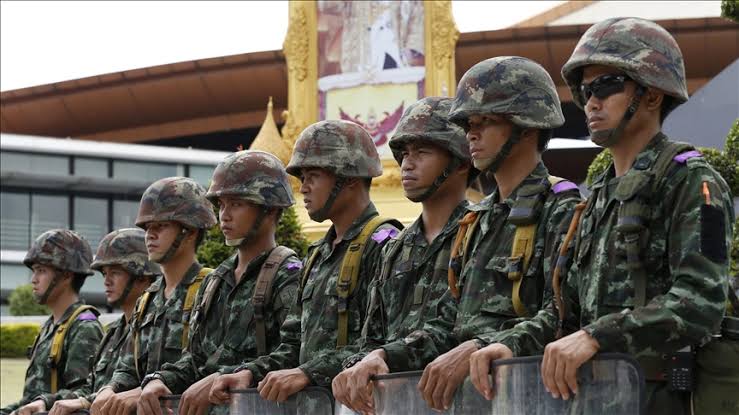
Both Thailand and Cambodia have accused each other of reigniting hostilities. Thailand’s army reported that at least six people were injured on Saturday after Cambodian rocket fire struck border positions. Cambodian authorities, on the other hand, alleged that Thai forces had expanded attacks to civilian infrastructure.
Cambodia’s information minister Neth Pheaktra accused Thailand of targeting non-military locations and endangering civilians. Thai officials rejected the allegation, stating that military operations were limited to strategic targets directly linked to the conflict.
A Thai navy spokesperson confirmed that the air force had destroyed two Cambodian bridges, which Bangkok claims were being used to transport weapons and military supplies to the frontline.
Half a Million Civilians Displaced
The humanitarian impact of the renewed fighting has been severe. Officials estimate that nearly 500,000 civilians on both sides of the border have been displaced as villages empty out amid fears of further escalation. Emergency shelters have been set up in several Thai provinces, while Cambodian authorities have also moved residents away from vulnerable areas.
In Thailand’s Buriram province, evacuees expressed deep scepticism about renewed peace efforts. “The last peace talks failed. I don’t know if this one will work,” said Kanyapat Saopria, a 39-year-old resident forced to flee her home.
Across the border, Cambodian evacuee Vy Rina said she was saddened that violence had continued despite international intervention. “I am not happy with brutal acts. We just want peace,” she said.
Past Ceasefire and Regional Mediation
The current escalation follows the collapse of a fragile ceasefire brokered in July by the United States, China, and Malaysia, the current chair of the Association of Southeast Asian Nations (ASEAN). That agreement came after five days of intense fighting earlier this year.
In October, Trump had backed a follow-up joint declaration that included expanded trade cooperation alongside security commitments. However, Thailand later suspended its participation after several soldiers were injured by landmines near the border, an incident Bangkok blamed on Cambodian forces.
Regional observers note that repeated breakdowns of peace arrangements underscore the complexity of the territorial dispute and the lack of effective enforcement mechanisms.
Thailand and Cambodia Stand Firm
Prime Minister Anutin said Thailand would continue military operations until it felt confident that its territory and citizens were no longer under threat. “The side that violated the agreement must take responsibility to fix the situation,” he said.
Cambodian Prime Minister Hun Manet, meanwhile, maintained that Phnom Penh remains committed to peaceful resolution through dialogue. He insisted Cambodia has consistently adhered to diplomatic norms, even as fighting intensifies.
As tensions persist, regional powers and ASEAN members are expected to increase diplomatic engagement to prevent a wider conflict in Southeast Asia.