
What happened the invitation list and immediate reaction
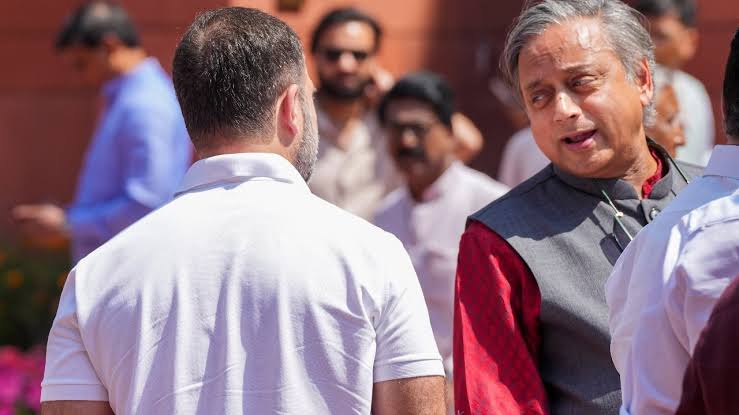
Sources close to the Congress told RamRajya News that neither Rahul Gandhi nor Mallikarjun Kharge received invitations to the presidential dinner, even as Tharoor confirmed his attendance. The omission sparked criticism from party spokespeople who questioned both the protocol and the optics of the selection.
Congress spokesperson Pawan Khera responded sharply, saying those who extended the invitation and those who accepted it are “open to scrutiny.” Khera suggested that if the roles had been reversed and the party’s principal leaders were invited, the party leadership would have declined on principle. “Everyone has their own conscience,” he said, stressing that the party leadership would have acted differently.
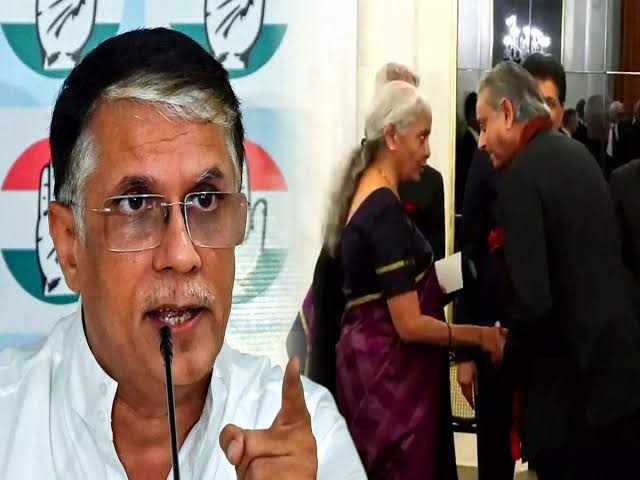

Traditionally, state banquets at Rashtrapati Bhavan include a cross-section of political and civil society figures. Opposition leaders have often been included so that diplomatic engagements reflect the broader political representation of the country. Rahul Gandhi has publicly argued that excluding opposition leaders breaks with that tradition, describing the move as symptomatic of a government unwilling to accommodate opposition representation at high-level diplomatic events.
Observers noted that decisions on guest lists for state banquets involve multiple offices and considerations, including the President’s office, the Ministry of External Affairs and the visiting delegation’s protocol team. Nevertheless, the optics of a high-profile invitee list in a polarized political environment can quickly become a subject of debate.
Tharoor’s recent tensions with Congress
Shashi Tharoor’s presence at the banquet arrives amid a string of public differences between him and parts of the Congress organisation. In recent months Tharoor authored articles and made public remarks that drew criticism from the party’s Kerala unit and others. His commentary on issues such as dynastic politics and regional governance had already stirred debate inside Congress, and his attendance at a high-visibility state dinner has intensified scrutiny.
Tharoor has defended his positions in the past as matters of conscience and public interest. Sources say he accepted the invitation as a Member of Parliament and as an individual participant in national diplomatic events, rather than as a representative of party hierarchy.
Opposition perspective and political calculations
Senior opposition figures and party strategists told RamRajya News they see the episode as part of a broader pattern of political messaging around ceremony and statecraft. Some in the party argued that exclusion of senior opposition leaders from symbolic events could be interpreted as an attempt to narrow the optics of national-level engagements.
Others urged a calibrated response, noting that confronting every instance of perceived marginalisation in public forums can escalate tensions and distract from policy work. For now, the Congress leadership has framed its response in measured language while reserving the right to publicly question the protocol used for the dinner.
Diplomacy and domestic politics intersect
The dinner coincided with President Putin’s two-day visit to India for summit talks with Prime Minister Narendra Modi. Such visits combine strategic bilateral diplomacy with ceremonial events that carry symbolic weight. The guest list for official dinners often reflects a balance between political actors, civil society and cultural figures but the choices can also reveal contemporary political fault lines.
Analysts say that momentary exclusions from ceremonial spaces can have outsized political resonance in an era of rapid media cycles and instant commentary. How political parties choose to frame such incidents will affect short-term narratives but may also shape long-term perceptions of inclusion in diplomatic pageantry.
What to watch next
The Congress response and any further statements by the Rashtrapati Bhavan or the Ministry of External Affairs will be closely followed by political observers. If either side issues clarifications on the selection process for guests, it will shape the continuing debate on protocol and opposition inclusion.