
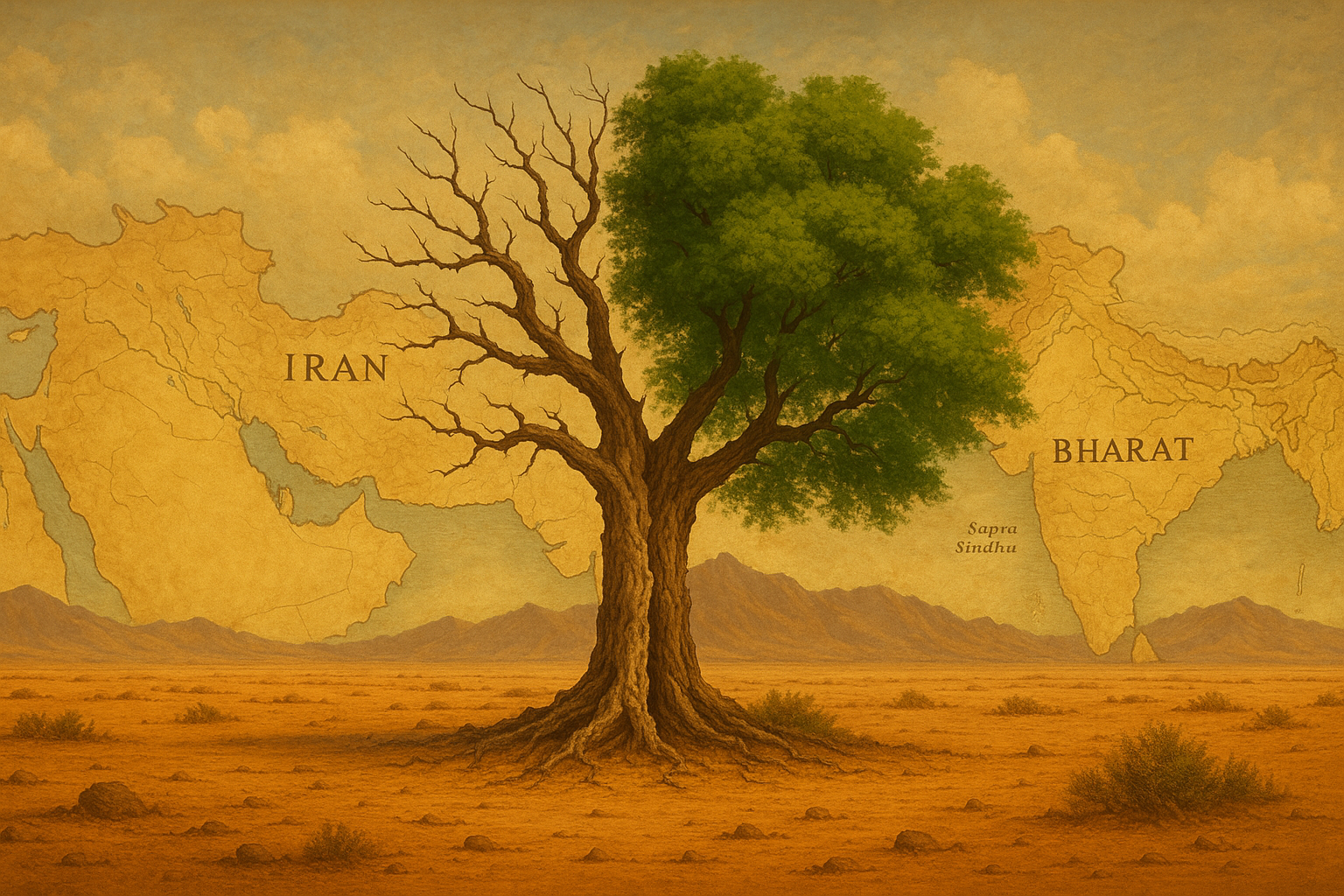
Once, in the cradle of the ancient world, where the Sarasvati once flowed and hymns to Agni echoed across the sacred land, there lived a tribe known as the Parshus. They were kin to the Vedic Aryans—worshippers of many gods, seers of cosmic truths, builders of a civilization born not from conquest, but from clarity and harmony. Today, we call their land Iran. But the Iran we know now is a ghost of its former self—haunted, heroic, and heart-wrenchingly lost.

A Prophet’s Vision and a Kingdom’s Drift
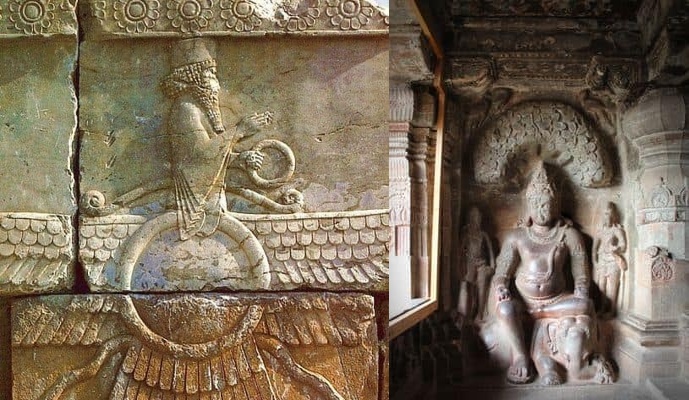
The first tear in Iran’s soul was gentle—almost imperceptible. It came wrapped in wisdom and fire, brought forth by a mystic sage: Zarathustra. Known in the West as Zoroaster, he was no villain—perhaps even a visionary. But visions have consequences. In his pursuit of divine clarity, Zarathustra rejected the rich, plural gods of the Vedas and raised a singular flame: Ahura Mazda. He called the old gods Daevas, demons, and restructured truth into monotheism. His new order sanctified kingship, spiritualized absolutism, and gradually rewrote the past into myth.
This wasn’t merely religious reform—it was a civilizational severance. The Persians turned from the land of their fathers. They forgot the rituals of the Yajurveda, abandoned the language of the Rigveda, and traded their polyphonic chants for singular proclamations. They became strangers to their own origins.
The Empire of Forgotten Blood
But forgotten roots did not hinder ambition. Under Cyrus the Great, the Parshus—now Persians—built an empire that spanned from the Aegean to the Indus. Darius continued this legacy. Their palaces glittered. Their roads stretched across continents. But their hearts no longer remembered where they began.
In one of history’s cruellest ironies, the descendants of Aryans began enslaving their own blood. Indian warriors were captured and forced to fight as auxiliaries in foreign wars—like at Thermopylae, alongside Xerxes’ grand army against the Spartans. Forgotten kin had become tools in imperial games.
When Kinship Turned to Confrontation
What followed was a grim succession of historical ironies. The Seleucid Greeks wrested Iran’s soul further west. The Kushans clashed with Iranian forces during the reign of Kanishka. The Guptas, defenders of Dharma, indirectly crippled the Sassanids by aiding Afghan Kidarites. The land that once shared Vedic hymns now stood in opposition to Bharat—not just politically, but spiritually.
The Final Blow: Islamization
Then came the whirlwind of the 7th century. The Arab armies swept across Persia like wildfire. Zoroastrian temples crumbled. Fire altars extinguished. Mosques replaced mandirs. And with that, Iran’s last link to its ancestral memory was buried under the crescent moon of conquest.
What remained was a new Iran—fierce, Islamic, proud—but no longer connected to its Vedic essence. Its leaders—like Nadir Shah, who looted Delhi in 1739—saw India not as kin, but as prey. Even in modern times, hostility lingered: from the Pahlavi dynasty’s political maneuvers to Khomeini and Khamenei’s remarks on Kashmir. The fracture endured, like an ancestral wound that never truly healed.
India’s Counter-Narrative: Bending, Never Breaking
Yet across the mountains, Bharat told a different tale. India too flirted with monotheism—through the Upanishads, through Buddha’s teachings. But Krishna emerged to realign the path, not by rejection, but by synthesis. He introduced Sarveshwarvad—a scientific, compassionate form of universal divinity that honored plurality. Buddha was not cast out; he became Vishnu’s ninth avatar. Where Persia collapsed under the weight of reform, India absorbed change like a banyan tree swallows air.
The Moral of the Forgotten
Why does this matter now? Because memory matters. Culture is not concrete—it’s clay. And when a nation forgets its clay, it cannot remold its future. Iran dreams of greatness, but it dreams without its roots. Until it reconciles with its Vedic past, the empire of Cyrus will remain only a whisper in the sands of Persepolis.
The path home begins not with conquest, but remembrance.
📚 Recommended Reading:
This and other fascinating historical facts can be read in detail in the book ‘अनसंग हीरोज: इंदु से सिंधु तक’.