
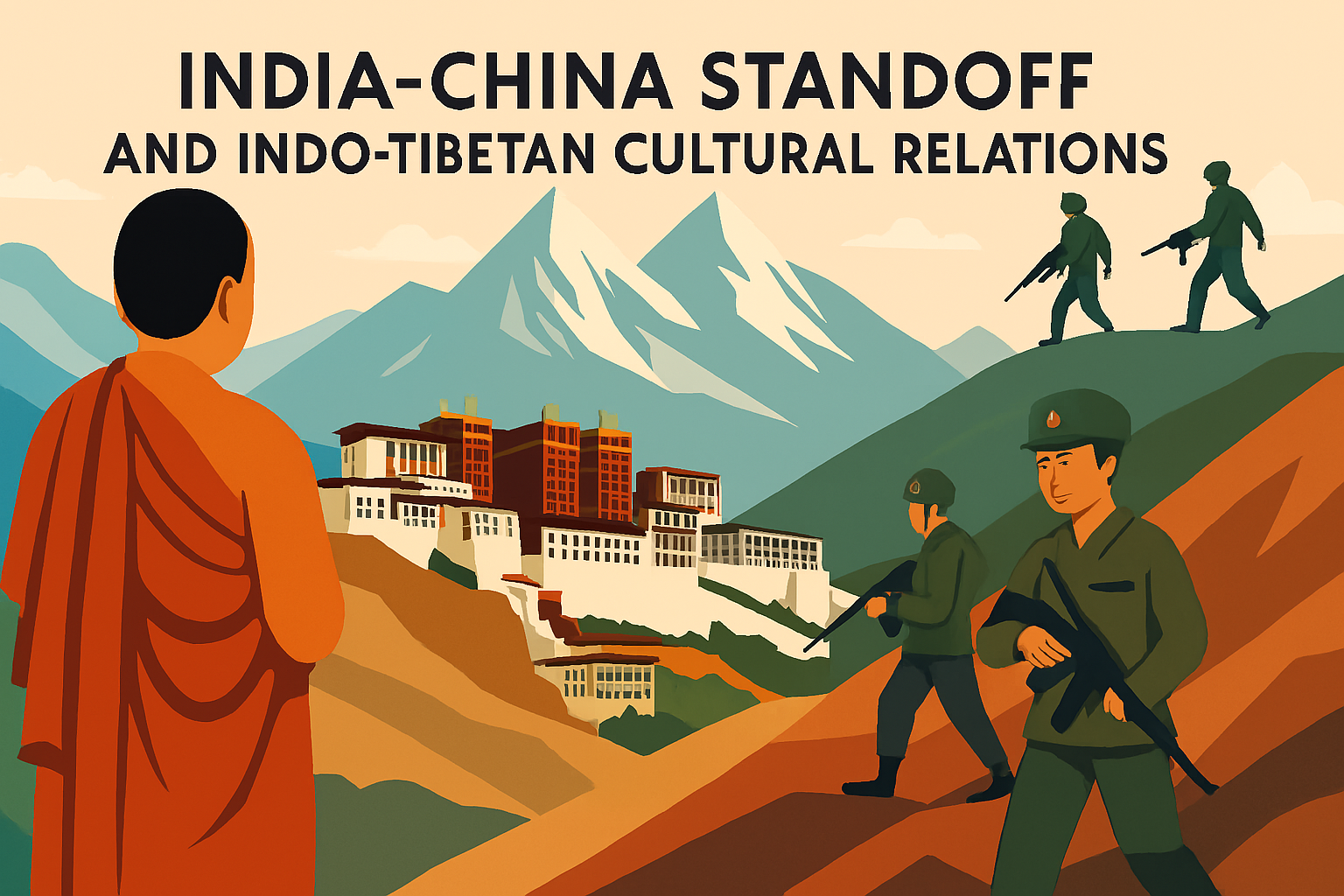
🗻 Tibet’s Uncertain Future and What It Means for India
The future of Tibet is again under global focus. China has tightened its grip on the region. Meanwhile, the Tibetan people continue to fight for their culture and rights. This situation has placed India in a tough spot. Should it take a strong stand? Or should it stay neutral to avoid conflict with China?
India’s strategic dilemma is not just about foreign policy—it also involves history, values, and national security.
📜 India and Tibet: A Shared History
India and Tibet share a deep connection. For centuries, the Himalayas allowed the exchange of Buddhist culture, trade, and spiritual ideas. However, that changed in 1950 when China took control of Tibet.
In 1959, the 14th Dalai Lama fled to India after a failed uprising. India gave him asylum. Since then, over 90,000 Tibetan refugees have lived peacefully in India. This move helped India gain moral support globally but also caused long-term tensions with China.
🧭 The Strategic Challenge in 2025
Today, China has increased its presence along the India-Tibet border, especially in Ladakh and Arunachal Pradesh. It is building roads, tunnels, and even military bases. These moves are part of China’s larger plan to control the Himalayas and weaken India’s position.
So, India must ask itself:
-
Can it trust China to honor border peace?
-
Should it support the Tibetan cause more openly?
-
Or must it keep quiet to avoid another border clash?
⚖️ India’s Difficult Balancing Act
India wants peace. Yet, it cannot ignore the security risks. It also wants to support Tibetan freedom, but openly doing so could make China react strongly.
So far, India has chosen a middle path:
-
It hosts the Tibetan Government-in-Exile, but avoids giving it official recognition.
-
It supports the Dalai Lama’s spiritual role but not his political claims.
-
It avoids mentioning Tibet in public talks with China, to keep the peace.
This strategy helps in avoiding direct conflict. But it also limits India’s ability to act if the Tibet issue grows bigger in global politics.
📍 Why Tibet Matters for India
Tibet is not just about values or history. It is a geopolitical buffer. Before China took control, Tibet acted as a peaceful zone between the two Asian giants.
Now, China controls the Tibetan Plateau, giving it the high ground in any border war. This gives China a big military advantage, especially in the case of surprise attacks.
Also, Tibet is the source of many key rivers, like the Brahmaputra. China’s dam projects in the region could create water security problems for India in the future.
🌏 What India Can Do Next
India has a few choices:
-
Speak up globally: India can work with allies like the U.S. and Japan to raise the Tibet issue in human rights forums.
-
Boost border infrastructure: It must match China’s road and defense work near the border.
-
Support culture, not politics: By helping preserve Tibetan culture and religion, India can keep its moral ground without angering China directly.
-
Revisit the “One China” Policy: India may consider dropping silent support to China’s Tibet claim unless its own borders are respected.
🔍 Final Thoughts
The future of Tibet is closely tied to India’s future in the Himalayas. As China becomes more aggressive, India cannot afford to stay silent. It must balance strategic caution with moral responsibility.
This is not an easy road. But ignoring Tibet now could mean facing bigger problems later—at the border, in global forums, and in water disputes.
India’s next steps may define not only its relationship with China, but also its role as a leader in Asia.