A Visionary Leap in Cooperative Education
 Honoring the Legacy of Tribhuvan Das Patel
Prime Minister Narendra Modi paid tribute to Shri Tribhuvan Das Patel, the pioneer behind India’s dairy cooperative movement. Inspired by Sardar Vallabhbhai Patel, he founded the Kheda Milk Union in 1946, which evolved into Amul. This successful model now empowers over 36 lakh women and boasts a turnover of ₹80,000 crore.
Bridging the Gap Between Education and Employment
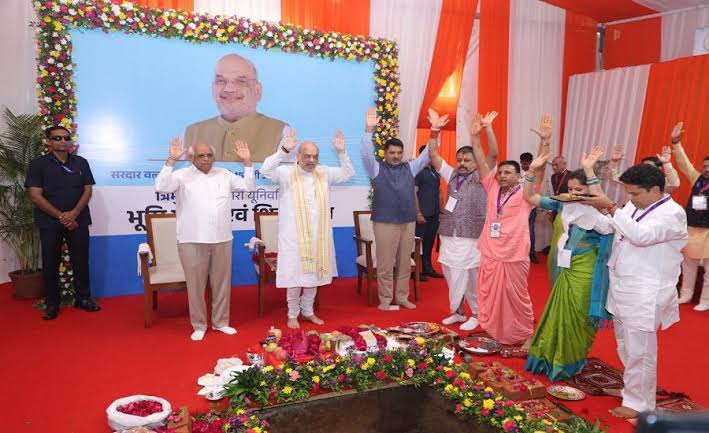
The university will be developed across 125 acres with a funding of ₹500 crore. It will offer specialized courses in cooperative management, technical skills, accounting, and scientific methods. More importantly, it will promote transparency and eliminate nepotism in recruitment by ensuring that only trained individuals lead India’s cooperative institutions.
Shri Shah highlighted that the initiative will especially benefit youth from tribal, Dalit, and rural communities, equipping them with ethical, inclusive, and job-ready skills.
Massive Job Creation Through PACS
Prime Minister Modi has announced the creation of 2 lakh new Primary Agricultural Credit Societies (PACS), with 60,000 to be launched in 2025 alone. These will generate demand for over 17 lakh skilled workers. The university aims to become a key supplier of this skilled manpower, supporting sectors such as cooperative banks, dairy federations, and cooperative insurance.
A Hub for Innovation, Policy, and Research
Beyond training, the university will act as a policy think tank, crafting 5-, 10-, and 25-year cooperative strategies. Using data analytics and field research, it will guide India’s cooperative roadmap. The university will also standardize training modules and collaborate with cooperative bodies nationwide.
With CBSE already adding “cooperation” as a subject in school curriculums, this university complements India’s vision of a grassroots economic revolution.
Cooperation Rooted in Indian Culture
Echoing the ideals of Vasudhaiva Kutumbakam and Sarve Bhavantu Sukhinah, Shri Amit Shah stressed that cooperation is an inherent part of Indian tradition. This university will not just promote economic growth, but also social and environmental well-being.
Nationwide Call for Collaboration
Shri Shah invited cooperative training institutions and experts from across India to collaborate with the university. Their participation will help shape the next generation of leaders in the cooperative sector.
As India aspires to become the global hub for cooperation, the foundation of Tribhuvan Sahkari University represents a bold step toward inclusive and sustainable development through education.