Agartala: In a landmark step towards strengthening state-led innovation, the Atal Innovation Mission (AIM) under NITI Aayog has launched the country’s first State Innovation Mission (SIM) in Tripura. The initiative aims to embed innovation and entrepreneurship at the core of the State’s long-term development strategy.
 AIM 2.0 Expands to State Level
The State Innovation Mission has been introduced under the approved AIM 2.0 programme, operating within NITI Aayog’s State Support Mission framework. It is designed as a structured institutional mechanism to help States and Union Territories develop inclusive and context-specific innovation ecosystems.
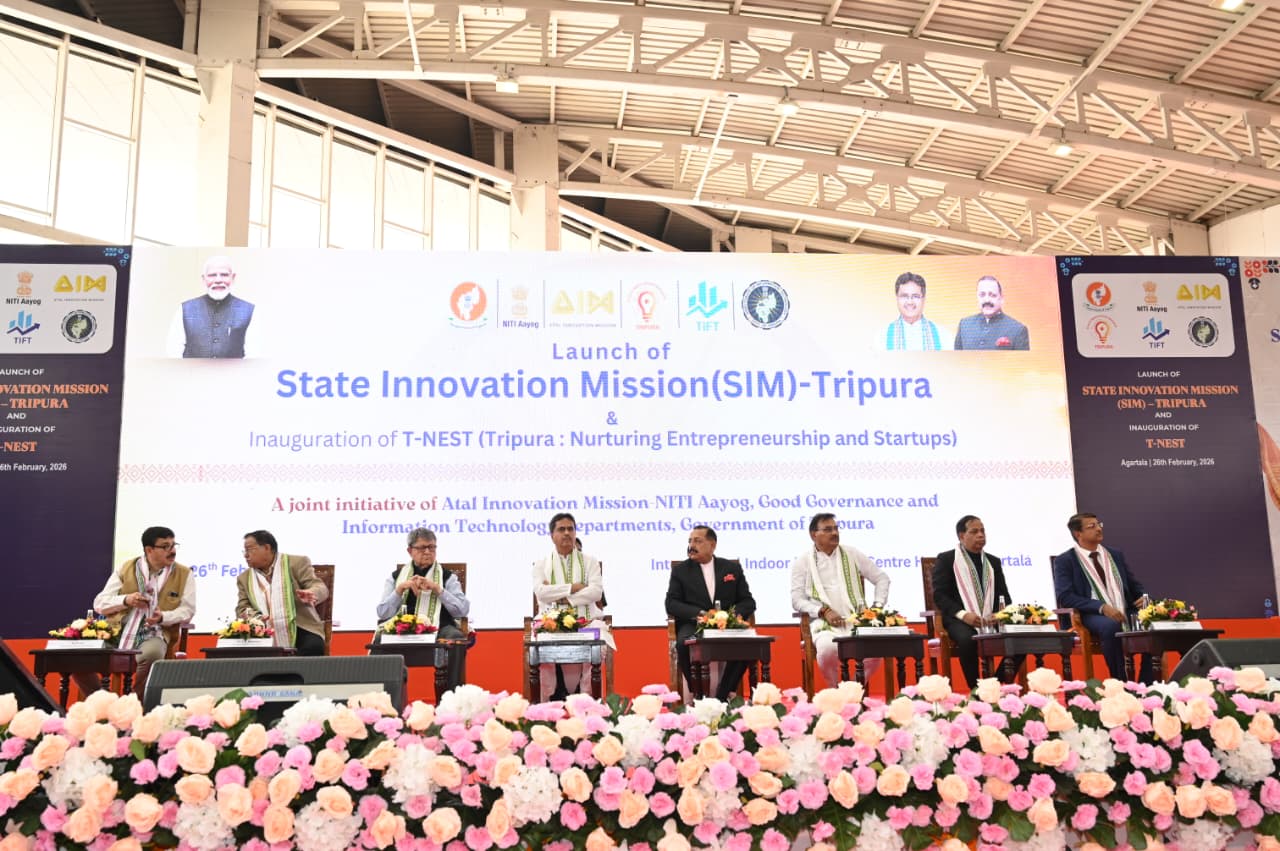
The launch ceremony was held at the Hapania International Exhibition Centre in Agartala. The event witnessed the presence of Tripura Chief Minister Prof. (Dr.) Manik Saha, NITI Aayog Vice Chairman Suman Bery, Union Minister of State (Independent Charge) for Science and Technology Dr. Jitendra Singh, and NITI Aayog Member Dr. V.K. Saraswat.
Tripura’s Vision for Innovation-Led Growth
Addressing the gathering, Chief Minister Manik Saha outlined a comprehensive roadmap for innovation-driven growth in the State. He announced the institutionalisation of the State Innovation Mission under the Tripura Institution for Transformation (TIFT), which will serve as the nodal body for implementation.
As part of the rollout, the State inaugurated T-NEST (Tripura – Nurturing Entrepreneurship and Startups), a dedicated incubation and innovation facility aimed at supporting startups and promoting “Make from Tripura” solutions. Innovation Centres will also be established in all eight districts of the State and linked to T-NEST to encourage grassroots entrepreneurship, especially among women and tribal communities.
District Innovator Fellowships and AI Push
In a first-of-its-kind move, the Chief Minister announced the launch of one of India’s earliest District Innovator Fellowships (DIF). The programme aims to identify grassroots innovators and provide them with structured lifecycle support, including mentorship and funding pathways.
Tripura will also formulate a dedicated State Artificial Intelligence Policy aligned with the Prime Minister’s vision of responsible and inclusive AI. The State plans to develop an AI City in Agartala with support from leading global technology enablers, positioning itself as a hub for AI-driven governance and innovation.
AIM’s National Vision
Union Minister Dr. Jitendra Singh described the Atal Innovation Mission as a transformative initiative conceptualised by Prime Minister Narendra Modi. He noted that AIM has reshaped India’s innovation roadmap over the past decade by creating a culture of innovation in governance and empowering States to become active growth drivers.
He highlighted that the shift from the Planning Commission to NITI Aayog marked a transition towards innovation-led development. According to him, the launch of SIM in Tripura demonstrates how States can leverage the AIM framework to unlock local strengths and contribute to national growth.
Strengthening the Innovation Ecosystem
Deepak Bagla, Mission Director of AIM, emphasised that the State Innovation Mission aligns with the vision of building an innovation-led Aatmanirbhar Bharat. By empowering States to design context-specific innovation strategies, AIM seeks to ensure that talent from every district and classroom becomes part of India’s development journey.
Through SIM, AIM will collaborate closely with the Government of Tripura to develop a long-term innovation and entrepreneurship strategy aligned with the State’s economic priorities. The Mission will support capacity building, policy reforms, partnerships, peer learning, and programmatic interventions across the innovation lifecycle.
Focus on Inclusion and Education
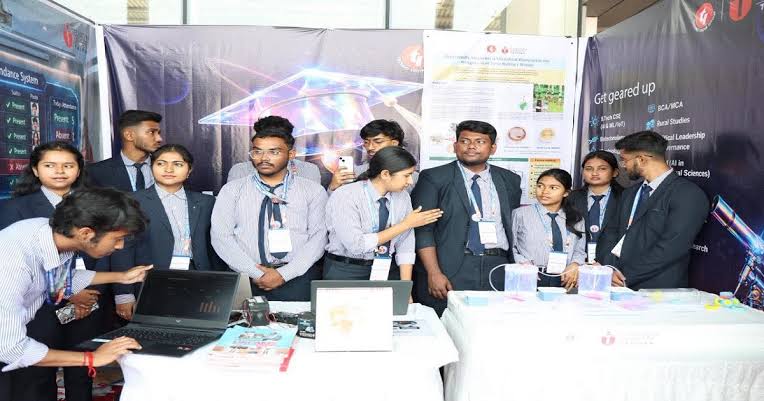
The State Innovation Mission also aims to strengthen innovation education from the school level onwards. It seeks to provide students and young entrepreneurs with access to infrastructure, mentorship, and funding support beyond traditional risk thresholds.
Special emphasis will be placed on inclusion, regional balance, and collaboration among government institutions, academia, industry, and civil society. Officials said the initiative aligns with the broader national vision of Viksit Bharat 2047 through innovation-led development.